Thinking Correctly Under Pressure

Thinking Correctly Under Pressure – or T-CUP – was popularized by Sir Clive Woodward the former England Rugby Union head coach.  He spoke often about big moments in sport, and that those competitors who could master T-CUP were the difference makers. I wrote about his thoughts on this subject in my Best Selling award winning book The Vital Edge.  Check it out for more, on this, and other fascinating lessons from sport.

One of the most dramatic examples of what he was getting at (although it seems that his misunderstanding of basketball rules meant his example was actually wrongly described) is demonstrated in a brilliant clip of the final second of a basketball game between two U.S. College teams.  The scores were tied at 88 apiece in overtime, with only 0.6 seconds left on the clock, when one of the teams was awarded two free throws. The first free throw was successful, making the score 89-88, with one throw remaining. Now, this should have been the game won.  All the team that was in the lead by a point had to do was, either score the second free throw, or ensure that the remaining 0.6 seconds were quickly eaten up should they miss.

One hugely alert member of the defending team, Jordan Snipes, had other ideas, and demonstrated a phenomenal level of T-CUP.  The ball rebounded from the rim of the basket, allowing our super alert player, Snipes, to capture the ball and hurl it the full length of the court, all in one motion. The rules of basketball are such that, even if the end of game buzzer sounds, the game does not end until a ball that is in the air hits the ground. The ball in this moment travelled over 85 feet and landed on the court, after passing cleanly through the basket at the other end of the court for a 3 point score, meaning his team had won 91-89.

“The Shot” is widely considered one of the greatest in NCAA history. The result was turned on its head in an instant by the clear thinking of one player who anticipated the ball rebounding from the rim, and knew exactly what he had to do as soon as he recovered possession of the ball.  It was a thoroughly compelling moment.  I urge you to watch this video as it is one of those moments in sport that is fascinating, magical and tragic all in the same split second.

I suspect the thrower was giving absolutely no thought whatsoever to the possibility of what was about to unfold, just a second later.  His teammates and coach did not step in and whisper any instruction either, so we must assume they too had no premonition of the imminent turnaround that was about to happen.  I imagine the thrower was preparing to enjoy the sweet scent of victory. Mentally, he had already crossed the finishing line. His previous throw, had surely sealed the deal, and this second throw was simply ceremonial. It was the cherry on top and he was about to embrace his teammates in a dance of celebration.  Instead, as you can see from the video, he and his teammates stand around in disbelief, and it is Snipes, and his team, who explode into wild celebration.

A great moment in sport, I’m sure you will agree. But how often does it take T-CUP in big moments to produce them.  What big T-CUP moments do you recall, whether in sport, or elsewhere in your life?  Feel free to share any T-CUP moments in the comments below. I’d love to hear about them.
 

The Present Serves us Well

I have followed Andy Murray’s career, and his emotional journey, since he first burst onto the scene as a gangly teenager. This year will be his last as a professional tennis player, and he will leave behind so many great stories, and great lessons, and not just relating to Tennis. I am leaving this previous post here, as I think it is still hugely relevant, and I want to thank Andy for all the entertainment, thrills and sheer drama, he has served up over all these years.

Recognise the fact that the past is past, and that soon you won’t have any future left – so you really might as well be here. It’s not so bad. Often enough, it’s wonderful. And in any case, there’s nowhere else to be.”   Oliver Burkeman

Reconsidering Flow

“I really enjoyed being in that zone. Each moment of flow is quite addictive because it’s such an incredible place to be. You are just in the moment, just focusing on what you’re doing right now.” Christian Meier

Over the years I have written a number of articles on Flow. See this article from 2013. But, like a number of psychological concepts, it can often be elusive to pin down. Some of my clients get it right away and will rattle off experiences where they are sure they experience it. Others, however, clearly feel no connection, and wonder, in puzzlement, at how difficult situations, and even mildly painful moments, can result in flow.

Whenever I read of an account where someone tries to explain their experience of flow, I like to capture it as an addition to the body of examples. You never know which ones will land for people. This one struck me as interesting. Christian Meier describes what it means to him.

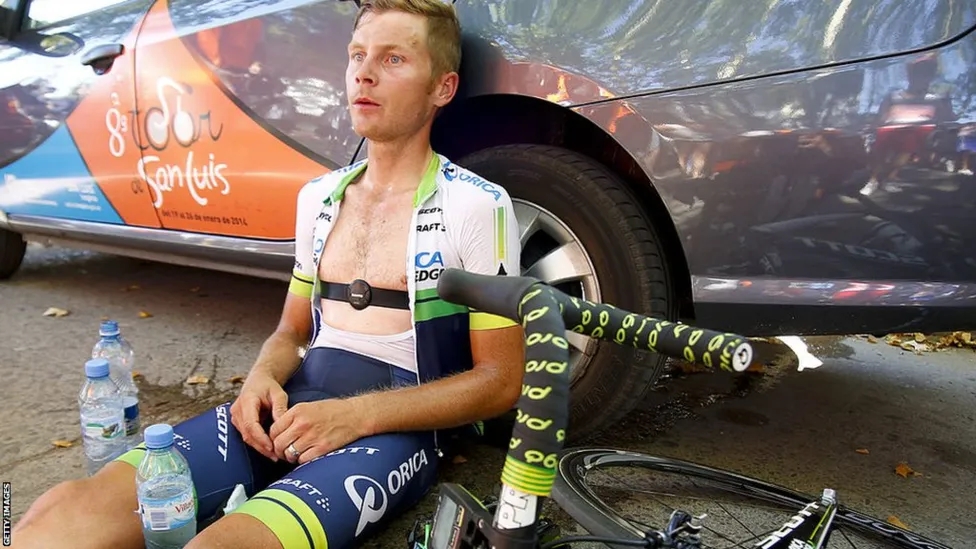
He speaks about his time as a domestique in a Grand Tour cycling team, where his role was never to win, but to be in the service of others. This demanded that he endure pain and discomfort, with no expectation of personal glory. Most people would describe this as “suffering in order to help others”, although Christian rejects the word “suffering”, preferring to think of himself as being in control of what he is doing, regulating the level of personal sacrifice he is prepared to endure. His journey from Grand Tour cycling to Ultra-running is fascinating, and along the way he offers some great insights into what it means for him to be in flow.

He characterizes the feelings he has experienced as being addictive. We don’t all have to be elite athletes or adrenaline junkies to know what that feeling is like. Indeed, meditation, yoga, and other similarly ‘mindful’ practices, generate a sense of calm, being in the moment, focusing on the present, and attending only to the here and now.

Have a read at what Christian has to say in the attached article. I’d be fascinated to hear your insights and what experiences you have had with the state of Flow?

Talismanic coaching: where science meets superstition

This Article was published originally in Coaching Psychology International, Volume 8, Issue 1 (Summer 2015) – ISSN 1758-7719 – pages 16-19. 

In Daniel Goleman’s (2013) Focus, he proposes that in a world of ever-increasing 24/7 distraction, we need to become better at focusing in the here and now. In this paper we propose the benefit of “superstitious conditioning” through the use of a Talisman to help
clients focus their attention in post-coaching situations.

Learning, at its most fundamental, is based upon the creation of neural connections which either strengthen or inhibit behaviour, facilitated by attending or not attending to stimuli. Learning can be said to happen when a new state (ie, a new connection) or a new association of existing connections occurs. The stronger the associations become, the more they become embedded, meaning the associated behaviour will be more readily enacted.

As coaches, we are in a highly privileged position, able to utilise this knowledge of how learning occurs for the benefit of our clients. We can share with them tools and techniques to create and strengthen associations. Once changes are fully embedded, then the tools may no longer be required, but, in the early days, having a proxy association to aid the formation of a neural association assists with sustenance of early progress.

However, all too often in coaching, after gaining insight, clients return to the everyday fray of work. Here, they lose conscious awareness of their coaching goal as it becomes displaced by more demanding pressures. Continue reading →

It’s the hope that kills you

“It’s not the despair, Laura. I can take the despair.  It’s the hope I can’t stand. ~ John Cleese (as Brian Stimpson in the film Clockwise)

Those who know me well will know that I am a long-suffering Scotland football fan. I have followed the national team for more years than I care to remember. Anyone who knows anything about sport in general, and perhaps football in particular, will recognise the dilemma that most football fans face. That is, they cannot always ‘choose’ their team.  As a professional coach and a psychologist who spends most of his life spreading the message that we all have choice, this does not sit well with ‘what I know’.  Why don’t I simply support Barcelona, Bayern Munich, Argentina or whatever team is top of the division on any given week?  That would be easy. It would take away a lot of the pain and disappointment that inevitably occurs when you follow Scotland’s world cup and euro championship qualification ambitions.scots fan in despair

But, I think that is to miss the point.
Continue reading →

Fail Big, Fail Fast, Fail Often!

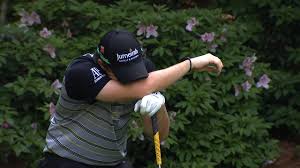
In the week of the 2015 US Masters golf championship, many eyes are on Rory McIlroy. In 2011, an even younger McIlroy was on the verge of making golfing history. He carried a 4-shot lead into the final round, having played sublime golf for the first three days of the championship. However, on his final round he shot the worst round in history by any professional golfer leading after the 3rd round of the Masters. Not the piece of history he was after. Rory suffered what can only be described as a ‘meltdown’ in the unforgiving glare of the TV cameras and the golfing world.

Some pundits questioned his bottle, his psyche, his temperament, and his ‘big game’ mentality. Some said, “history shows that players who cough up big leads in big tournaments often don’t get another chance, their psyches permanently shattered by thoughts of what might have been.” (TwinCities.com) 

But, McIlroy went on to win 4 majors in the next three years, starting with the U.S.Open championship, just a few short months after his Augusta meltdown. He achieved his victory in some style too, setting a new championship record and becoming the youngest winner since 1923.
Continue reading →

On the Edge of Control

“…Fear is what keeps us from going over the edge……I don’t think what makes a good race car driver is a fearless person. I think it’s somebody that is comfortable being behind the wheel of something that’s somewhat out of control”.                ~ Jeff Gordon

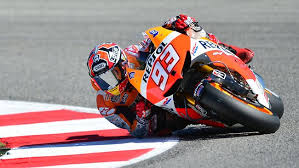
Imagine yourself riding a motorcycle in a high-speed race. You are at full throttle going round the final bend. Only a delicate balance between gravity and centrifugal forces are preventing you from flying off the track. At that moment, are you in control of your bike, or are you out of control? The answer is you are ‘right on the edge’. Too much ‘in control’ and you probably aren’t taking enough risk, and are unlikely to win the race. Too much ‘out of control’ and the likelihood is you are in for a very painful crash.

In 2013, at age 20, Marc Márquez of Spain became the youngest ever World Champion of MotoGP in the final race of the season in Valencia.  For anyone who hasn’t witnessed MotoGP, it is truly breath-taking. Riders appear to defy gravity on the bends, with their knees and elbows scraping the surface of the track at speeds in excess of 300km/hour. marquezExperts have commented on the young Márquez’s style saying, “….he drags his elbow on every corner and leans his body and bike closer to the ground than any of his rivals.”  In this sport, being daring and aggressive is a requirement if you hope to succeed. It would look as though an ability to shut out thoughts of fear, and consequences of getting it wrong, are a necessity in this sport. Yet, at the same time, knowing, in that instant, just what would be too much, too fast, too risky is clearly also a vital (and life-preserving) requirement. As is resilience, perseverance and the ability to learn from (and not be put off by) misjudgements.

During the course of the season, Marquez also set the record for the highest-speed crash in motorcycle racing. While practising his gravity-defying turns, he lost control at 320km/hour. He managed to throw himself from his bike just before it crashed against a concrete wall. He was catapulted into a gravel safety trap at 280km/hour, walked away, and competed in the race the next day.  He is very clear about the fact that he must keep learning and improving.  In the final race of the season, he needed to finish no worse than fourth to secure the title.  He worked out that keeping his two main rivals in front of him, where he could watch their every move, was a better strategy than having them plot and scheme their moves from behind him. He rode a sensible, calculating race, taking less risks, staying out of trouble, and safely securing third place, sufficient to win the World Championship.
Continue reading →

The Power of Optimism

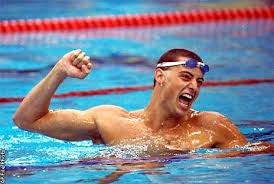
A great deal of pressure was heaped on the young shoulders of Matt Biondi in the run up to the Seoul Olympics in 1988.  He was one of the United States great hopes for multiple medals in the swimming pool. Comparisons were being drawn with the legendary Mark Spitz who had won seven golds in the 1972 games.    In his first event, the two-hundred-metre freestyle, he finished a creditable third.  Great by most people’s standards, but disappointing for Biondi and the hard-to-please media back home.  The next event was the one-hundred-metre butterfly.  Having blasted into an early lead, and dominated the race all the way, he made an error of judgement on his final stroke. One more stroke squeezed in with a metre to go would have seen him home, but he chose to coast and stretch for the wall instead.  In doing so he was pipped by a fingernail and beaten into second by an unknown swimmer, Anthony Nesty, from Surinam, not a country renowned for swimmers, let alone gold medals.

biondiThere was much gnashing of teeth and criticism levelled at Biondi from afar. This was not the start to an assault on seven gold medals that the American public expected, and many started to write him off.   There was at least one person who did not, however.  Marty Seligman, the father of Positive Psychology, watching proceedings on his television, had belief, and evidence, that Biondi had what it would take to come back from these disappointments and go on to achieve success.  Continue reading →

Don’t write off the ‘Old Guard’

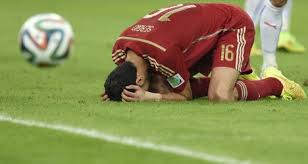
It has been an intriguing summer of sport already, and (thankfully) it has a long way still to go. What has struck me as interesting is that it has resulted in a large number of teams and individuals being toppled from the top spot.  In football’s World Cup we saw a shock early departure of Spain from the tournament.
spain defeated
In tennis, at Wimbledon, we saw last year’s champion, Andy Murray, and the world’s number one seed, Rafael Nadal, exit the competition – both beaten by younger rising stars of the game. In the women’s competition, we also saw the departure of Serena Williams, Maria Sharapova, and other past champions. Here, as in the men’s game, there is an exciting emergence of new young talent challenging the ‘old guard’.  I have no doubt that the rest of the summer’s sport, in events such as the Tour de France, golf’s Open Championship at Hoylake and the Commonwealth Games in Glasgow, will throw up other demises, departures, abdications and shock defeats of established past winners.
While the emergence of new talent is both exciting and essential for the good of the sport, what is equally, if not more, fascinating is how the so called ‘old guard’ respond to that challenge, and the hugely important leadership role they play in creating the next generation of champions. Despite the performances of the emerging stars,  the four semi-finalists in the World Cup are all established ‘giants’ of the game, and the eventual Wimbledon winners in both the men’s and women’s finals this weekend were also past winners, and amongst the pre-competition favourites.

Which past champions disappear, slide off into the sunset, and enjoy the dreams of their past glories, and which go back to the gym, come back stronger, fitter, fresher and ready to mount another bid?

Continue reading →

Congratulations

A huge congratulations to the three winners of the competition to win signed copies of “The Vital Edge”.

The winners are:-Screen Print Book Cover

Shaun Coffey
Sheila Richards
Barry Millar


“The Vital Edge” will be winging its way to them shortly.

All three winners nominated truly awesome sports people as the ones who had inspired them most.

Continue reading →