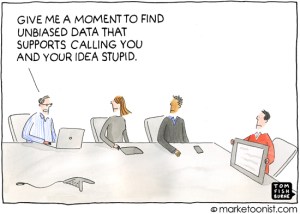
Hands up if you’re scared

In the wake of yet more mass murder, this time in Manchester, useful words are hard to find. All acts of this nature are senseless and horrific. Somehow the targeting of young, innocent children accentuates our sense of revulsion. I have chosen to re-post my thoughts from last year after the killings in Paris.The words are the same. After all, nothing seems to have changed.

louiscollinsblog's avatarGyro Consulting Services

Liberté, égalité, fraternité

Hands up if you are more scared this week than last?  Hands up if you believe you are more likely to be the victim of a terrorist atrocity than you were before the Russian airliner fell from the sky? Or the killings in Paris?  I see a fair few hands raised. I’m guessing that your hands are not raised having quickly calculated the complex statistical probability associated with being mixed up in such occurrences. More likely, it is coming from something in your gut, or in your heart. Somewhere far away from cognitive reason and rationality.

creative commons creative commons

And, of course, that is what terror intends. To switch people off from reason, rationality, logic and constructive discourse, and switch on our more primal decision-making systems. “I feel it in my water. In my gut. I can smell it. My heart is ruling my head”. Believer v Non-Believer. Black v White. Love v Hate.  For…

View original post 271 more words

Choice, Happiness and the Quarter-Life Crisis

Last month’s post ~ Does Choice make us Happy? ~ attracted a lot of attention. Thank you for your excellent feedback. Some of the comments I received prompted me to consider this issue further, but this time from the point of view of the younger generation, particularly Generation Y.

Alice Stapleton writes sensitively and authoritatively about the phenomenon of the Quarter-Life Crisis. Unlike the well-documented mid-life crisis, which afflicts people in their forties or fifties, and is linked to feelings of stagnancy and a desire for radical change, the quarter-life crisis stems from anxiety about change, expectations, instability and identity.

Continue reading

Does Choice make us Happy?

How can Choice be bad for us?  This surely goes against everything that we in the western world have taken for granted for decades, indeed hundreds of years. Choice is fundamental to freedom, and, for people who have no freedom, it makes total sense that increasing personal choice, will provide at least an illusion of freedom, and in turn enhance their welfare, satisfaction and happiness. Continue reading

Committing to New Year Resolutions

So, another year is about to begin. Who knows what it may hold? For some, they approach it with trepidation. Others can’t wait to get started and to grab the opportunities that the new year will generate. It is a time when many people make plans and resolve to make changes, yet so many of those dreams will be but memories before January is out.

resolutionsEvery call to adventure is acted upon by two opposing forces.  In one direction we can choose to embark on the adventure, to take the journey into the unknown and face the uncomfortable challenges that will inevitably lie ahead.  In order to make this choice, the force of reward must be sufficiently strong to overcome the opposing force of inertia, the appeal of the status quo or the comfort zone we have become used to.

I spend a lot of time in workshops and working one on one with people who know that they are in a bind.  They know that their current world is less than satisfactory. They recognise that changes would be positive and could make life better in so many ways. And yet, there is no guarantee that people will make the necessary commitment to move away from the world they inhabit, to make the journey that is necessary to gain the reward, the change, the life that they would prefer.

People know they would be healthier if they gave up smoking, that they drink a bit too much alcohol, that they don’t exercise as much as perhaps they could, or that they are in a dead-end job and a change would breathe new life into their career. They may even make a resolution each New Year to do something about it.  Some may even get as far as joining a gym, giving up smoking or drinking for a while, or actively seeking job vacancies on the internet. And that does demonstrate some level of recognition that change may be attractive. So, why are so many of these attempts aborted so early?  What is missing when people embark on these annual failed excursions, which rarely mature into fully fledged adventures resulting in transformation? Continue reading

It’s Lonely at the Top

I have long been a fan and admirer of Andy Murray, so naturally I was delighted for him when he recently reached the pinnacle of his sport by being crowned the world’s number one-ranked male tennis player. Amazing!  Perhaps even more amazing when we reflect on the fact that he comes from a small town (Dunblane) in a country (Scotland) with practically no history to speak of in the game of tennis.  His journey to get to the top has been far from easy.  He has played in an era which has been dominated by three other great players, Federer, Nadal and Djokovic, an era that most tennis experts agree has been the most highly contested period of excellence in the men’s game – ever!

And here he now stands. On top of the world.

So, what next?  Well, the only certain thing about being world number one is that the day
will come when you will no longer be world number one.
 Sorry to introduce such a note of pessimism to proceedings, but that is the stark reality.  It’s a lonely place being out on your own. Not everyone has enjoyed it, and not everyone has coped well with it.  Andre Agassi has described how miserable it made him, and John McEnroe found it lonely and exposed. He once said, “You’re out there on your own island, and you feel like you’re disengaged, not only with the rest of the world, but the rest of your competitors, some of them friends.”andy_murray_practice_27107035063

This is similar to how many CEOs, Business Owners and Leaders describe the feeling of being at the top, or out in front of their organisations and companies. It can be a lonely place.   Continue reading

Lazy Leadership

Is this the age of Lazy Leadership? Well, before you answer, perhaps I should explain a little more about what I mean by that term.

No-one ever said that leaders need to be popular. In fact we probably need to be wary of leaders who appear to be universally liked. Those who are, in my view, are either at the head of a very slick and dangerous brain-washing machine, or are simply not tackling the tough stuff that people don’t like to hear.  (See We get the Leaders we deserve).

Here in the UK we have experienced a number of major political episodes in the last couple of years, from a Scottish Referendum, to a General Election, and more recently, an EU Referendum, and both a Tory and Labour leadership battle.  And we are currently in the final lap of the US Presidential marathon (or Trumpathon).donald-trump-creative-commons-via-flickr_659823

Perhaps it is because so many of these events have been reduced to simplistic binary choices that the quality of political debate has deteriorated. Complex issues, that do not necessarily have straightforward solutions, have been reduced to simple soundbites, creating polarised debates, resulting in divided electorates and divided nations.

High quality leaders navigate complexity and ambiguity, and do not allow themselves to be drawn into the downward spiral that is satisfied merely by securing a simple majority to fulfil a political end. Instead they are prepared to tackle thorny issues that may not be popular, they recognise that alienating half of the electorate (or workforce) is not a good foundation to build from, and they understand the danger of chasing populist opinion.

Here in the UK,

Continue reading

Dance under those Lights

In the week of the great Muhammad Ali’s sad death, I felt it appropriate to repost this article in his honour. He has been a remarkable inspiration for so many for so long. His impact will be felt for many years, and his legendary status will grow with time. His appeal transcends boxing and sport, it has no geographical boundaries, and he is instantly recognisable even by children too young to have known him in his prime. He will go on ‘Dancing Under Those Lights’.

louiscollinsblog's avatarGyro Consulting Services

George Bernard Shaw is reputed to have described a sick man as being unable to think of anything but his ailment”.  The general malaise and depression that swamps much of our news, both regionally and from around the world, is reminiscent of Shaw’s sick man. Get too close to a problem and you can’t see beyond it.

source: http://www.kclanderson.com/

Our organisations and businesses are being driven by a management obsessed with ‘looking in the rear view mirror’. Think about it!  What goes on in meetings in organisations and businesses, day in day out? How much of the focus is on what has been going wrong, and why?  How much time is devoted to looking at trends, and graphs, and budget forecasts based on productivity over the last month, quarter or year? How much of the employee performance appraisal is devoted to the fine detail of relative value and contribution…

View original post 493 more words

Collusion of Confusion

People do not go out of their way to seek data that contradicts their existing beliefs. On the contrary, they will select any data they find that supports existing assumptions. We may like to believe that we are open to having our minds changed, but the reality is that we are quite fixed when it comes to our mental malleability.

Evidence for this assertion is being played out daily on our radios and televisions, as people debate the pros and cons of Brexit. There is an uncanny collective agreement amongst the public that they do not get enough facts to help them arrive at a logical and balanced position. We hear this refrain in panel discussions, question time and vox pops. “How are we supposed to know what the truth is? One lot give us a load of statistics, and then the other lot come along and tell us that is all wrong and hit us with another load of statistics.”

I watched one such programme recently, where a member of the public made exactly this
point. He levelled his accusation at one of the ‘experts’ on the panel. His complaint centred around the costs of running the EU along with an assertion that Britain should not be run by unelected bureaucrats. The expert spent a reasonable amount of time patiently 141201.unbiasedexplaining the facts. He explained that calling all of the EU machine unelected was not accurate.  He pointed out that the EU Parliament, which is made up of elected national representatives, does in fact have a veto over recommendations put forward by the EU Commission. And that the EU Council is also made up of one member from each state in the EU, each of whom will have been elected as part of their home nation’s general elections.  This was all delivered in a tone of neutrality, and with a genuine desire to help alleviate concerns and misunderstandings.  At the end, the person who had raised the original issue was asked if the information provided had helped. His response was not positive. Exasperated, he accused the ‘expert’ of simply adding to the confusion and misconceptions, and “just who was he supposed to believe?”
I suspect the data provided Continue reading

Blind them with Science

The invalid assumption that correlation implies cause is probably among the two or three most serious and common errors of human reasoning.                                 ~ Stephen Jay Gould, evolutionary biologist and author, 1981

I have a background in science.  I was trained in the scientific method and have the conscience of Karl Popper on my shoulder much of the time. In recent years I have been able to unshackle myself a little from the constraints this can place on my tolerance, and been able to stay chilled a little more than I used to be able to when I see or hear people purport to use ‘science’ to make questionable and spurious claims.

However, every now and then I get mad.  Especially when the people behind the claims ought to know better. When people misuse ‘science’ to dupe the public and sway political and social debates.

This week was one of those weeks. Junior Doctors are currently in the middle of a dispute with the UK Government, which led to the first of three planned strikes. Now, I have no wish to make any party political points in this post, and my compulsion to write is not driven by any particular support for either side in the dispute.  Rather it is based on the oft quoted claim made by Jeremy Hunt, the Health Secretary, that: “….at the moment we have an NHS where if you have a stroke at the weekends, you’re 20% more likely to die. That can’t be acceptable.”

Now if this bald fact were true it would clearly be quite alarming, and no doubt the public would be rightly supportive of action to do something about it.  Before digging into the accuracy or otherwise of the claim, it has clearly proved to be a pretty ‘sticky’ soundbite.

As well as Hunt himself Continue reading

Step off the dance floor once in a while

I wrote this post back in March 2012, and the message came hurtling back to me this week, when I read some comments about key learning experienced by Sir Alex Ferguson in his early days as a manager. When he was a young manager with Aberdeen, in the days before he came to global prominence, he hired an assistant called Archie Knox. After working together a short time, Archie stunned Alex by asking him why he had hired him. At first the question stumped him, but Archie explained what he meant by it. He believed that the leader’s job was to be less involved in the detail but to stand back on the sidelines, watching and observing. This came as a surprise to Alex, as he liked to be in control, and giving that control over to Archie did not sit well with him. He did, however, decide to give it a go. He handed the detailed control of running training and practice over to Archie, while he removed himself to the sidelines to watch. He claims it was the most important decision he ever made in the field of managing and leading. Being removed from the game, he saw things he would not otherwise have seen. His field of vision had become widened, and he was able to observe players ‘off the ball’ with a fresh perspective. Archie continued to work with Sir Alex later in his career, including at Manchester United. Although never going on to have major success as a leader in his own right, he had a hugely successful career as an assistant, someone who made the leaders he worked with even more successful.

louiscollinsblog's avatarGyro Consulting Services

I was struck by this article by Paul Shoemaker on the “6 Habits of True Strategic Thinkers”.  It all makes sense and I am sure most good leaders will know this stuff – at least they will when they are away from the thick of the action.

So, what are the 6 habits effective leaders should form to get strategic?

  • Anticipate
  • Think Critically
  • Interpret
  • Decide
  • Align
  • Learn
A good list (for more detail on what’s behind each item go to the article) to add to any leader’s toolkit.  However, we all have “espoused” theories, and usually they are pretty sound. The problem comes when we start trying to put them into action.  What we then see are “behaviours in practice”, which more often than not are quite different from what we say we should or would do.
The one additional habit I would add, is STAND BACK…

View original post 352 more words