No Time to Think

Perhaps ‘the’ most tantalising allure of any advancement in engineering or technology through the ages has been the promise of saving us time. Cars, trains and planes certainly get us places faster than horses ever did. Bridges and tunnels allow us to take short-cuts over rivers and through mountains, saving us hours. Advances in IT and robotics mean that tasks previously handled manually have been automated with exponential levels of increased productivity.

Why, with so much technology and time-saving gadgetry at our fingertips, do people still present at coaching sessions with issues and concerns about their ability to manage their time? After all, our lives have never appeared to be more organised ~ or perhaps I should say digitised!   More and more of us are hooked up to the Net from morning to night.

Our smartphones and tablets wake us up, we check our diary for appointments and read our messages before getting out of bed. We catch up on missed shows on iPlayer or Stitcher while we commute to work. We juggle collaborating on Sharepoint, with watching company Webcasts, while occasionally dipping into our personal Instagram, Twitter or WhatsApp accounts. We may even check in on Foursquare while grabbing lunch, and be just as likely to choose where to go by WiFi availability as the quality of the food. On the way home we might burn some carbs, having gained access with our fingerprint or iris, which are digitised on the gym’s customer database. We immediately wire ourselves up to the screens on the machines so as to catch up on news, or check Facebook activity.  And when we get home, after a microwaved dinner, and a quick skype chat with your mum, our relaxation and wind down time may well include logging on remotely to your work’s email to ‘finish off’ a few things, and give yourself a fighting chance of making a clean start on things again in the morning (fat chance!).

Continue reading

Can Emotion Recognition be Taught?

Being able to accurately process emotional cues from others is a critical ability that underpins effective and appropriate interpersonal relationships.  If we misread signals, or miss cues from others altogether, it can lead to some embarrassing and uncomfortable moments.  We are neurologically wired to scan the faces and body language of others in our social groups to help us determine emotional states, providing us with clear survival value. Detecting anger or fear is useful, not least in helping us avoid getting too close to danger or making situations worse, while being able to identify happiness or joy in others is key to establishing or enhancing positive connections and initiating relationships.

Some recent studies on emotion recognition have concluded that individuals with conduct disorders (CD) and antisocial behaviours (ASB) are significantly worse at recognising emotional signals associated with sadness, disgust, anger and fear, relative to controls.

It perhaps wouldn’t come as a surprise to people working within the prison system, and exposed regularly to ‘angry’ young men (most studies have focused on men within the criminal justice system), that their ‘sensitivity’ to cues may be different to the general population. The reasons for this, at least at an anecdotal level, may appear obvious. For example, take a young man who has been raised within an abusive environment, where the levels of anger he was exposed to were extreme. His normal baseline for detection of anger is likely to be set higher than the average person. He is used to seeing and hearing the cues of extreme anger, while possibly also experiencing their direct impacts. It may be reasonable to assume that this exposure to negative emotions will impact his sensitivity to detection of negative emotions such as anger, fear and sadness. Continue reading

Why don’t we do what’s good for us?

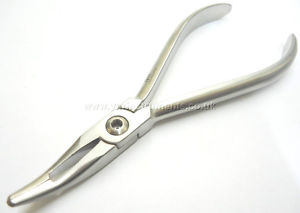
I have toothache as I write. I am in pain.  My tooth needs to come out. I am
attached to it, but, it has done its job and we now need to part company. But don’t let me fool you into thinking that I have taken a completely quick and rational pliersdecision. I have had recurring problems with this particular tooth for some time. Each time the pain flares I know that it needs extracted. My dentist has confirmed this and told me to arrange an appointment whenever I feel it needs to happen. However, just before I make the call, the pain inevitably recedes.  Why is this? Does it really? Do I imagine it has? Do I fool myself that it has? Whatever the reason, I end up putting off thoughts of calling the dentist until the next time the pain returns.

So why is it that we avoid taking action that we know would alleviate our pain? Why is it so hard for people to do the things that are actually good for them?  A study published in the British Journal of Clinical Psychology (2014), Gilbert, McEwan, Catarino, Baiao and Palmeira, suggests that the fear of experiencing a positive outcome might be stronger than the desire to heal.

Continue reading

How much of ourselves do we really control?

“So much of control is not authoritative action but mindful waiting.”               ~Cameron Conaway, Caged: Memoirs of a Cage-Fighting Poet

In his book Drunk Tank Pink, Adam Alter describes a classic study which created quite a stir amongst sports coaches and prison warders, as well as psychologists and parents. The study by Schauss in 1979 suggested that simple exposure to one of two colours made a significant difference to people’s display of strength.  A large group of men were tested, one by one, on a simple strength test.  They were asked to raise their arms in front of their body while a moderate downward and opposite pressure was applied by the researcher to their arms. Nothing remarkable in this so far.  However, when the men were asked to stare at a large piece of cardboard which was coloured pink, their strength was dramatically weaker than when they were asked to stare at a piece of blue cardboard. Blue appeared to leave the subject’s strength intact, while pink depleted their strength.

source: http://www.mobypicture.com/user/PeterM_KOMO/view/10334383

source: http://www.mobypicture.com/user/ PeterM_KOMO/view/10334383

This curious finding quickly found practical application across a number of situations, one of which was the use of pink holding cells in correctional facilities. Angry inmates were reported as being calmed almost immediately by being placed in pink cells. The phenomenon went on to have wider application, and was even used in the world of sport, with boxers wearing pink shorts to ‘weaken’ their opponents, and American football teams painting their opponents’ locker rooms pink in order to reduce the visiting teams’ combativeness just prior to the start of the game.

Psychologists are now aware of many such phenomena which similarly influence our behaviour and our subconscious thoughts. They refer to these forces as cues. 

Within Drunk Tank Pink, the author goes on to chronicle a number of fascinating examples: Continue reading

The Case for Humble Inquiry

“Humble Inquiry is the skill & art of drawing someone out, of asking questions to which you do not already know the answer, of building a relationship based on curiosity & interest in the other person.”  ~ Edgar H. Schein


Doing and telling are valued more in western, industrialised societies than asking and relationship building.  We hire and promote people who can get the job done. Asking for help and admitting that you don’t know are considered taboos to striving and ambitious people.

However, one quality of great leaders that comes out consistently close to the top in studies of leadership is the ability to master ‘humble inquiry’. Leaders who ask questions, who do not pretend to know answers, and who recognise that their people are the real experts, inevitably command greater respect and are considered to be more effective leaders.

RelationshipBlogImage1

And why should this be so? Well, consider the charismatic, know-it-all boss who operates by telling. They may command a type of respect, possibly grounded in fear or concerns of inadequacy.  But, will people be prepared to approach them with problems, issues or concerns?  If relationships have not been established that make it easy for people to share problems, there is a danger that critical information could be withheld, even safety critical or life-and-death information may be held back.

Continue reading

On the Edge of Control

“…Fear is what keeps us from going over the edge……I don’t think what makes a good race car driver is a fearless person. I think it’s somebody that is comfortable being behind the wheel of something that’s somewhat out of control”.                Jeff Gordon

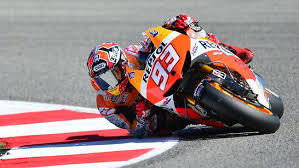
Imagine yourself riding a motorcycle in a high-speed race. You are at full throttle going round the final bend. Only a delicate balance between gravity and centrifugal forces are preventing you from flying off the track. At that moment, are you in control of your bike, or are you out of control? The answer is you are ‘right on the edge’. Too much ‘in control’ and you probably aren’t taking enough risk, and are unlikely to win the race. Too much ‘out of control’ and the likelihood is you are in for a very painful crash.

In 2013, at age 20, Marc Márquez of Spain became the youngest ever World Champion of MotoGP in the final race of the season in Valencia.  For anyone who hasn’t witnessed MotoGP, it is truly breath-taking. Riders appear to defy gravity on the bends, with their knees and elbows scraping the surface of the track at speeds in excess of 300km/hour. marquezExperts have commented on the young Márquez’s style saying, “….he drags his elbow on every corner and leans his body and bike closer to the ground than any of his rivals.”  In this sport, being daring and aggressive is a requirement if you hope to succeed. It would look as though an ability to shut out thoughts of fear, and consequences of getting it wrong, are a necessity in this sport. Yet, at the same time, knowing, in that instant, just what would be too much, too fast, too risky is clearly also a vital (and life-preserving) requirement. As is resilience, perseverance and the ability to learn from (and not be put off by) misjudgements.

During the course of the season, Marquez also set the record for the highest-speed crash in motorcycle racing. While practising his gravity-defying turns, he lost control at 320km/hour. He managed to throw himself from his bike just before it crashed against a concrete wall. He was catapulted into a gravel safety trap at 280km/hour, walked away, and competed in the race the next day.  He is very clear about the fact that he must keep learning and improving.  In the final race of the season, he needed to finish no worse than fourth to secure the title.  He worked out that keeping his two main rivals in front of him, where he could watch their every move, was a better strategy than having them plot and scheme their moves from behind him. He rode a sensible, calculating race, taking less risks, staying out of trouble, and safely securing third place, sufficient to win the World Championship.
Continue reading

We Need a New Breed of Leader

This article was originally published in The e.MILE People Development Magazine in Nov 2014.

Boy In A Suit Drinking Coffee

The leadership mindset that led us into the global economic downturn is not fit for the purpose of leading us back out again.

Recessions encourage cautious mindsets, resulting in refrains such as,  “Batten down the hatches, let the storm blow over, it’s not a time for taking risks, let’s just make sure we are still standing at the end of this – we’ll be in good shape to start again.”  And, “Sorry, there’s no budget for people development. Not the right time to explore new means of production. Not possible to invest in innovation initiatives.” These leadership mantras have become engrained in the psyche of many a business culture during the last five or six years.

Leadership mindsets have themselves become victims of the downturn. The focus on cost reduction and the bottom line has stunted many leaders’ abilities. The question is, how easily will they be able to shift into a frame of mind that embraces growth, change and innovation.  Some who once had visions of new and exciting futures have resorted to being excited by ‘making budget’.

This is not the role of leaders.  Continue reading

Don’t write off the ‘Old Guard’

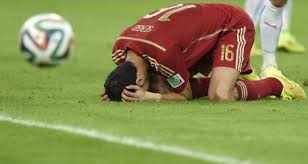
It has been an intriguing summer of sport already, and (thankfully) it has a long way still to go. What has struck me as interesting is that it has resulted in a large number of teams and individuals being toppled from the top spot.  In football’s World Cup we saw a shock early departure of Spain from the tournament.
spain defeated
In tennis, at Wimbledon, we saw last year’s champion, Andy Murray, and the world’s number one seed, Rafael Nadal, exit the competition – both beaten by younger rising stars of the game. In the women’s competition, we also saw the departure of Serena Williams, Maria Sharapova, and other past champions. Here, as in the men’s game, there is an exciting emergence of new young talent challenging the ‘old guard’.  I have no doubt that the rest of the summer’s sport, in events such as the Tour de France, golf’s Open Championship at Hoylake and the Commonwealth Games in Glasgow, will throw up other demises, departures, abdications and shock defeats of established past winners.
While the emergence of new talent is both exciting and essential for the good of the sport, what is equally, if not more, fascinating is how the so called ‘old guard’ respond to that challenge, and the hugely important leadership role they play in creating the next generation of champions. Despite the performances of the emerging stars,  the four semi-finalists in the World Cup are all established ‘giants’ of the game, and the eventual Wimbledon winners in both the men’s and women’s finals this weekend were also past winners, and amongst the pre-competition favourites.

Which past champions disappear, slide off into the sunset, and enjoy the dreams of their past glories, and which go back to the gym, come back stronger, fitter, fresher and ready to mount another bid?

Continue reading

Congratulations

A huge congratulations to the three winners of the competition to win signed copies of “The Vital Edge”.

The winners are:-Screen Print Book Cover

Shaun Coffey
Sheila Richards
Barry Millar


“The Vital Edge” will be winging its way to them shortly.

All three winners nominated truly awesome sports people as the ones who had inspired them most.

Continue reading

Win a copy of The Vital Edge

To coincide with the release of “The Vital Edge” on Amazon, the start of the Football World Cup, and a great summer of sport, I am holding a competition in which THREE signed copies of my new book will be won. Read on to find out more…

Continue reading