The Present Serves us Well

I have followed Andy Murray’s career, and his emotional journey, since he first burst onto the scene as a gangly teenager. This year will be his last as a professional tennis player, and he will leave behind so many great stories, and great lessons, and not just relating to Tennis. I am leaving this previous post here, as I think it is still hugely relevant, and I want to thank Andy for all the entertainment, thrills and sheer drama, he has served up over all these years.

Recognise the fact that the past is past, and that soon you won’t have any future left – so you really might as well be here. It’s not so bad. Often enough, it’s wonderful. And in any case, there’s nowhere else to be.”   Oliver Burkeman

Reconsidering Flow

“I really enjoyed being in that zone. Each moment of flow is quite addictive because it’s such an incredible place to be. You are just in the moment, just focusing on what you’re doing right now.” Christian Meier

Over the years I have written a number of articles on Flow. See this article from 2013. But, like a number of psychological concepts, it can often be elusive to pin down. Some of my clients get it right away and will rattle off experiences where they are sure they experience it. Others, however, clearly feel no connection, and wonder, in puzzlement, at how difficult situations, and even mildly painful moments, can result in flow.

Whenever I read of an account where someone tries to explain their experience of flow, I like to capture it as an addition to the body of examples. You never know which ones will land for people. This one struck me as interesting. Christian Meier describes what it means to him.

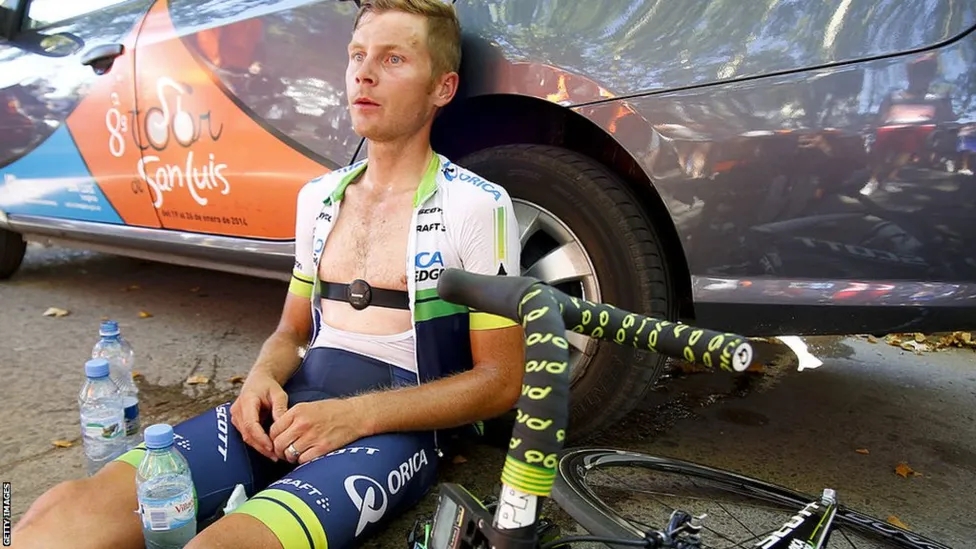
He speaks about his time as a domestique in a Grand Tour cycling team, where his role was never to win, but to be in the service of others. This demanded that he endure pain and discomfort, with no expectation of personal glory. Most people would describe this as “suffering in order to help others”, although Christian rejects the word “suffering”, preferring to think of himself as being in control of what he is doing, regulating the level of personal sacrifice he is prepared to endure. His journey from Grand Tour cycling to Ultra-running is fascinating, and along the way he offers some great insights into what it means for him to be in flow.

He characterizes the feelings he has experienced as being addictive. We don’t all have to be elite athletes or adrenaline junkies to know what that feeling is like. Indeed, meditation, yoga, and other similarly ‘mindful’ practices, generate a sense of calm, being in the moment, focusing on the present, and attending only to the here and now.

Have a read at what Christian has to say in the attached article. I’d be fascinated to hear your insights and what experiences you have had with the state of Flow?

Investing in People

Reading an article in The Scottish Review this week reminded me of some organisations’ baffling approach to learning, growth and development of their people. It may seem obvious to most readers of this post that investing in the ongoing growth and development of your people is a ‘no-brainer’. However, it is sadly not always the case, and too many firms, institutions and businesses scrimp on people and their learning, until demands are forced upon them, whereupon it may be too late.

Dr Mary Brown’s son asked his company for training over a long period of time but all requests were met with stony silence. On securing a post with another company, which did place training of its staff as a high priority, his current employer suddenly sprang into action and offered him inducements to stay. It was too late. He left.

But this is not unusual. Too many managers see training and development as a luxury ‘add-on’, rather than an essential part of every successful organisation’s strategy. A rapidly growing proportion of the younger generation entering the workforce place training, continuous learning and coaching even higher than starting salary, when it comes to what attracts them to new job opportunities.

A backward thinking manager once said to their colleague,

“But we can’t throw all that expensive training at them. What if they take it all, learn all this new stuff, and then decide to up and leave?”

The wise colleague said, “Maybe! But just think how much more worrying it would be if you don’t, and they stay?”

Win a copy of The Vital Edge

To coincide with the release of “The Vital Edge” on Amazon, the start of the Football World Cup, and a great summer of sport, I am holding a competition in which THREE signed copies of my new book will be won. Read on to find out more…

Continue reading

“The Vital Edge” has arrived

My book, “The Vital Edge”, can now be purchased at Lulu.com (it will be available through other distributors at a later date).

dt-improved-performance

Using anecdotes and metaphors from sport, combined with psychology and behavioural models, the book provides guidance and pointers as to how business performance can be improved and how common de-railers can be overcome. It is intended to be an easy to read and entertaining journey through a variety of sports, with an intriguing dive into subject areas as diverse as motivation, optimism, ‘flow’, neuroscience, leadership, teamwork and collaboration. It will include worksheets with ponder questions at the end of each chapter allowing the book to be used individually or as part of team-building, leadership development and coaching programmes.

I recently offered sneak previews to readers.

One reviewer commented: “Being an athlete, an improving coach and a sports policy maker makes your book talk to me in a very personal way. It’s as if you have written this book just for me. I love it so much putting it down is a problem. All the elements that bind sport and business are there.” 

I would love to hear what you think of the book. You can of course leave comments and feedback, as well as ratings, on the Lulu.com page, and it would be great if you did.  In addition, you can send me comments directly using the Contact Us Page.

Many thanks.  I hope you enjoy it.

Louis

“The Vital Edge” is coming

Make a note of the date. The week commencing 14 April 2014 will see the release of

“The Vital Edge”……. (Sporting Mindsets for Business Performance)

dt-improved-performance

Using anecdotes and metaphors from sport, combined with psychology and behavioural models, the book provides guidance and pointers as to how business performance can be improved and how common de-railers can be overcome. It is intended to be an easy to read and entertaining journey through a variety of sports, with an intriguing dive into subject areas as diverse as motivation, optimism, ‘flow’, neuroscience, leadership, teamwork and collaboration. It will include worksheets with ponder questions at the end of each chapter allowing the book to be used individually or as part of team-building, leadership development and coaching programmes.

I recently offered sneak previews to readers.

One reviewer commented: “Being an athlete, an improving coach and a sports policy maker makes your book talk to me in a very personal way. Its as if you have written this book just for me. I love it so much putting it down is a problem. All the elements that bind sport and business are there.” 

A number of people have requested details of how to get hold of the book on its release.  I will make sure you get those details. If you would like to add your name (and contact details) to that list please provide your details using the Contact Us Page and I will get back to you personally.


Louis Collins, Leadership Development Coach


Perform like a Champion Every Day

I’m delighted to say that I have a publication about to be released ~ to be called………….

“The Vital Edge”

Using anecdotes and metaphors from sport, combined with psychology and behavioural models, the book provides guidance and pointers as to how business performance can be improved and how common de-railers can be overcome. It is intended to be an easy to dt-improved-performanceread and entertaining journey through a variety of sports, with an intriguing dive into subject areas as diverse as motivation, optimism, ‘flow’, neuroscience, leadership, teamwork and collaboration. It will include worksheets with ponder questions at the end of each chapter allowing the book to be used individually or as part of team-building, leadership development and coaching programmes.

I recently offered sneak previews to readers.  Many thanks to those of you who took up this offer and for your invaluable feedback. It was most appreciated, and has helped me make changes to the preview version that I am sure will improve the final product.  You know who you are.

One reviewer commented: “Being an athlete, an improving coach and a sports policy maker makes your book talk to me in a very personal way. Its as if you have written this book just for me. I love it so much putting it down is a problem. All the elements that bind sport and business are there.” 

If you would like me to send you details of where and how to get hold of the book as soon as it is released, please drop me a line with your contact details using the Contact Us Page and I will get back to you personally.


Louis Collins, Leadership Development Coach


Performance dips. Is it all just statistics?

source: wikispaces.psu.edu

source: wikispaces.psu.edu

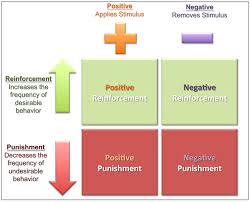
In the age-old debate about which works best – positively rewarding desired behaviours or punishing non-desired behaviours – we need to be careful that we don’t fall into the trap of making a causal attribution that does not actually exist. We may be observing nothing more than a mere consequence of statistical distribution known to students of statistics as ‘regression to the mean’.

This is described in the excellent book Thinking, Fast and Slow by Daniel Kahneman (p 175), where he describes an Air Force trainer who objected to Kahneman making the claim that rewarding improved performance was more effective than punishing mistakes. His objection was based on his experience. When he positively praised someone for performing a manoeuvre well, on the next occasion the individual inevitably performed worse. On the other hand, when someone did badly, he would blast a condemnation into their ear which, in the view of the trainer, always caused an improvement in performance.  Ergo, negative reinforcement works more effectively than positive.

source; aperfectchef.hubpages.com

source; aperfectchef.hubpages.com

And, so it might seem, on first inspection in this example. That is, until you think about these situations as being distributed levels of performance around a mean. It makes sense that one single piece of outstanding performance is very likely to be followed by one that is closer to the mean than before. Likewise, an extremely poorly executed manoeuvre is more than likely an aberration, and (even without the blast in the ear) is likely to result in an improvement, and a performance closer to the mean on the next occasion.

What the trainer had stumbled upon was a rule of statistical distribution, and not a profound principle of psychological reinforcement theory.

What we do know, however, is that the brain is wired in such a way as to be biased toward negativity.  This is a consequence of our evolutionary journey and is one of the reasons that we have survived as a species.  It was critical, and indeed life-saving at times, for our ancestors to be alert to danger, to be primed to detect predators, to see risks everywhere. Neuroscience demonstrates that our emotional centres are biased toward negative emotions, and, for this reason, positivity does face an uphill battle. It is working against the tide of our emotional make-up, and to overcome the bias (or at least redress it) we need to experience at least a 3 to 1 ratio of positive thoughts or experiences over negative ones on a daily basis.  (for a deeper treatment of this area see the previous post Overcoming the Brain’s Negativity Bias).

Negative reinforcements and punishments have their place in a world associated with danger and risk, but in a world where our safety is less of an issue, and the emphasis is on how well we thrive, grow and develop, the powerful effects of positive reinforcement are in the generation of optimism, creativity, empowerment and confidence.

*******************************************

If you feel that you or members of your management team would benefit from exploring ways to make substantial improvements to personal and collective effectiveness and productivity, please do get in touch.       Simply  submit  your contact details on the Contact Us page and I will be delighted to get in touch for an informal initial chat.

About me:  I enable people in business to operate more successfully.  You may be struggling to implement corporate strategy, you may want to get more productivity out of your teams but don’t know where to start,  or your people may not be having as effective conversations with each other as they could be. I will work with you to enable you to formulate more effective ways of leading, to raise awareness of blockers to successful ways of working, and ultimately to help you to lead more successfully.  

.  

We’re rewarding the wrong behaviours

The subject of bankers and their bonuses has raised its ugly head again this week. Yes, it is getting kind of boring.  If only because nothing new ever comes out of these media-driven examinations.  All we really get is a platform for the ‘public’ (or sections of the public) to express their disgust. What is there new to say?  Well, one or two thoughts spring to my mind (albeit not necessarily new).

First, the mass demonization of everyone who works in the banking industry is unhelpful and unfair. Indeed, a sizeable majority of those who work for the bank in the news this week, operate a long way (both physically and financially) from the lofty heights of the “City Bonuses” often quoted by the press. The people who work at the front desks of the provincial banks up and down the high streets, or in the call centres around the world, or in the admin departments at HQ, are not earning big bucks, and in the main, will never see a bonus no matter how good a job they do.

Second, the bonus system (not just in banking), one of the key incentivisation tools at the very heart of capitalism, is profoundly broken.

Let’s assume for a moment that monetary bonuses do have some merit as a means of incentivising staff to do a better job than they otherwise would do.  At the very least, one would expect that the measure of success used to decide whether the bonus should be paid, would be one that resulted in a direct improvement for the customer. That may be in the form of better value (financially), better quality or better service, but it should be something that is tangible and agreed (externally) as having resulted in that improvement.  

What has become all too prevalent in the crazy ‘bonus-driven culture’ of our businesses and organisations, is an industry of internally-driven, inward-looking, process improvement measures, which have little or no relevance to the end customer, or recipient of the service. Internal departments, in order to prove their value and viability, concoct complicated measures, based on process efficiency, productivity enhancements, employee engagement and so on. All worthwhile activities, no doubt, but irrelevant if the end customer experience is not impacted and does not improve. Despite this, great effort is expended in agreeing annual goals and targets, and even greater effort in gathering evidence to prove they have been achieved, regardless of whether the end customer is receiving improved service, value or product innovation.  The system has lost its way, and lost touch with its original purpose.  

Ah, original purpose. What was that anyway?   Continue reading

What’s a genius anyway?

Pablo Sarasate (violin virtuoso) stated “A genius!  For 37 years I’ve practiced 14 hours a day, and now they call me a genius” (cited in Simonton, 1999) *.

Last week I wrote a post called ‘Stroke of Genius’ and it attracted a pretty high level of interest. Clearly a popular topic. And many comments I received were along similar lines, mentioning that identifying talent in the first place is often the most difficult challenge faced. I figured that I owed it to myself and readers to address this area in today’s post.

source: blog.kennedyviolins.com

source: blog.kennedyviolins.com

Well, right up front, we need to think about recruitment.

Recruiting talent
Do you know what you are looking for in the first place?

This is not as simple a question as it might first appear. For example, if you are a company, can you answer the following questions?

  • What does the company look like today, and what will it look like in two, three, or four years time?
  • What is the company’s medium to long term strategy?
  • What sort of people will it need to succeed in that strategy? Same as today or very different talent?
  • What sort of roles will be most critical in the future? And how much market demand will there be for those people?
  • What aptitudes will it take to operate in these future positions?

Are the people who are making recruitment decisions and identifying talent sufficiently aware of the future strategic plans for the business? Or are they blindly cultivating talent based on a model of today’s business? Continue reading