Is The Appraisal System Dead?

If, as is reported, as many as one third of U.S. companies have abandoned the traditional appraisal system (ref:The Performance Management Revolution), and the signs are that more and more are joining the revolution, what is the future of performance management? How will companies ensure that people do what is expected of them in the future? How will managers know who’s good and who’s not? How will they advise on development, or decide who to sack and replace?

Major players such as Dell, Microsoft and IBM, as well as previous champions of the
forced ranking system such as GE, are at the vanguard of new approaches to retaining and developing talent.  These companies are responding to many issues and criticisms which have been levelled at traditional performance management systems. In some organisations they have become enormous consumers of people’s time. With  the move to
flatter organisational structures and virtual or globally dispersed teams, supervisors have had to contend with larger and larger teams. The answer to this problem in some companies has been to turn the job of performance management over to ‘specialist’ people creativitymanagers, who do little else other than manage the entire cycle, quarter after quarter. Ranking, levelling, forced distributions, identifying rising stars, identifying laggards, assessing delivery against stretch targets, calculating the distribution of the bonus pot, and starting the whole cycle again.  This has become an industry in its own right, and one that delivers no core benefit to the customer or the shareholder.
A number of factors have played a part in driving the shift we are now seeing.  Continue reading

The Quiet Power of Selflessness

To me, teamwork is the beauty of our sport, where you have five acting as one. You become selfless ~ Mike Krzyzewski

Much continues to be written about what marks out successful teams from those that fail. Most of us can think about our own experiences of both, and, no doubt, recall factors that contributed to both positive and negative experiences.

source: thevalleys.co.uk/

source: thevalleys.co.uk/

The Olympic Games in Rio de Janeiro have been providing us with thrilling achievements, but while they shine a light on athletic stars and big names such as Usain Bolt, Simone Biles and Laura Trott, I am fascinated by the armies of unsung heroes. Team members who are vital parts of the success but who do not receive the same media attention. This can be coaches, trainers, physios and sometimes fellow athletes, who sacrifice themselves for the greater good. They may not receive the Olympic medal or the adulation, but their contribution is vital, often displaying a level of selflessness that appears extraordinary. I have touched upon the role of the ‘domestique’ in team cycling in previous posts, which illustrate this point further.

But, let’s take a closer look at this. The mental state required to achieve this is one of ‘selflessness’. And, to exist happily in this state, one must be more concerned about achieving the eventual outcome than about personal recognition for it being achieved. In other words, the outcome is the most important thing, not your own psychological state.

Let’s think Continue reading

Mining for Treasure

You could be excused for wondering whether leadership has gone out of fashion right now. Whether it be politics, business or sport, wherever you look, there appears to be a vacuum at the top, and much discrediting of those leaders who remain.

What could be going on?  Well, I think one of the problems is that we are mixed up about
what we want from our leaders. Perhaps we expect too much of them. Should they have all the answers? Should they be all-seeing and all-hearing? Is it reasonable to expect them to set strategy, direction, plan, implement, review, report and make key decisions, as well as dispense wisdom to all who seek it?   Of course not.  But, despite recognising this as impractical, and even unhealthy, as a society we are still encouraged to demand unequivocal and unwavering surety from our leaders.

Pirate_map

At this time, perhaps more than at any time in the past, we need a different set of skills from our leaders. We live in a VUCA (volatility, uncertainty, complexity and ambiguity) world where knowledge is distributed more widely than ever, where more information is instantly available than at any time in history, yet despite all that information, decision-making has never been more difficult. Those who come out of the charismatic ‘all-knowing’ school of leadership present us with dangers. Continue reading

Get Personality Out Of Your Way

“Real knowledge is to know the extent of one’s ignorance” ~ Confucius

Fundamentally, one of the main aims of coaching is to assist people to have a greater understanding of their self, to live a life that is congruent with their values, and ideally one that is both purposeful and fulfilling. Not much to ask, right?

One problem that lies in the way of fulfilling this quest is a little thing called ‘Personality’.  Prof. Tomas Chamorro-Premuzic went so far as to say that “Coaching tries to inhibit the effects of personality on behaviour” (ref: ICF Advance 2015: Science of Coaching Conference).

What is it about personality that causes him to make that assertion? In many ways it sounds counter-intuitive. After all, surely the full discovery and expression of our personalities is something that we seek? The world is, after all, full of people trying to find themselves. According to Prof. Chamorro-Premuzic, the science tells us something different. It would appear that our personality operates in a number of ways, many of which make it tough for us to change our ‘typical’ ways of behaving.

Let’s look at some of the things he highlights about personality:- Continue reading

No Time to Think

Perhaps ‘the’ most tantalising allure of any advancement in engineering or technology through the ages has been the promise of saving us time. Cars, trains and planes certainly get us places faster than horses ever did. Bridges and tunnels allow us to take short-cuts over rivers and through mountains, saving us hours. Advances in IT and robotics mean that tasks previously handled manually have been automated with exponential levels of increased productivity.

Why, with so much technology and time-saving gadgetry at our fingertips, do people still present at coaching sessions with issues and concerns about their ability to manage their time? After all, our lives have never appeared to be more organised ~ or perhaps I should say digitised!   More and more of us are hooked up to the Net from morning to night.

Our smartphones and tablets wake us up, we check our diary for appointments and read our messages before getting out of bed. We catch up on missed shows on iPlayer or Stitcher while we commute to work. We juggle collaborating on Sharepoint, with watching company Webcasts, while occasionally dipping into our personal Instagram, Twitter or WhatsApp accounts. We may even check in on Foursquare while grabbing lunch, and be just as likely to choose where to go by WiFi availability as the quality of the food. On the way home we might burn some carbs, having gained access with our fingerprint or iris, which are digitised on the gym’s customer database. We immediately wire ourselves up to the screens on the machines so as to catch up on news, or check Facebook activity.  And when we get home, after a microwaved dinner, and a quick skype chat with your mum, our relaxation and wind down time may well include logging on remotely to your work’s email to ‘finish off’ a few things, and give yourself a fighting chance of making a clean start on things again in the morning (fat chance!).

Continue reading

Fail Big, Fail Fast, Fail Often!

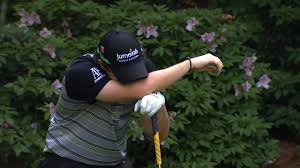
In the week of the 2015 US Masters golf championship, many eyes are on Rory McIlroy. In 2011, an even younger McIlroy was on the verge of making golfing history. He carried a 4-shot lead into the final round, having played sublime golf for the first three days of the championship. However, on his final round he shot the worst round in history by any professional golfer leading after the 3rd round of the Masters. Not the piece of history he was after. Rory suffered what can only be described as a ‘meltdown’ in the unforgiving glare of the TV cameras and the golfing world.

Some pundits questioned his bottle, his psyche, his temperament, and his ‘big game’ mentality. Some said, “history shows that players who cough up big leads in big tournaments often don’t get another chance, their psyches permanently shattered by thoughts of what might have been.” (TwinCities.com

But, McIlroy went on to win 4 majors in the next three years, starting with the U.S.Open championship, just a few short months after his Augusta meltdown. He achieved his victory in some style too, setting a new championship record and becoming the youngest winner since 1923.
Continue reading

On the Edge of Control

“…Fear is what keeps us from going over the edge……I don’t think what makes a good race car driver is a fearless person. I think it’s somebody that is comfortable being behind the wheel of something that’s somewhat out of control”.                Jeff Gordon

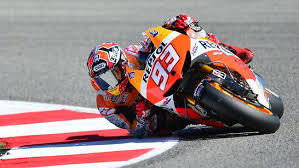
Imagine yourself riding a motorcycle in a high-speed race. You are at full throttle going round the final bend. Only a delicate balance between gravity and centrifugal forces are preventing you from flying off the track. At that moment, are you in control of your bike, or are you out of control? The answer is you are ‘right on the edge’. Too much ‘in control’ and you probably aren’t taking enough risk, and are unlikely to win the race. Too much ‘out of control’ and the likelihood is you are in for a very painful crash.

In 2013, at age 20, Marc Márquez of Spain became the youngest ever World Champion of MotoGP in the final race of the season in Valencia.  For anyone who hasn’t witnessed MotoGP, it is truly breath-taking. Riders appear to defy gravity on the bends, with their knees and elbows scraping the surface of the track at speeds in excess of 300km/hour. marquezExperts have commented on the young Márquez’s style saying, “….he drags his elbow on every corner and leans his body and bike closer to the ground than any of his rivals.”  In this sport, being daring and aggressive is a requirement if you hope to succeed. It would look as though an ability to shut out thoughts of fear, and consequences of getting it wrong, are a necessity in this sport. Yet, at the same time, knowing, in that instant, just what would be too much, too fast, too risky is clearly also a vital (and life-preserving) requirement. As is resilience, perseverance and the ability to learn from (and not be put off by) misjudgements.

During the course of the season, Marquez also set the record for the highest-speed crash in motorcycle racing. While practising his gravity-defying turns, he lost control at 320km/hour. He managed to throw himself from his bike just before it crashed against a concrete wall. He was catapulted into a gravel safety trap at 280km/hour, walked away, and competed in the race the next day.  He is very clear about the fact that he must keep learning and improving.  In the final race of the season, he needed to finish no worse than fourth to secure the title.  He worked out that keeping his two main rivals in front of him, where he could watch their every move, was a better strategy than having them plot and scheme their moves from behind him. He rode a sensible, calculating race, taking less risks, staying out of trouble, and safely securing third place, sufficient to win the World Championship.
Continue reading

The Power of Optimism

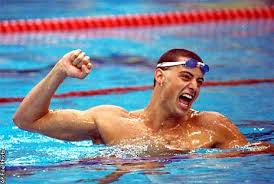
A great deal of pressure was heaped on the young shoulders of Matt Biondi in the run up to the Seoul Olympics in 1988.  He was one of the United States great hopes for multiple medals in the swimming pool. Comparisons were being drawn with the legendary Mark Spitz who had won seven golds in the 1972 games.    In his first event, the two-hundred-metre freestyle, he finished a creditable third.  Great by most people’s standards, but disappointing for Biondi and the hard-to-please media back home.  The next event was the one-hundred-metre butterfly.  Having blasted into an early lead, and dominated the race all the way, he made an error of judgement on his final stroke. One more stroke squeezed in with a metre to go would have seen him home, but he chose to coast and stretch for the wall instead.  In doing so he was pipped by a fingernail and beaten into second by an unknown swimmer, Anthony Nesty, from Surinam, not a country renowned for swimmers, let alone gold medals.

biondiThere was much gnashing of teeth and criticism levelled at Biondi from afar. This was not the start to an assault on seven gold medals that the American public expected, and many started to write him off.   There was at least one person who did not, however.  Marty Seligman, the father of Positive Psychology, watching proceedings on his television, had belief, and evidence, that Biondi had what it would take to come back from these disappointments and go on to achieve success.  Continue reading

Don’t write off the ‘Old Guard’

It has been an intriguing summer of sport already, and (thankfully) it has a long way still to go. What has struck me as interesting is that it has resulted in a large number of teams and individuals being toppled from the top spot.  In football’s World Cup we saw a shock early departure of Spain from the tournament.
spain defeated
In tennis, at Wimbledon, we saw last year’s champion, Andy Murray, and the world’s number one seed, Rafael Nadal, exit the competition – both beaten by younger rising stars of the game. In the women’s competition, we also saw the departure of Serena Williams, Maria Sharapova, and other past champions. Here, as in the men’s game, there is an exciting emergence of new young talent challenging the ‘old guard’.  I have no doubt that the rest of the summer’s sport, in events such as the Tour de France, golf’s Open Championship at Hoylake and the Commonwealth Games in Glasgow, will throw up other demises, departures, abdications and shock defeats of established past winners.
While the emergence of new talent is both exciting and essential for the good of the sport, what is equally, if not more, fascinating is how the so called ‘old guard’ respond to that challenge, and the hugely important leadership role they play in creating the next generation of champions. Despite the performances of the emerging stars,  the four semi-finalists in the World Cup are all established ‘giants’ of the game, and the eventual Wimbledon winners in both the men’s and women’s finals this weekend were also past winners, and amongst the pre-competition favourites.

Which past champions disappear, slide off into the sunset, and enjoy the dreams of their past glories, and which go back to the gym, come back stronger, fitter, fresher and ready to mount another bid?

Continue reading

Congratulations

A huge congratulations to the three winners of the competition to win signed copies of “The Vital Edge”.

The winners are:-Screen Print Book Cover

Shaun Coffey
Sheila Richards
Barry Millar


“The Vital Edge” will be winging its way to them shortly.

All three winners nominated truly awesome sports people as the ones who had inspired them most.

Continue reading