Congratulations

A huge congratulations to the three winners of the competition to win signed copies of “The Vital Edge”.

The winners are:-Screen Print Book Cover

Shaun Coffey
Sheila Richards
Barry Millar


“The Vital Edge” will be winging its way to them shortly.

All three winners nominated truly awesome sports people as the ones who had inspired them most.

Continue reading

Win a copy of The Vital Edge

To coincide with the release of “The Vital Edge” on Amazon, the start of the Football World Cup, and a great summer of sport, I am holding a competition in which THREE signed copies of my new book will be won. Read on to find out more…

Continue reading

Dip into “The Vital Edge”

Fancy a taster of what you can expect from my recently released book, “The Vital Edge”? Have a look through the attached presentation to see what topics are covered and which sports people feature. If you have already purchased the book, many thanks for doing so. I’d love to hear your thoughts and comments on the subjects raised in “The Vital Edge”, either by leaving a review or rating on the Lulu.com site or here in the comments section of this blog.

“The Vital Edge” has arrived

My book, “The Vital Edge”, can now be purchased at Lulu.com (it will be available through other distributors at a later date).

dt-improved-performance

Using anecdotes and metaphors from sport, combined with psychology and behavioural models, the book provides guidance and pointers as to how business performance can be improved and how common de-railers can be overcome. It is intended to be an easy to read and entertaining journey through a variety of sports, with an intriguing dive into subject areas as diverse as motivation, optimism, ‘flow’, neuroscience, leadership, teamwork and collaboration. It will include worksheets with ponder questions at the end of each chapter allowing the book to be used individually or as part of team-building, leadership development and coaching programmes.

I recently offered sneak previews to readers.

One reviewer commented: “Being an athlete, an improving coach and a sports policy maker makes your book talk to me in a very personal way. It’s as if you have written this book just for me. I love it so much putting it down is a problem. All the elements that bind sport and business are there.” 

I would love to hear what you think of the book. You can of course leave comments and feedback, as well as ratings, on the Lulu.com page, and it would be great if you did.  In addition, you can send me comments directly using the Contact Us Page.

Many thanks.  I hope you enjoy it.

Louis

“The Vital Edge” is coming

Make a note of the date. The week commencing 14 April 2014 will see the release of

“The Vital Edge”……. (Sporting Mindsets for Business Performance)

dt-improved-performance

Using anecdotes and metaphors from sport, combined with psychology and behavioural models, the book provides guidance and pointers as to how business performance can be improved and how common de-railers can be overcome. It is intended to be an easy to read and entertaining journey through a variety of sports, with an intriguing dive into subject areas as diverse as motivation, optimism, ‘flow’, neuroscience, leadership, teamwork and collaboration. It will include worksheets with ponder questions at the end of each chapter allowing the book to be used individually or as part of team-building, leadership development and coaching programmes.

I recently offered sneak previews to readers.

One reviewer commented: “Being an athlete, an improving coach and a sports policy maker makes your book talk to me in a very personal way. Its as if you have written this book just for me. I love it so much putting it down is a problem. All the elements that bind sport and business are there.” 

A number of people have requested details of how to get hold of the book on its release.  I will make sure you get those details. If you would like to add your name (and contact details) to that list please provide your details using the Contact Us Page and I will get back to you personally.


Louis Collins, Leadership Development Coach


Perform like a Champion Every Day

I’m delighted to say that I have a publication about to be released ~ to be called………….

“The Vital Edge”

Using anecdotes and metaphors from sport, combined with psychology and behavioural models, the book provides guidance and pointers as to how business performance can be improved and how common de-railers can be overcome. It is intended to be an easy to dt-improved-performanceread and entertaining journey through a variety of sports, with an intriguing dive into subject areas as diverse as motivation, optimism, ‘flow’, neuroscience, leadership, teamwork and collaboration. It will include worksheets with ponder questions at the end of each chapter allowing the book to be used individually or as part of team-building, leadership development and coaching programmes.

I recently offered sneak previews to readers.  Many thanks to those of you who took up this offer and for your invaluable feedback. It was most appreciated, and has helped me make changes to the preview version that I am sure will improve the final product.  You know who you are.

One reviewer commented: “Being an athlete, an improving coach and a sports policy maker makes your book talk to me in a very personal way. Its as if you have written this book just for me. I love it so much putting it down is a problem. All the elements that bind sport and business are there.” 

If you would like me to send you details of where and how to get hold of the book as soon as it is released, please drop me a line with your contact details using the Contact Us Page and I will get back to you personally.


Louis Collins, Leadership Development Coach


Sporting Lessons

alipanettarorybrailsfordRegular readers will know that sport features extensively in the leadership lessons & metaphors that I allude to.  I’ve decided to compile these sporting examples into book format and, should there be sufficient interest, I will aim to publish.      

. I would be delighted if you would care to take the time to                                                  look over either a sample chapter or, for the seriously dedicated amongst you, a draft of the entire book.

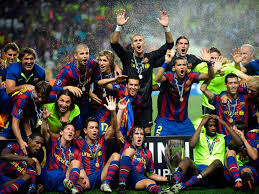
barca

You can get a copy of a sample chapter easily by using this link.

The full draft is available at this link but you will need to drop me a request for a password to allow you to download the PDF.  Just send me a request either through a comment to this post or by using the contact us page.

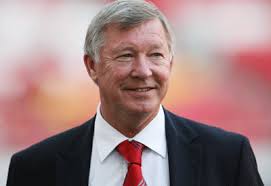
ferguson

I hope you enjoy what you read.  I have just one small request to make in return.  I would love to have your feedback. All comments are welcome.  Any suggestions you have for improvements, for inclusions, for removals, or any other thoughts or comments will be very much appreciated.  Do you think this concept or format will have appeal?  If so, to whom?

murray wigginsOf course, whether you choose to read just one chapter or the entire compilation, I will be happy if you enjoy it, even if only to relive some great sporting moments.  

If you extract even more value than that, then I will be delighted. Do let me know.  

Happy New Year for 2014.   woodward


How close are you to your ‘A’ game?

I was intrigued by something that Rory McIlroy said recently in an  interview following his widely-reported ‘early exit’ from the Honda Golf Classic in Florida.  Clearly he has been going through a troubled time, with speculation bouncing between whether it is down to his new clubs deal, his relationship with tennis star Caroline Wozniaki, or, as he claimed in Florida, a troublesome wisdom tooth.

source: sports.yahoo.com/blogs/golf-devil-ball-golf

source: sports.yahoo.com/blogs/golf-devil-ball-golf

He summed up how he feels when he is off his game in very simple terms.  “I always think when I’m playing bad that it’s further away than it is.” (meaning his best game). I sense this is true for many of us, in all walks of life.  Rory went on to say “….If I have a bad round, it’s sort of like the end of the world.”   This ‘catastrophizing’  form of thinking, is, I am sure, familiar to many of us. When some aspect of our life (not always one that is most critical) is not working as well as we’d like, it can become magnified and generalised, to the extent that it contaminates our thinking and self-perception of other aspects of what we do and who we are.   Continue reading

Employee Engagement and the Half-Time Team Talk

Employee Engagement. Hackneyed phrase or holy grail? Having recently read the MacLeod/Clarke report to the British Government (Engaging for Success: enhancing performance through employee engagement) on the subject, I am convinced that a) there is currently no better way of describing it and b) it is fundamentally important. To quote from the opening section, “If it is how the workforce performs that determines to a large extent whether companies or organisations succeed, then whether or not the workforce is positively encouraged to perform at its best should be a prime consideration for every leader and manager, and be placed at the heart of business strategy.”

I will leave you to delve into the rich findings, recommendations and case studies in the report, and I do recommend it to anyone with a passing interest in the subject of employee engagement. Here, I will simply draw out some of the barriers organisations feel inhibit effective engagement, together with the key principles highlighted that are imperative for successful implementation.

Barriers

  • Lack of Awareness.  Some leaders are not aware of employee engagement and what it can do for them. Others are reluctant to get involved, concerned that it may be seen as too ‘soft or fluffy’.
  • Uncertainty about Starting.  Some who are interested are unsure how to get involved and started, sometimes fearful that it has to involve ‘buying a product’ and therefore entail expense.
  • Culture.  The prevailing culture and working practices get in the way of delivering engagement, even when leaders place great emphasis on it. Managers may not share the belief, and attempts to implement can be resisted.
  • Underestimating engagement. Some see employee engagement as another job on a tick-list that is achieved when the annual staff survey is completed.

Enablers

  • Leadership.  The importance of a Leadership vision (or ‘strategic narrative’ as it is described in the report) cannot be overstated. A widespread understanding of purpose, and each person having a clear view of how their role contributes to that purpose is paramount.
  • Engaging Managers.  While it is key that Leaders set the purpose, vision and direction, it is the engaged manager who is at the “heart of success” in any workforce.  As one contributor to the report said, “the line manager is the lens through which I see the company and the company sees me.”
  • Voice.  Providing employees with a voice – so that they are listened to, are not fearful of raising issues, know that their views will be heard and could be used to help define and change the direction of the organisation.  This is, of course, a cultural challenge for many organisations where ‘token gesture’ attempts to implement ‘speak up’ policies have failed to penetrate the DNA.
  • Integrity.   Consistency across the organisation between stated values and behaviours. “If an employee sees the stated values of an organisation being lived by the leadership and colleagues, a sense of trust in the organisation is more likely to be developed, and this constitutes a powerful enabler of engagement.”

Regular readers of my posts will know that I enjoy looking to sport for leadership lessons and parallels. So, this week, my attention turns to Continue reading

Breaking Barriers

As the London Olympic Games draw towards their close, it has been exciting to watch records tumble and barriers being broken. Of course, not all barriers are measured by distance or by the clock. Some of the most fascinating are psychological barriers.

Andy Murray appears to have broken a personal barrier in winning his Tennis singles gold medal. Regular readers will have read Learning from Wimbledon a few short weeks ago which described the progress Murray was making with his Inner Game. At the Olympics he buried the anguish he experienced a month ago, by defeating two of his fiercest opponents in quick succession, something he has found tough to do previously. He played unbelievably well, out-hitting, out-moving and out-thinking both Djokovic and Federer. A huge breakthrough, which may well see Murray move on to achieve much more success in future championships. .

Michael Phelps broke the barrier of all-time most decorated olympian – 22 medals – 18 of which are gold. This is a phenomenal achievement, even in a sport that provides more opportunity than most to multi-event. Phelps has set the bar at a new height for someone else to emulate in years to come.

Oscar Pistorius broke a barrier of a very different kind, becoming the first double amputee to ever take his place in an Olympics starting line up. He qualified from his heat to reach the semi-final of the 400m. A remarkable story which has cleared the way for future paralympians to stake their claim to be able to qualify for full olympic participation. New barriers will no doubt have to be overcome, but Pistorius has shown it is possible.

Some barriers are broken with increasing regularity, most notably in the swimming pool and in the velodrome, the latter no doubt assisted by advances in cycle technology. Others stand defiantly unobtainable, such as the long jump record which has stood for over 20 years. What fascinates me most of all is the psychological nature of breaking barriers.

Perhaps the best known example of this in the sporting arena is that of the mythical 4 min mile ‘barrier’. Until 1954, many actually believed that it was impossible, and perhaps even dangerous (or fatal) for anyone to run a mile faster than 4 mins. Roger Bannister became the first to make the breakthrough, and opened the floodgates for many others to do the same very soon afterwards. Soon the record was being broken over and over again. Those people who were soon running sub-4 minutes on a regular basis, were clearly physically capable of doing so, in the same way that Bannister did. The barrier they broke was inside their head, not on the track.

Running the 100m had a similar ‘magical’ barrier for quite some time. Once 10 sec was broken by Jim Hines in 1968, many others soon followed. The 100m final at this week’s Olympics was won by the extraordinary Usain Bolt. Had Asafa Powell not pulled up with an unfortunate injury, there is no doubt that every runner in the race would have gone under the 10sec barrier.

No-one has yet gone under 2 hours for the marathon, but it is getting closer with the current world record for men standing at 2hr 03min. It will be fascinating to observe how long it takes for the first person to run 1hr 59min 59sec, and how long afterwards we have to wait to see that time further reduced.

What is going on with these symbolic barriers, and what learning can it provide for other areas of life? In business, when people say it’s impossible, do they simply mean it’s not been done yet? Does it mean that Continue reading