It’s the hope that kills you

“It’s not the despair, Laura. I can take the despair.  It’s the hope I can’t stand. ~ John Cleese (as Brian Stimpson in the film Clockwise)

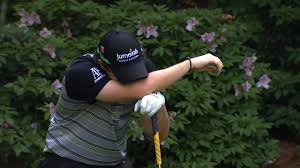
Those who know me well will know that I am a long-suffering Scotland football fan. I have followed the national team for more years than I care to remember. Anyone who knows anything about sport in general, and perhaps football in particular, will recognise the dilemma that most football fans face. That is, they cannot always ‘choose’ their team.  As a professional coach and a psychologist who spends most of his life spreading the message that we all have choice, this does not sit well with ‘what I know’.  Why don’t I simply support Barcelona, Bayern Munich, Argentina or whatever team is top of the division on any given week?  That would be easy. It would take away a lot of the pain and disappointment that inevitably occurs when you follow Scotland’s world cup and euro championship qualification ambitions.scots fan in despair

But, I think that is to miss the point.
Continue reading

No Time to Think

Perhaps ‘the’ most tantalising allure of any advancement in engineering or technology through the ages has been the promise of saving us time. Cars, trains and planes certainly get us places faster than horses ever did. Bridges and tunnels allow us to take short-cuts over rivers and through mountains, saving us hours. Advances in IT and robotics mean that tasks previously handled manually have been automated with exponential levels of increased productivity.

Why, with so much technology and time-saving gadgetry at our fingertips, do people still present at coaching sessions with issues and concerns about their ability to manage their time? After all, our lives have never appeared to be more organised ~ or perhaps I should say digitised!   More and more of us are hooked up to the Net from morning to night.

Our smartphones and tablets wake us up, we check our diary for appointments and read our messages before getting out of bed. We catch up on missed shows on iPlayer or Stitcher while we commute to work. We juggle collaborating on Sharepoint, with watching company Webcasts, while occasionally dipping into our personal Instagram, Twitter or WhatsApp accounts. We may even check in on Foursquare while grabbing lunch, and be just as likely to choose where to go by WiFi availability as the quality of the food. On the way home we might burn some carbs, having gained access with our fingerprint or iris, which are digitised on the gym’s customer database. We immediately wire ourselves up to the screens on the machines so as to catch up on news, or check Facebook activity.  And when we get home, after a microwaved dinner, and a quick skype chat with your mum, our relaxation and wind down time may well include logging on remotely to your work’s email to ‘finish off’ a few things, and give yourself a fighting chance of making a clean start on things again in the morning (fat chance!).

Continue reading

Can Emotion Recognition be Taught?

Being able to accurately process emotional cues from others is a critical ability that underpins effective and appropriate interpersonal relationships.  If we misread signals, or miss cues from others altogether, it can lead to some embarrassing and uncomfortable moments.  We are neurologically wired to scan the faces and body language of others in our social groups to help us determine emotional states, providing us with clear survival value. Detecting anger or fear is useful, not least in helping us avoid getting too close to danger or making situations worse, while being able to identify happiness or joy in others is key to establishing or enhancing positive connections and initiating relationships.

Some recent studies on emotion recognition have concluded that individuals with conduct disorders (CD) and antisocial behaviours (ASB) are significantly worse at recognising emotional signals associated with sadness, disgust, anger and fear, relative to controls.

It perhaps wouldn’t come as a surprise to people working within the prison system, and exposed regularly to ‘angry’ young men (most studies have focused on men within the criminal justice system), that their ‘sensitivity’ to cues may be different to the general population. The reasons for this, at least at an anecdotal level, may appear obvious. For example, take a young man who has been raised within an abusive environment, where the levels of anger he was exposed to were extreme. His normal baseline for detection of anger is likely to be set higher than the average person. He is used to seeing and hearing the cues of extreme anger, while possibly also experiencing their direct impacts. It may be reasonable to assume that this exposure to negative emotions will impact his sensitivity to detection of negative emotions such as anger, fear and sadness. Continue reading

Why don’t we do what’s good for us?

I have toothache as I write. I am in pain.  My tooth needs to come out. I am
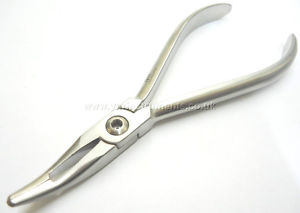
attached to it, but, it has done its job and we now need to part company. But don’t let me fool you into thinking that I have taken a completely quick and rational pliersdecision. I have had recurring problems with this particular tooth for some time. Each time the pain flares I know that it needs extracted. My dentist has confirmed this and told me to arrange an appointment whenever I feel it needs to happen. However, just before I make the call, the pain inevitably recedes.  Why is this? Does it really? Do I imagine it has? Do I fool myself that it has? Whatever the reason, I end up putting off thoughts of calling the dentist until the next time the pain returns.

So why is it that we avoid taking action that we know would alleviate our pain? Why is it so hard for people to do the things that are actually good for them?  A study published in the British Journal of Clinical Psychology (2014), Gilbert, McEwan, Catarino, Baiao and Palmeira, suggests that the fear of experiencing a positive outcome might be stronger than the desire to heal.

Continue reading

How much of ourselves do we really control?

“So much of control is not authoritative action but mindful waiting.”               ~Cameron Conaway, Caged: Memoirs of a Cage-Fighting Poet

In his book Drunk Tank Pink, Adam Alter describes a classic study which created quite a stir amongst sports coaches and prison warders, as well as psychologists and parents. The study by Schauss in 1979 suggested that simple exposure to one of two colours made a significant difference to people’s display of strength.  A large group of men were tested, one by one, on a simple strength test.  They were asked to raise their arms in front of their body while a moderate downward and opposite pressure was applied by the researcher to their arms. Nothing remarkable in this so far.  However, when the men were asked to stare at a large piece of cardboard which was coloured pink, their strength was dramatically weaker than when they were asked to stare at a piece of blue cardboard. Blue appeared to leave the subject’s strength intact, while pink depleted their strength.

source: http://www.mobypicture.com/user/PeterM_KOMO/view/10334383

source: http://www.mobypicture.com/user/ PeterM_KOMO/view/10334383

This curious finding quickly found practical application across a number of situations, one of which was the use of pink holding cells in correctional facilities. Angry inmates were reported as being calmed almost immediately by being placed in pink cells. The phenomenon went on to have wider application, and was even used in the world of sport, with boxers wearing pink shorts to ‘weaken’ their opponents, and American football teams painting their opponents’ locker rooms pink in order to reduce the visiting teams’ combativeness just prior to the start of the game.

Psychologists are now aware of many such phenomena which similarly influence our behaviour and our subconscious thoughts. They refer to these forces as cues. 

Within Drunk Tank Pink, the author goes on to chronicle a number of fascinating examples: Continue reading

Fail Big, Fail Fast, Fail Often!

In the week of the 2015 US Masters golf championship, many eyes are on Rory McIlroy. In 2011, an even younger McIlroy was on the verge of making golfing history. He carried a 4-shot lead into the final round, having played sublime golf for the first three days of the championship. However, on his final round he shot the worst round in history by any professional golfer leading after the 3rd round of the Masters. Not the piece of history he was after. Rory suffered what can only be described as a ‘meltdown’ in the unforgiving glare of the TV cameras and the golfing world.

Some pundits questioned his bottle, his psyche, his temperament, and his ‘big game’ mentality. Some said, “history shows that players who cough up big leads in big tournaments often don’t get another chance, their psyches permanently shattered by thoughts of what might have been.” (TwinCities.com

But, McIlroy went on to win 4 majors in the next three years, starting with the U.S.Open championship, just a few short months after his Augusta meltdown. He achieved his victory in some style too, setting a new championship record and becoming the youngest winner since 1923.
Continue reading

Self-Awareness: The Gateway to Leadership

This article was originally published in The e.MILE People Development Magazine in Feb 2015.

Few would argue with the notion that self-awareness is a vital prerequisite for any effective leader.  It is, after all, a key building block for emotional intelligence (EQ), providing the foundation for greater self-regulation, which in turn lends itself to more astute social awareness and finely tuned social skills, including leadership.

Be careful of false promises however.  Many books and articles have been written promising great things on the back of EQ mastery.  Unfortunately, many of these words of wisdom miss the point.  EQ is not just a set of skills to be learned and used, as simply as switching on a light. True EQ embodies a mind-set and a ‘way of being’ that is imbued with honourable intentions.Unhappy Girl Looking At Her Reflection On The Mirror

It is fashionable, indeed expected, for leaders to be in tune with their emotions, to understand themselves deeply, and to be equipped with the skills to know and read others’ emotions and motivations.  There is a danger in this, however.  A danger that lies at the very heart of how we expect our leaders to be.

Leaders are expected to know stuff. To know the strategy, to provide the direction, to comfort people during periods of uncertainty, to motivate, and have answers to difficult questions about expected future changes in the market. In short, the buck stops with the leader. It’s what they are paid top dollar for, isn’t it?

And how do leaders typically respond to these expectations?  By playing the same elaborate  game of course.  By giving people what they expect.  They put on a brave face (“for the sake of morale!”) even when they are unsure. They feel pressure to come up with answers when put on the spot for fear of looking out of their depth (“you never know – you might eventually be ‘found out’ as being a fraud or over-promoted!”).  All the while, they stay outwardly calm, self-assured and in control.  In other words, they put all of their hard-learned EQ skills into practice.  The veneer of self-assuredness, and being completely in tune with people’s fears and uncertainties, proves the value of the hours spent on the books and courses to master these essential ‘people’ skills.  But, wait a minute!  Didn’t I suggest that this was all a game?

The truth is that this is playing EQ by numbers and not from the heart.   The best leaders trust themselves – warts and all – to operate from a place of openness and honesty. This means displaying vulnerability. Yes, even at the risk of scaring the workforce, by having them know you don’t have all the answers.  Leaders who can share insecurities, hand responsibility back to others, ask questions rather than provide answers, and use EQ to learn rather than persuade and manipulate, will earn greater respect and trust in the longer term.

People will sense very quickly if your words and actions have a ‘hollow’, transactional and manipulative tone, even if they are dressed up with the EQ language you have learned. Furthermore, you will be modelling the type of behaviour that will become part of the organisation’s culture and be repeated at every level.   After all, being a leader is not about you. It is about the people being led.  Are you helping to enhance their capacity and creativity? Are you empowering them to have ideas and to influence strategy?   Are they growing and developing as people under your leadership?

Self-awareness is the gateway to great leadership, a prerequisite but not, in itself, sufficient.  It is not enough that leaders use emotional intelligence; it is vital that they live it.

***********************************************

About the author: Louis Collins enables people to operate more successfully. You may be struggling to implement corporate strategy, you may want to get more productivity out of yourself or your teams but don’t know where to start, or you may not be having as effective conversations as you could be. I will work with you to enable you to formulate more effective ways of leading, to raise awareness of blockers to successful ways of working, and ultimately to help you and your managers to lead more successfully.

Could your organisation benefit from raising the leadership skills of its people? Would you, or members of your management team, benefit from exploring ways to make significant improvements in personal and/or collective effectiveness and productivity? Coaching around the rich field of leadership will help provide the edge that you are seeking in 2015. Coaching has been proven to directly impact the bottom line. Simply drop me your contact details on the Contact Us page and I will be delighted to speak with you. 
We Need a New Breed of Leader

This article was originally published in The e.MILE People Development Magazine in Nov 2014.

Boy In A Suit Drinking Coffee

The leadership mindset that led us into the global economic downturn is not fit for the purpose of leading us back out again.

Recessions encourage cautious mindsets, resulting in refrains such as,  “Batten down the hatches, let the storm blow over, it’s not a time for taking risks, let’s just make sure we are still standing at the end of this – we’ll be in good shape to start again.”  And, “Sorry, there’s no budget for people development. Not the right time to explore new means of production. Not possible to invest in innovation initiatives.” These leadership mantras have become engrained in the psyche of many a business culture during the last five or six years.

Leadership mindsets have themselves become victims of the downturn. The focus on cost reduction and the bottom line has stunted many leaders’ abilities. The question is, how easily will they be able to shift into a frame of mind that embraces growth, change and innovation.  Some who once had visions of new and exciting futures have resorted to being excited by ‘making budget’.

This is not the role of leaders.  Continue reading

What’s changing for you right now?

                  When we are no longer able to change a situation,  we are challenged to change ourselves. ~ Viktor E. Frankl

All learning happens at ‘the edge’.   Going to the edge, and looking beyond, creates uncertainty.  After all, when nothing is changing and your world is predictable, what is the need to change, or learn anything new?  Sometimes changes are forced on us, sometimes they are sought.  Either way, they induce learning and growth.

This appears to be at the very heart of our existence as a species.  Skulls found in the Great Rift Valley of East Africa, the cradle of humanity, point to increases in skull capacity, and by definition brain size, at specific points in the earth’s history that correspond to periods of dramatic environmental change.

Professor Brian Cox’s recent BBC programme, Apeman to Spaceman,  explains that Brian Cox skullsthe earth experiences major and rapid climatic changes approximately every 400,000 years.  The skulls of various generations of hominin species (i.e. from australopithecus, to homo erectus, through to early homo sapien) reveal an almost doubling of brain capacity every 400,000 years.  The theory he advances is that human intelligence is quite literally a response to periods of rapid changes in the environment as a result of violent climate fluctuations.

And while this theory is concerned with enormous changes over thousands of years, the conditions for changes driving growth and learning are no less evident within single lifetimes.  Continue reading

Getting back to Why

“May your choices reflect your hopes, not your fears.” ~ Nelson Mandela

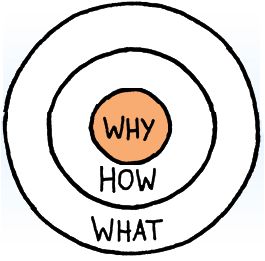
The current Scottish Independence campaign has highlighted many questions and parallels with the world of leadership and inspiration. Reading this post about the importance of Getting Back to Why, I was reminded of Simon Sinek’s Golden Circle. People are inspired by “Why” and not by “What” or “How”. To gain a greater understanding of how the golden circle model works, this TED talk is well worth watching.golden-circle

The independence campaign has almost exclusively been conducted on the question of How. “How will Scotland run its economy?” “How will it balance its books?” “How will it ensure its security?” How…! How…! How…! Questions that do not inspire, that do not contribute answers, and which, in the main, generate doubt, uncertainty and fear. It is little surprise, therefore, that a predominantly pro-union press and media have allowed the how question to dominate the campaign.

Simon Sinek has shown that the great companies, organisations, politicians and leaders inspire, generate energy and instil hope with “why”. Martin Luther King did not start his speeches by telling people how everything would work in a world after civil-rights was achieved, he started by telling people about his Dreams. Inspiration and hope comes not from having all the details known beforehand, but by being clear on the bigger vision, the grand purpose. No major change in history has ever been made where people have known clearly what lay ahead beforehand. They rarely know how things will work out, but they have known why they wanted to make the change. When purpose and vision is clear, then anything becomes possible. Being clear on the how is of less significance. Those details will emerge, they will evolve, driven by the energies of an inspired and optimistic people who know clearly why they want change to happen.

Jamie Jauncey's avatarA Few Kind Words

Back in January I wrote about how it seemed to me that the question Why? is so much more fundamental to the independence referendum than the question How? Yet the mainstream of the debate has been framed almost entirely by How.

The reason’s not hard to see. It’s simpler to place practical obstacles – in this case mainly economic and political – in someone’s path than to convince them of the moral, philosophical or emotional benefits of the status quo. Yet whichever way you plan to vote you must surely be clear about why you do or don’t want independence before you start to consider how it might or might not come about.

I was reminded of that post this week by a friend at the Edinburgh International Book Festival. It made me think that I myself have been too easily caught up in the How? of late, and that…

View original post 944 more words