On the Edge of Control

“…Fear is what keeps us from going over the edge……I don’t think what makes a good race car driver is a fearless person. I think it’s somebody that is comfortable being behind the wheel of something that’s somewhat out of control”.                Jeff Gordon

Imagine yourself riding a motorcycle in a high-speed race. You are at full throttle going round the final bend. Only a delicate balance between gravity and centrifugal forces are preventing you from flying off the track. At that moment, are you in control of your bike, or are you out of control? The answer is you are ‘right on the edge’. Too much ‘in control’ and you probably aren’t taking enough risk, and are unlikely to win the race. Too much ‘out of control’ and the likelihood is you are in for a very painful crash.

In 2013, at age 20, Marc Márquez of Spain became the youngest ever World Champion of MotoGP in the final race of the season in Valencia.  For anyone who hasn’t witnessed MotoGP, it is truly breath-taking. Riders appear to defy gravity on the bends, with their knees and elbows scraping the surface of the track at speeds in excess of 300km/hour. marquezExperts have commented on the young Márquez’s style saying, “….he drags his elbow on every corner and leans his body and bike closer to the ground than any of his rivals.”  In this sport, being daring and aggressive is a requirement if you hope to succeed. It would look as though an ability to shut out thoughts of fear, and consequences of getting it wrong, are a necessity in this sport. Yet, at the same time, knowing, in that instant, just what would be too much, too fast, too risky is clearly also a vital (and life-preserving) requirement. As is resilience, perseverance and the ability to learn from (and not be put off by) misjudgements.
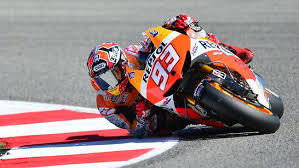
During the course of the season, Marquez also set the record for the highest-speed crash in motorcycle racing. While practising his gravity-defying turns, he lost control at 320km/hour. He managed to throw himself from his bike just before it crashed against a concrete wall. He was catapulted into a gravel safety trap at 280km/hour, walked away, and competed in the race the next day.  He is very clear about the fact that he must keep learning and improving.  In the final race of the season, he needed to finish no worse than fourth to secure the title.  He worked out that keeping his two main rivals in front of him, where he could watch their every move, was a better strategy than having them plot and scheme their moves from behind him. He rode a sensible, calculating race, taking less risks, staying out of trouble, and safely securing third place, sufficient to win the World Championship.
Continue reading
The Power of Optimism

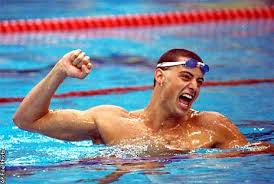
A great deal of pressure was heaped on the young shoulders of Matt Biondi in the run up to the Seoul Olympics in 1988.  He was one of the United States great hopes for multiple medals in the swimming pool. Comparisons were being drawn with the legendary Mark Spitz who had won seven golds in the 1972 games.    In his first event, the two-hundred-metre freestyle, he finished a creditable third.  Great by most people’s standards, but disappointing for Biondi and the hard-to-please media back home.  The next event was the one-hundred-metre butterfly.  Having blasted into an early lead, and dominated the race all the way, he made an error of judgement on his final stroke. One more stroke squeezed in with a metre to go would have seen him home, but he chose to coast and stretch for the wall instead.  In doing so he was pipped by a fingernail and beaten into second by an unknown swimmer, Anthony Nesty, from Surinam, not a country renowned for swimmers, let alone gold medals.

biondiThere was much gnashing of teeth and criticism levelled at Biondi from afar. This was not the start to an assault on seven gold medals that the American public expected, and many started to write him off.   There was at least one person who did not, however.  Marty Seligman, the father of Positive Psychology, watching proceedings on his television, had belief, and evidence, that Biondi had what it would take to come back from these disappointments and go on to achieve success.  Continue reading

Congratulations

A huge congratulations to the three winners of the competition to win signed copies of “The Vital Edge”.

The winners are:-Screen Print Book Cover

Shaun Coffey
Sheila Richards
Barry Millar


“The Vital Edge” will be winging its way to them shortly.

All three winners nominated truly awesome sports people as the ones who had inspired them most.

Continue reading

Learning from Wimbledon (revisited)

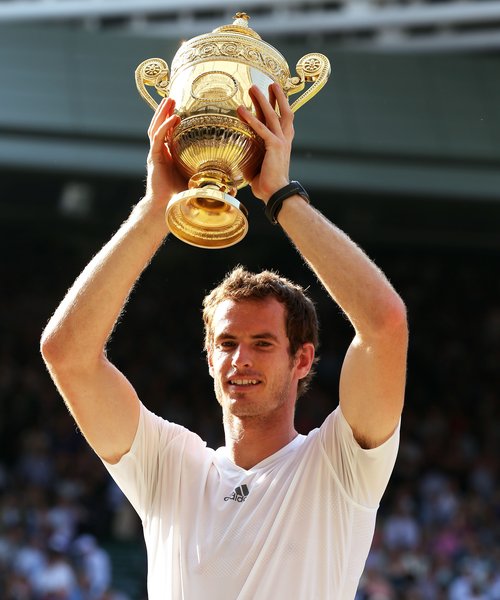
It’s one year since I wrote the post called Learning from Wimbledon.  Andy Murray had just lost an emotionally charged final to Roger Federer. His tearful speech in front of a packed Centre Court and millions more on TV was hard to watch. But, despite the despair and pain that he (and his followers) felt, it was clear that something had changed. His raw talent was clearly good enough to win the major prizes. His tactical awareness was not in question. His physical fitness had been transformed such that no-one in the game worked harder to ensure they were able to go the distance.  The final piece of the jigsaw for Andy was conquering his Inner Game. For years his temperament had been called into question. He cracked at the big moments. The pressure placed on him by the British media and public, hungry for a British Wimbledon men’s champion, was becoming unbearable. If Andy was to succeed, it was going to be a victory inside his own head that would secure the breakthrough.

andy-murray-wins-wimbledon-2013-1373217266-custom-0The Inner Game is played out completely inside the brain. To succeed in the Inner Game one must quieten the ‘voice’ in the head that judges, criticises and worries. It can act in many subtle (and not so subtle) ways, but basically it does one of two things. It either causes us to dwell on and regret past events (e.g. a poorly executed drop shot at the end of the last rally that cost you the game), or it worries about and raises anxiety levels about future events (e.g. if I don’t win my next service game, my opponent will be serving for the match). Neither of these thought processes are useful or conducive to delivering your peak performance. To perform at your best, you need to be operating neither in the past nor in the future, but with total concentration on the present.

Continue reading

Resilience in the moment

“A good half of the art of living is resilience.” ~ Alain de Botton.

As companies embark on another tough year ahead in 2013, and a climate of ongoing uncertainty, they are increasingly placing ‘resilience’ as one of the most important qualities they are looking for in their people. But, how do you recognise resilience in people, and how do you help people develop it further?

GlaxoSmithKline have defined ‘resilience’ as: “the ability to succeed personally and professionally in the midst of a high pressured, fast moving and continuously changing environment”.  

Traditional views are reflected in the language often used to describe resilient behaviour:

  • “Bouncing back after being knocked down”
  • “Taking the blows and coming back for more”
  • “Living to fight another day”
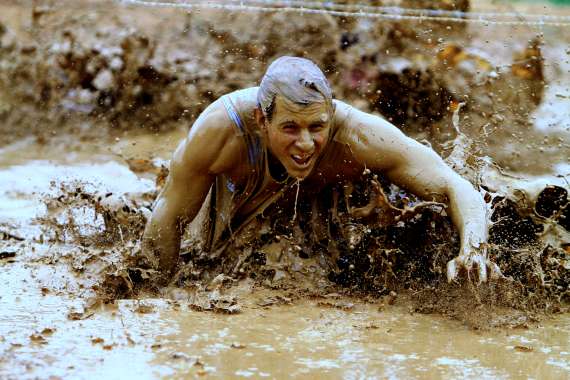
source: northjersey.com

source: northjersey.com

These expressions are adversarial and have their roots in war-like and conflict-driven situations. It is arguable that a mind-set of resilience, steeped in this language, is likely to generate more friction than collaboration.

  • What would it feel like to be resilient ‘in the moment’?  Not walk away to ‘re-group’ and then come back re-charged and ready for the fight.  Not retreat in order to re-think your strategy and make sure you win the argument the next time.  
  • But instead, there and then, you were to demonstrate emotional resilience, to really hear what was being said?
  • What if you could ‘flip’ the situation, get behind what was being said, and assess the dynamics objectively and not react?
  • What if you could show genuine curiosity in what’s happening, to hang around long enough to ask questions, to listen deeply, and to hear people out?
  • What might happen once they have been heard?  What different level of engagement might then be possible?

Continue reading