The Dumbing Down of Knowledge

The world is faced with enormous challenges, and we need creativity and innovation more than ever. Whether today’s focus is on climate change, terrorism, economic collapse or disease, the ‘old-world’ thinking that got us here will not be good enough to lead us to where we need to get to.

www.searchinfluence.com/No one can dispute that the growth of the internet and the explosion of personal device ownership has made available more data to more people in the space of just a few short years than was ever available in the history of humanity. The trouble is that knowledge search algorithms generally assume that volume is good. The more something is searched for, the more privileged it becomes. The information at the top of the list does not reflect quality, it reflects desirability. And, it fosters laziness. Personalisation ensures that we are presented with our ‘favourites’, the things we have ‘said we enjoy’ in the past.  Despite the diversity of knowledge that is potentially available, the interfaces through which we access information, ironically, narrows our universe.
Even in the corridors Continue reading

Get Personality Out Of Your Way

“Real knowledge is to know the extent of one’s ignorance” ~ Confucius

Fundamentally, one of the main aims of coaching is to assist people to have a greater understanding of their self, to live a life that is congruent with their values, and ideally one that is both purposeful and fulfilling. Not much to ask, right?

One problem that lies in the way of fulfilling this quest is a little thing called ‘Personality’.  Prof. Tomas Chamorro-Premuzic went so far as to say that “Coaching tries to inhibit the effects of personality on behaviour” (ref: ICF Advance 2015: Science of Coaching Conference).

What is it about personality that causes him to make that assertion? In many ways it sounds counter-intuitive. After all, surely the full discovery and expression of our personalities is something that we seek? The world is, after all, full of people trying to find themselves. According to Prof. Chamorro-Premuzic, the science tells us something different. It would appear that our personality operates in a number of ways, many of which make it tough for us to change our ‘typical’ ways of behaving.

Let’s look at some of the things he highlights about personality:- Continue reading

Acceptance and Commitment

As a coach, I have never been one to feel wedded to a particular philosophy or specific model. There are too many rich and interesting ways of thinking out there, and to ignore them because they don’t fit with ‘your model’ seems short-sighted. Also, no two clients are ever the same, and what works best for one person may not hit the mark for another. As such, I believe that having a deep tool-bag of coaching techniques is essential. That way, and with experience of using them, you can start to get a sense of what will work best for different clients.

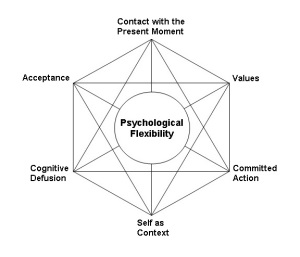
One area that I have recently borrowed from, and found hugely powerful in coaching practice, is that of ACT (Acceptance and Commitment Therapy). ACT is based upon a model of psychological flexibility (called the ACT hexaflex).  The principle being that healthy emotional functioning is achieved as a result of finding a healthy balance of six key processes:hexaflex

  • Acceptance
  • Cognitive Defusion
  • Present Moment Awareness
  • Self Awareness
  • Values
  • Committed Action

ACT also recognises that the unique nature of human language, while clearly setting us apart from all other life on earth in our ability to plan, predict, evaluate and reason, also traps us inside a cage of emotional suffering.  The way we describe ourselves, the world, and how we interact with the world reveals much about our psychological flexibility.  Continue reading

Blind them with Science

The invalid assumption that correlation implies cause is probably among the two or three most serious and common errors of human reasoning.                                 ~ Stephen Jay Gould, evolutionary biologist and author, 1981

I have a background in science.  I was trained in the scientific method and have the conscience of Karl Popper on my shoulder much of the time. In recent years I have been able to unshackle myself a little from the constraints this can place on my tolerance, and been able to stay chilled a little more than I used to be able to when I see or hear people purport to use ‘science’ to make questionable and spurious claims.

However, every now and then I get mad.  Especially when the people behind the claims ought to know better. When people misuse ‘science’ to dupe the public and sway political and social debates.

This week was one of those weeks. Junior Doctors are currently in the middle of a dispute with the UK Government, which led to the first of three planned strikes. Now, I have no wish to make any party political points in this post, and my compulsion to write is not driven by any particular support for either side in the dispute.  Rather it is based on the oft quoted claim made by Jeremy Hunt, the Health Secretary, that: “….at the moment we have an NHS where if you have a stroke at the weekends, you’re 20% more likely to die. That can’t be acceptable.”

Now if this bald fact were true it would clearly be quite alarming, and no doubt the public would be rightly supportive of action to do something about it.  Before digging into the accuracy or otherwise of the claim, it has clearly proved to be a pretty ‘sticky’ soundbite.

As well as Hunt himself Continue reading

Who Do You Think You Are?

“Dad! Dad! Can I be an astronaut?”

“Don’t be stupid son. You come from Doncaster.” ~ Steve McDermott


Last month I published a post in the wake of the killings in Paris called Hands up if you’re scared. The thrust of the piece was about fear, and the natural (and adaptive) reactions we have to dangerous situations. It was also about the exploitation of that fear, by both terrorists and political hawks.

In addition to those external voices of doom, we also have to be on our guard against our own internal enemy. The voice from within plays into the hands of the arguments of external fear-mongers. Many people have studied and written about the many forms our internal voice takes. Sometimes we can think of it as our conscience, our guide, our fairy godmother, looking out for us and keeping us on the straight and narrow. Or it may manifest in more malevolent form, talking down your talent or competence, criticizing your ideas or dreams, mocking your attempts to break free from “who you are”.

Over many years of working with people as they seek to overcome internal obstacles, I have heard people describe their ‘inner critic’ or ‘gremlin’ in many different ways, but whatever form they take, they tend always to say the same sorts of things to us.

  • “What makes you think you can do that?”
  • “You’ll fail and look stupid.”
  • “You’ll never amount to anything.”
  • “Who’s going to listen to you?”
  • “Who do you think you are?”

Screenshot 2015-12-11 13.26.33I recommend watching this interview between Oprah Winfrey and Brene Brown. The whole interview is fascinating, but if you only have a few minutes to spare, Continue reading

Hands up if you’re scared

Liberté, égalité, fraternité

Hands up if you are more scared this week than last?  Hands up if you believe you are more likely to be the victim of a terrorist atrocity than you were before the Russian airliner fell from the sky? Or the killings in Paris?  I see a fair few hands raised. I’m guessing that your hands are not raised having quickly calculated the complex statistical probability associated with being mixed up in such occurrences. More likely, it is coming from something in your gut, or in your heart. Somewhere far away from cognitive reason and rationality.

creative commons

creative commons

And, of course, that is what terror intends. To switch people off from reason, rationality, logic and constructive discourse, and switch on our more primal decision-making systems. “I feel it in my water. In my gut. I can smell it. My heart is ruling my head”. Believer v Non-Believer. Black v White. Love v Hate.  For v Against. Polarisation, simplification. No room for the grey. Choose your side.

Operating in a state of fear is commonplace. Workers fear for their jobs, their livelihoods, and being able to fend for their families. Patients fear the worst when waiting their medical results. City traders fear the flashing lights on the trading board when they glow red for what it might be about to signal. Could this be another crash in global markets?

Fear serves a useful evolutionary function. It kept our ancestors alive, and we have their fear to thank for us being here today. Unfortunately it is the enemy of progress. It stunts creativity, blocks new ways of thinking. Neuroscience shows quite clearly that, when the fear system in the brain is active, exploratory activity is turned off. In other words we stop looking for new ways to solve problems.  We resort to what we know worked in our evolutionary past. We either cower and hide and hope the danger passes, we flee and turn our backs on the problem, or we retaliate with force and hope to win with might. Continue reading

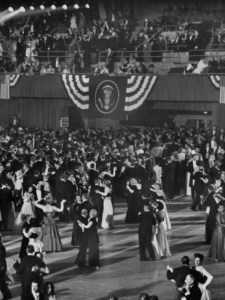
Step off the dance floor once in a while

I wrote this post back in March 2012, and the message came hurtling back to me this week, when I read some comments about key learning experienced by Sir Alex Ferguson in his early days as a manager. When he was a young manager with Aberdeen, in the days before he came to global prominence, he hired an assistant called Archie Knox. After working together a short time, Archie stunned Alex by asking him why he had hired him. At first the question stumped him, but Archie explained what he meant by it. He believed that the leader’s job was to be less involved in the detail but to stand back on the sidelines, watching and observing. This came as a surprise to Alex, as he liked to be in control, and giving that control over to Archie did not sit well with him. He did, however, decide to give it a go. He handed the detailed control of running training and practice over to Archie, while he removed himself to the sidelines to watch. He claims it was the most important decision he ever made in the field of managing and leading. Being removed from the game, he saw things he would not otherwise have seen. His field of vision had become widened, and he was able to observe players ‘off the ball’ with a fresh perspective. Archie continued to work with Sir Alex later in his career, including at Manchester United. Although never going on to have major success as a leader in his own right, he had a hugely successful career as an assistant, someone who made the leaders he worked with even more successful.

louiscollinsblog's avatarGyro Consulting Services

I was struck by this article by Paul Shoemaker on the “6 Habits of True Strategic Thinkers”.  It all makes sense and I am sure most good leaders will know this stuff – at least they will when they are away from the thick of the action.

So, what are the 6 habits effective leaders should form to get strategic?

  • Anticipate
  • Think Critically
  • Interpret
  • Decide
  • Align
  • Learn
A good list (for more detail on what’s behind each item go to the article) to add to any leader’s toolkit.  However, we all have “espoused” theories, and usually they are pretty sound. The problem comes when we start trying to put them into action.  What we then see are “behaviours in practice”, which more often than not are quite different from what we say we should or would do.
The one additional habit I would add, is STAND BACK…

View original post 352 more words

It’s the hope that kills you

“It’s not the despair, Laura. I can take the despair.  It’s the hope I can’t stand. ~ John Cleese (as Brian Stimpson in the film Clockwise)

Those who know me well will know that I am a long-suffering Scotland football fan. I have followed the national team for more years than I care to remember. Anyone who knows anything about sport in general, and perhaps football in particular, will recognise the dilemma that most football fans face. That is, they cannot always ‘choose’ their team.  As a professional coach and a psychologist who spends most of his life spreading the message that we all have choice, this does not sit well with ‘what I know’.  Why don’t I simply support Barcelona, Bayern Munich, Argentina or whatever team is top of the division on any given week?  That would be easy. It would take away a lot of the pain and disappointment that inevitably occurs when you follow Scotland’s world cup and euro championship qualification ambitions.scots fan in despair

But, I think that is to miss the point.
Continue reading

No Time to Think

Perhaps ‘the’ most tantalising allure of any advancement in engineering or technology through the ages has been the promise of saving us time. Cars, trains and planes certainly get us places faster than horses ever did. Bridges and tunnels allow us to take short-cuts over rivers and through mountains, saving us hours. Advances in IT and robotics mean that tasks previously handled manually have been automated with exponential levels of increased productivity.

Why, with so much technology and time-saving gadgetry at our fingertips, do people still present at coaching sessions with issues and concerns about their ability to manage their time? After all, our lives have never appeared to be more organised ~ or perhaps I should say digitised!   More and more of us are hooked up to the Net from morning to night.

Our smartphones and tablets wake us up, we check our diary for appointments and read our messages before getting out of bed. We catch up on missed shows on iPlayer or Stitcher while we commute to work. We juggle collaborating on Sharepoint, with watching company Webcasts, while occasionally dipping into our personal Instagram, Twitter or WhatsApp accounts. We may even check in on Foursquare while grabbing lunch, and be just as likely to choose where to go by WiFi availability as the quality of the food. On the way home we might burn some carbs, having gained access with our fingerprint or iris, which are digitised on the gym’s customer database. We immediately wire ourselves up to the screens on the machines so as to catch up on news, or check Facebook activity.  And when we get home, after a microwaved dinner, and a quick skype chat with your mum, our relaxation and wind down time may well include logging on remotely to your work’s email to ‘finish off’ a few things, and give yourself a fighting chance of making a clean start on things again in the morning (fat chance!).

Continue reading

Can Emotion Recognition be Taught?

Being able to accurately process emotional cues from others is a critical ability that underpins effective and appropriate interpersonal relationships.  If we misread signals, or miss cues from others altogether, it can lead to some embarrassing and uncomfortable moments.  We are neurologically wired to scan the faces and body language of others in our social groups to help us determine emotional states, providing us with clear survival value. Detecting anger or fear is useful, not least in helping us avoid getting too close to danger or making situations worse, while being able to identify happiness or joy in others is key to establishing or enhancing positive connections and initiating relationships.

Some recent studies on emotion recognition have concluded that individuals with conduct disorders (CD) and antisocial behaviours (ASB) are significantly worse at recognising emotional signals associated with sadness, disgust, anger and fear, relative to controls.

It perhaps wouldn’t come as a surprise to people working within the prison system, and exposed regularly to ‘angry’ young men (most studies have focused on men within the criminal justice system), that their ‘sensitivity’ to cues may be different to the general population. The reasons for this, at least at an anecdotal level, may appear obvious. For example, take a young man who has been raised within an abusive environment, where the levels of anger he was exposed to were extreme. His normal baseline for detection of anger is likely to be set higher than the average person. He is used to seeing and hearing the cues of extreme anger, while possibly also experiencing their direct impacts. It may be reasonable to assume that this exposure to negative emotions will impact his sensitivity to detection of negative emotions such as anger, fear and sadness. Continue reading