Don’t give me bad news

Nancy Kline in her superb book Time to Think describes a conversation with a senior civil servant whose department was going through wave after wave of changes to the way work was done and how things were structured. When asked how his managers were coping  with all of this, he responded, ‘I have no idea.  I don’t ask them.’  When asked ‘Why?’, he said, ‘They might tell me. We couldn’t have that.’  As Nancy goes on to explain, what he was really saying was thathe couldn’t handle that”.

How common is it for managers to shy away from facing up to the reality of what is going on around them, particularly when it might involve a face-to-face conversation with someone?  Very common, in my experience.   Confronting bad news, delivering home truths, providing feedback on performance, addressing inappropriate behaviour, or challenging resistance to change.  All of these scenarios present managers with situations which they either feel ill-equipped to handle effectively, or they ignore.

When managers fail to recognise an under-performing member of their team, there can be any number of underlying thinking errors or limiting beliefs at play.

For example:

  • They don’t want to admit they have someone under-performing as it may reflect badly on them
  • They don’t want to face the issue directly (it’s not in their nature), and they’re worried about handling any conflict that facing up to it might cause
  • The work is getting done to an ‘adequate enough’ level. Even though the individual is not adding as much as they potentially could, everyone’s reasonably happy – so why rock the boat?  (I dealt with this specific case in more detail in a previous post called Are you prepared to upset the Apple Cart?)
  • The individual is reasonably effective in some areas, so why not overlook or downplay issues in other areas where things could be better?
  • It is just a fact of life that some individuals are weak in certain skills or habits. We can’t change that.
  • The manager has been ‘friends’ with the individual and they’ve worked together a long time. They find it hard to confront them with hard messages.
  • The individual is a “nice” person, and it would hurt them to come down too hard on them
  • The individual is “slick” in that they always have a reason/response to issues raised with them, it’s just not worth the hassle of bringing up problems. After all, we’ve always managed to work round them in the past

Holding back, and not acting with complete honesty or sincerity does not create or encourage learning and improvement?  It does not prepare people for the future and help them adapt to change.

Fundamentally the approach to overcoming this type of ‘limiting thinking’ is simple….. Continue reading
When conflict works

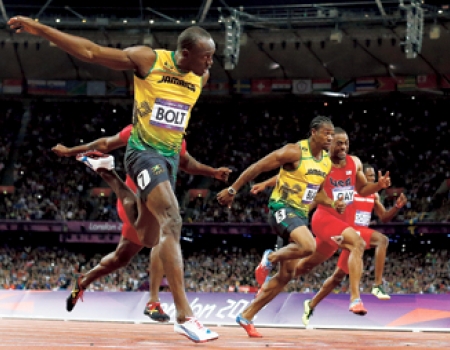
It seems to me, from reflecting on the Olympics, that truly great performances benefit from having someone else to ‘bounce off’. On occasions this can be achieved by colleagues in the same team pushing each other to ever higher levels, as evidenced by the Jamaican sprinters, Usain Bolt and Yohan Blake. It may also be achieved by fierce but respectful rivalry, where the standards of excellence set by one player forces the other to have to raise their game to heights they would not otherwise have to. The phenomenal standards of performance displayed by the world’s top tennis players is evidence of this. It is debatable whether Nadal would ever have reached the level of peak performance he has, if he was not asked some extraordinary questions on the tennis court by Federer. Djokovic has since had to take his game to even greater heights to become World number one. Whether friendly or fierce rivalry, in elite sport, the tensions, pressures, and challenges set, help motivate participants to keep raising their game.

But it is not only sport that can benefit from rivalry, conflict and challenge. Used effectively, disagreements and tensions can be hugely important in driving up standards in all walks of life.

This is illustrated most powerfully in this short clip of Margaret Heffernan, describing the inspiring story of Alice Stewart, an epidemiologist who struggled against the medical establishment to prove that x-rays on pregnant mothers were responsible for childhood cancers. During a long, and often lonely battle, to prove her case, Alice relied heavily upon a colleague, who was quite the opposite from Alice in many ways. His job, as a statistician and as a friend, was simple. To try to prove Alice’s data and results wrong. His job was to create conflict around her theories. Subjecting her work to this level of challenge and scrutiny, provided Alice with greater confidence about the validity of her theory, and helped her to find the energy to persist against formidable opposition.

So, how willing are we in the business world to be so open to this level of ‘voluntary’ challenge and conflict? To what extent are we willing to invite disagreement in the interest of true collaboration?  Continue reading

Breaking Barriers

As the London Olympic Games draw towards their close, it has been exciting to watch records tumble and barriers being broken. Of course, not all barriers are measured by distance or by the clock. Some of the most fascinating are psychological barriers.

Andy Murray appears to have broken a personal barrier in winning his Tennis singles gold medal. Regular readers will have read Learning from Wimbledon a few short weeks ago which described the progress Murray was making with his Inner Game. At the Olympics he buried the anguish he experienced a month ago, by defeating two of his fiercest opponents in quick succession, something he has found tough to do previously. He played unbelievably well, out-hitting, out-moving and out-thinking both Djokovic and Federer. A huge breakthrough, which may well see Murray move on to achieve much more success in future championships. .

Michael Phelps broke the barrier of all-time most decorated olympian – 22 medals – 18 of which are gold. This is a phenomenal achievement, even in a sport that provides more opportunity than most to multi-event. Phelps has set the bar at a new height for someone else to emulate in years to come.

Oscar Pistorius broke a barrier of a very different kind, becoming the first double amputee to ever take his place in an Olympics starting line up. He qualified from his heat to reach the semi-final of the 400m. A remarkable story which has cleared the way for future paralympians to stake their claim to be able to qualify for full olympic participation. New barriers will no doubt have to be overcome, but Pistorius has shown it is possible.

Some barriers are broken with increasing regularity, most notably in the swimming pool and in the velodrome, the latter no doubt assisted by advances in cycle technology. Others stand defiantly unobtainable, such as the long jump record which has stood for over 20 years. What fascinates me most of all is the psychological nature of breaking barriers.

Perhaps the best known example of this in the sporting arena is that of the mythical 4 min mile ‘barrier’. Until 1954, many actually believed that it was impossible, and perhaps even dangerous (or fatal) for anyone to run a mile faster than 4 mins. Roger Bannister became the first to make the breakthrough, and opened the floodgates for many others to do the same very soon afterwards. Soon the record was being broken over and over again. Those people who were soon running sub-4 minutes on a regular basis, were clearly physically capable of doing so, in the same way that Bannister did. The barrier they broke was inside their head, not on the track.

Running the 100m had a similar ‘magical’ barrier for quite some time. Once 10 sec was broken by Jim Hines in 1968, many others soon followed. The 100m final at this week’s Olympics was won by the extraordinary Usain Bolt. Had Asafa Powell not pulled up with an unfortunate injury, there is no doubt that every runner in the race would have gone under the 10sec barrier.

No-one has yet gone under 2 hours for the marathon, but it is getting closer with the current world record for men standing at 2hr 03min. It will be fascinating to observe how long it takes for the first person to run 1hr 59min 59sec, and how long afterwards we have to wait to see that time further reduced.

What is going on with these symbolic barriers, and what learning can it provide for other areas of life? In business, when people say it’s impossible, do they simply mean it’s not been done yet? Does it mean that Continue reading

Winning margins

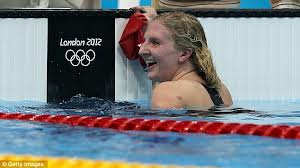
Rebecca Adlington, the darling of British swimming, put in a faster time this week to win Olympic bronze in the 400m Freestyle than the time she clocked to win gold in the same event four years ago in Beijing.  This simple fact, whether surprising or not, encapsulates the essence of high performance sport. The margins between top performers are ever-decreasing, and every athlete is seeking that special something that might just give them the vital edge that will make the difference on the day.

People sometimes ask why people like Usain Bolt, Roger Federer or Tiger Woods need coaches. After all, when athletes have already become the best in the world, what more coaching do they need, and who is ‘qualified’ to coach someone who is the best?  The answer is simple. They want to remain the best, and only being as good as you are now is not going to achieve that.

I am fascinated by the variety of ways that performers seek to gain that vital edge over the competition. Swimmers, for example, are increasingly engaging in an intriguing mixture of cross-over training. Rock-climbing, pilates and ballet are just three unlikely activities that are being incorporated into their already punishing schedule. This is not just to generate variety and ease boredom from swimming lengths, although the value of that is not to be under-estimated, nor is it just because they are proven for building exceptional core strength, something that is vital for top swimmers. The additional benefits gained relate to developing an increased sense of overall body awareness. Having spatial awareness of hands and feet is very important to swimmers, especially in those micro-seconds and vital millimetres when a wall touch needs to be timed to perfection.  One swimming coach this week stated that “…..he and his swimmers will leave no stone unturned to find that extra ingredient that might just make the vital difference, and if that means tapping in to other disciplines then great”.

I referred in my last post to the importance of ‘Learning from the Outside’.  This can be thought of on different levels, whether as an individual or as an organisation. In any walk of life, whether athletics or business, any fresh and innovative ideas that can be drawn upon to enrich training methods, and ultimately produce peak performance are to be welcomed. Business leaders have been slower than their counterparts in the athletic world to adopt this ‘leave no stone unturned’ mindset, and to tap in to other disciplines to help create the winning edge. (See Why aren’t Business Leaders more like Athletes?)

Of course, this focus on sport and winning, raises another dilemma for many people. Some argue that competition can be harmful and unhealthy, and actually brings out the worst in people.  After all, not everyone can win the gold medal, and doesn’t competitive sport result in more disappointment and failure than anything else?  Well, I like the treatment this subject gets from Tim Gallwey in his book the Inner Game of Tennis.  “Winning is overcoming obstacles to reach a goal, but the value of winning is only as great as the value of the goal reached.”   In other words,  the essence of competition  is all about the challenge and obstacles to be overcome.  In a game of tennis, the opponent provides the obstacles required to allow a player to reach and experience their own peak performance.  To that end, when an opponent Continue reading

Unassailable Leads. The Agony and the Ecstasy.

I’ve just witnessed yet another fascinating weekend of sport, and it never fails to throw up intriguing twists and turns whilst shining a light into the deepest recesses of the human psyche.  Watching people at the very top of their sport perform under the spotlight and scrutiny of millions, not to mention billions around the world on TV, reveals so much about what makes humans tick.

Two very different sports, golf and cycling, and two leaders with what most people considered to be unassailable leads in major events.  One went on to finish the job, while the other, sadly for him, suffered a ‘meltdown’ as he saw the finishing line in sight.   What can we learn from these two events, and what was going on for these two athletes at those crucial moments?

For those of you who were not glued to these events, here is a brief summary.

Adam Scott, an Australian golfer, led the The Open (sometimes know as the British Open), by a very comfortable margin on the final day’s play. If he were to defend his lead, it would be his first ever ‘Major’ triumph.  At one point he held a 6 shot lead, and no-one in the rest of the field was making any serious inroads into his lead. One or two players made the occasional threat, only to falter again at the next hole. Meanwhile, Scott played like the ice-man. He was focused, calm and very much playing ‘in the present’. He was not getting excited and was playing a very ‘safe’ game, staying out of all trouble. With 4 holes to go, he still had a 4 shot lead.  Up ahead of him Ernie Els, the popular and experienced South African with previous Major wins to his name, was quietly picking off the occasional birdie on the back 9 holes, but none of the experts, commentators or crowd, really foresaw what was about to happen.   Scott, who had barely put a foot wrong during the previous 4 days, bogied the last 4 holes.  Els, from nowhere, was The Open champion.  The crowd were stunned.

Photograph courtesy of Reuters 

At the same time, about 500 miles further south, history was being made in Paris. Bradley Wiggins, a British cyclist, became the first man from his country to ever win the famous Tour de France in its 99 years history. Wiggins had held the yellow (leaders) jersey from very early on in the 3 weeks long race, and his lead had been considered unassailable for the previous 4 or 5 days.  Only after the penultimate stage, when Wiggins reinforced his lead, did he allow himself the luxury of acknowledging that, barring a disaster, victory would be his in the Champs Elysees. But, he still had work to do on the final day, and his focus was on helping his team-mate, Mark Cavendish, to win the final stage. He was successful in this, setting up Cavendish for a final sprint finish that saw him race to his fourth stage victory in four years in Paris. A short while later, Wiggins stood on the top of the podium to be crowned the 2012 Tour de France champion.

In a recent post I touched on the importance of the Inner Game, in sport, and in life. Success, and staying focused, depends hugely on being able to quieten the ‘inner voice’. Avoiding the twin enemies of success – regret and anxiety – is vital to ‘play your best game’. I have no way of being sure what Adam Scott was experiencing, as his bogey count rose during those final few holes, but I am willing to bet that either regret at the choices he had just made, or anxiety about how he would ‘recover’ and play his next shot (or both), started to occupy his thinking.  He was playing a lonely Inner Game all by himself, in full view of a global audience, and, on this occasion he was unable to come through and take the big prize.

Wiggins’ Inner Game was played to perfection. He allowed himself only a very brief moment of anticipating his victory, before  refocusing his attention on the task of helping his team-mate to a final-day stage victory.

Photograph courtesy of Christophe Ena/AP. http://keepingscore.blogs.time.com/2012/07/22/britains-bradley-wiggins-wins-tour-de-france/ 

So, what lessons can we take away from the amazing Tour de France victory achieved by Bradley Wiggins and his team? Continue reading

Learning from Wimbledon

It’s the Tennis season, though those of you living in the UK or Ireland could be forgiven for mistaking it for the Asian monsoon season. Thank goodness for Wimbledon’s Centre Court roof or we could still be waiting for the final matches to be played.

I was delighted to see how well Andy Murray performed, becoming the first British men’s player to reach the singles final at Wimbledon in 74 years. Although he lost in a great final to an inspired Roger Federer, I sensed that Murray had buried a few ghosts that have been haunting him. In fact, what pleased me, even more than the level of tennis performance that he put in, was the Inner Game he played.


All sports, games and activities that people undertake can be thought about on two levels. The outer game is the one played out physically, and witnessed by others. In the case of tennis it includes the serves, ground strokes, smashes and lobs. But more often than not, especially in a contest between two players of comparable skill levels, it is the one that plays the better Inner Game who comes through and wins.

The Inner Game is played out completely inside the brain. To succeed in the Inner Game one must quieten the ‘voice’ in the head that judges, criticises and worries. It can act in many subtle (and not so subtle) ways, but basically it does one of two things. It either causes us to dwell on and regret past events (e.g. a poorly executed drop shot at the end of the last rally that cost you the game), or it worries about and raises anxiety levels about future events (e.g. if I don’t win my next service game, my opponent will be serving for the match). Neither of these thought processes are useful or conducive to delivering your peak performance. To perform at your best, you need to be operating neither in the past nor in the future, but with total concentration on the present.

This applies, of course, not just to Tennis, sports or games, but to our everyday lives. How much of your thinking time in work is preoccupied with concerns or regrets about past events or with anxiety about deadlines or future presentations?

As it is the Tennis season, I wanted to give my own game a boost, so I re-read Tim Gallwey’s seminal work, The Inner Game of Tennis. This is a hugely recommended book for tennis (and non-tennis) fans. It’s simple messages about quieting our inner voice, and questioning traditional ‘teaching’ and ‘coaching’ methods, are every bit as applicable to how we operate, function and interact in our personal and working lives, as they are to tennis.  I was lucky enough to hear Tim speak recently (via videolink from his home in California) at the Association for Coaching 10th Anniversary Conference in Edinburgh. He used a simple formula to describe excellence – Excellence = Potential minus Interference (i.e. where interference is all of the internal negative thoughts, doubts, limiting beliefs, self-criticism and judgement that we are capable of inflicting on ourselves on a regular basis).

Tim describes the typical ways of learning that people adopt :- Continue reading

Slow Down, you Move too Fast

“Slow Down, you Move too Fast”… so go the wise words of Simon & Garfunkel’s “59th Street Bridge Song” ……

Many people are inclined to jump to action rather quickly.  After all, isn’t this what people feel they are being paid for? To make decisions, to be decisive, to act !

Acting, in my experience, is rarely the biggest problem we face within our boardrooms, executive groups and operational teams. Our businesses and organisations are replete with people who plan, manage tasks, monitor activities, schedule, organise and control. I don’t sense that we need to build more skill in these areas.

The bigger challenges that face our business leaders are in the quality of conversations they undertake, their depth of problem analyses, and their ability to reach universal agreements on what actually needs to be done to bring about the major changes that will transform our businesses and organisations to turnaround their fortunes.

People tend to “over-analyse” the detail (or the parts we are most comfortable with) and avoid  tackling the real, hard, knotty issues. As teams, our conversations, seldom focus in on the major issues that would bring about significant and transformational change.

We tend not to bring sufficient attention to the most significant issues. After all, it is easier to focus on the trivia, or those issues that are most comfortable to discuss.  Bringing attention to significant issues is, after all, risky. We risk upsetting people, we risk our reputation, we risk being alienated if no-one else supports us, and we risk upsetting the status quo.

As a result, true agreement is rarely reached to the extent that it is clarified, confirmed and restated to everyone’s level of unambiguous satisfaction. How many meetings have you come away from where people start initiatives to resolve what they believe is the ‘agreed’ issue, but which is, in reality, subject to their own individual perspective?  This typically results in duplication of effort, conflicting initiatives, confusion and frustration.

Our organisations are action-generating machines,creating an illusion of efficiency, and productivity. Down the line, the most significant issues, which, if addressed and tackled, would result in radical change and improvement, remain untouched, lurking in the shadows in corners of meeting rooms around the globe (the proverbial elephant in the room?).

Here is a simple step by step guide – “The 4 As” –  to help leaders navigate Continue reading

Leadership without accountability. Let’s hope it’s just a ‘glitch’?

Following the Enron and Worldcom scandals of a decade or so ago, we might have been excused of thinking that a new era of more authentic, honest and open leadership would beckon.  Unfortunately, the last few years have demonstrated that no industry, or walk of life, is immune from deep-rooted dubious leadership.  One simply has to mention politics (expenses scandals), journalism (the Levenson inquiry), banking (sub-prime lending) and pharmaceuticals (drug use fraud) to reinforce the breadth and depth of the malaise.

There is clearly no single, or simple, answer to what is a serious global leadership problem, but one particular story in recent weeks highlighted to me an area where leaders could at least make a start on recovering some of the confidence and trust that will take a long time to regain.  I am talking about those two pillars of leadership – responsibility and accountability.

I was dismayed to hear the statements coming out from Stephen Hester, the chief executive of RBS, last week, following the serious systems outage that caused so much concern, inconvenience and, in some cases, hardship to so many customers. After several days of uncertainty as to when the problem would be resolved, during which various spokes-people provided updates and assurances that everything was being done to bring the systems back, Mr. Hester appeared in front of the cameras, and described the problem as a software ‘glitch’. Oh dear!  This was, in my view, a complete abrogation of responsibility and accountabilty, and an insult to so many people’s intelligence.  (see attached for the anger that such simplistic responses can stir up).

One does not need to be fully aware of the precise details of the software or technology issues that RBS faced to know that dismissing the issue as a ‘glitch’ is to miss so many points about the important role of leadership.

From my experience of the IT industry, all technology & software problems can be tracked back to a failure of leadership at one level or other.

  • Who took the final decisions on how the software upgrade was to be implemented?
  • Who looked at the risk analysis and made decisions about back-ups, back-out plans, the operational window for the upgrade, the resources to be put into testing before going live?
  • Going back further in the timeline, where did the buck stop on decisions made about which technology to run with? Were compromises made, and technical advice dismissed on the basis of cost?
  • Were any other (more costly perhaps) recommendations by the front-line operational teams overruled by the executive team?
  • Is the culture within the organisation one where technicians and software engineering team leaders are encouraged and empowered to speak up and warn that things may go wrong?
  • Or are they living in a climate of fear for their jobs, resulting in them keeping their heads down, even if they are worried about some aspect of deployment procedure?
  • Was the upgrade managed by outsourced staff or contractors, perhaps with less intimate knowledge of the complexities of legacy system interfaces? Who made the decision to outsource and lay off in-house IT people to save costs?

Whatever, the answers to these, and many more questions that could be asked in a post-implementation review, the issue is that Continue reading

Leading Small Countries to Big Futures. Reflections from the edges of Europe.

I have recently returned from visiting two European countries in quick succession. The first, Scotland, is in the far North West of Europe, and has much in common with Norway and Iceland, while the other, Albania, is in the South East of the continent, and has more in common with Greece and Serbia. Two countries in stark contrast to one another in so many ways, but also with many intriguing parallels. Both are proud countries with long and rich histories, of similar relative size and population, both with rich energy reserves not yet fully explored and exploited, and both at a cross-roads in their respective journeys. The contrasts, on the other hand, are stark.

Albania is a country which has remained fiercely independent through turbulent times. When former Yugoslavia tried to annex the country, it formed alliances first with Russia and later with China, but gave up on both of these super-powers to create an isolationist state. Scotland on the other hand gave up its independence in the early 1700s, joining a Union with England, Wales & Northern Ireland to form today’s United Kingdom.

Albania is currently seeking to come in from the cold with a long term plan to join the EU. It has a long way to go to satisfy the many conditions required, even to become a ‘candidate state’. There are massive improvements required on the economy, human rights, open & transparent democratic elections, infrastructure, and more.  Scotland, meanwhile, has a proud and reputable tradition in its standards of education and democracy, as well as in its finance and legal systems. It is currently engaged in a national and UK-wide debate on whether its future is best served as an independent state once again, or to continue as part of a union within the United Kingdom.

What particularly fascinates me about these countries, and the significance of their respective moments in history, is how their Leadership will choose to navigate the challenges that will be thrown at them, and how they will communicate the key messages that they believe will bring people with them.

Albania, since being free of the stranglehold of communism and isolationism, has rapidly become a country of massive contrasts and disparity. Top of the range German and Japanese cars share the (under-developed) roads with donkeys and hand-pulled carts. The gap between rich and poor is enormous and appears to be widening. The ‘ruling class’ is accused of corruption, and that includes the current Leader, Sali Berisha. Trust in leadership is in short supply and yet the people remain optimistic, perhaps still buoyed by the recency of their freedom from the oppressive chains of communism that led to their world isolation. The challenge for the leadership in Albania will be to harness and nurture that optimism, and not exploit it, and to work relentlessly to gain trust and credibility.

Scotland is very different, and its Leadership faces a different type of battle. Scotland has been part of a union for over 300 years. The Scots people have a reputation for being cautious, pragmatic and, some say, dour. Scots do not heap praise on its famous and successful sons and daughters. They like to keep people in their place and ensure they do not get ideas above their station. This is a national characteristic. Alex Salmond, the current leader in the Scottish Parliament, who is keen to persuade the nation of the benefits independence will bring, will need to find ways to energise and mobilise the people, and overcome the culturally entrenched tendency to accept the status quo After all, it’s easier to stay where one is; our brains are wired to resist change. No matter how unsatisfied we may be (short of a life-threatening situation), our brains will do their best to convince us that what got us here is working, so “why change anything”?

What Scotland does have in its favour is its history of egalitarianism. It is a country with a heritage of social justice and fairness, and is coming from a better starting point in terms of the gap between the richest and poorest being relatively narrow, when compared with Albania.

So, why do I stress this particular point? Continue reading

How to create Success out of Failure

Some of the greatest opportunities to promote loyalty or repair damaged reputations arise from negative situations.
I am reminded of the example of a well-known US airline that put special effort into repairing damage caused by customer-impacting failures.  When flights were delayed, whether caused directly by the airline or not, special processes kicked in. Extra staff ensured that regular communication updates were provided to customers, not via the usual impersonal and indiscernible ‘Tannoy’, but in person, by a trained and sympathetic member of the airline customer service team. Anyone worried about connecting flights or about getting messages to friends or relatives who may have been waiting at the other end were given extra attention, and all efforts made to assure that connections would be held, and people contacted on passenger’s behalf. When people arrived, more members of the airline were on hand; a) to apologise once again, in person, for the inconvenience caused and b) to find out if there was any other help or assistance that could be provided in making connections, collecting baggage or accessing other airport services.  Finally, passenger’s contact details were taken so that they could be followed up with at a later date.

Now, my experience from situations where things fail badly at airports is that getting up to date and accurate information can be pretty difficult, and knowledgeable members of staff are hard to find (almost as if they go in to hiding!).  This is a huge opportunity missed. The airline, in the example just described, reported excellent customer retention, very good onward reference rates (i.e. people tell their friends what a good carrier they are), and much better than average customer satisfaction levels, despite the initial experience being a negative one.

No company or organisation sets out to deliver poor customer experiences, but inevitably things can and will go wrong. How these situations are handled is a huge differentiator.  People will and do forgive poor experiences (providing they do not happen too often) if they sense that they are being treated fairly, with respect and that the company genuinely goes out of its way to make things right.  Leaders possess a huge responsibility ensuring their people understand and appreciate the positive potential difficult situations present. Great leaders expect high standards of attentiveness to be delivered at all times, and will role-model and encourage the desired behaviours at every opportunity.

The following list of practices is by no means exhaustive, but will go a long way to ensuring customer service reputations are repaired when things go wrong.

  1. Take responsibility – even if a third-party is at fault or circumstances are outside of your control. After all they are YOUR customers.
  2. Say sorry.  Apologise and demonstrate genuine understanding of the frustrations people are feeling.
  3. Communicate regularly, in as direct (human) a way as possible, with updates about the situation – even if nothing has changed, it is worth sharing that with people, so that they do not have to make assumptions or speak to each other and feed on rumours.
  4. Seek feedback and information that will help you learn and improve from the experience – and let customers know that their input to this process is valued and respected.
  5. Follow up with customers after the event. Check that they got to their destination safely, let them know you are working on improving things for the future, demonstrate that what happened was not acceptable and fell short of the kind of service you would want for them.

Creating a culture and mind-set amongst the workforce that lives these values, will generate a “word of mouth” buzz and demonstrate that they care. This in turn will build loyalty amongst existing customers, and generate new customers, especially those who have experienced badly handled situations by competitors.