Signposts & Weathercocks

On the day of Tony Benn’s death, I thought it would be appropriate to repost this tribute to him from 2009. A great man, a brilliant thinker and writer, and his legacy and wisdom will live on for generations.

louiscollinsblog's avatarGyro Consulting Services

I have a lot of time for Tony Benn. He is a genuine politician, an honest man, and someone always worth listening to. I heard him recently put in refreshingly simple terms the whole essence of leadership. It summed things up for me admirably.

Signposts are reliable. They provide you with a sense of direction. If you wander off and get lost, when you come back to them they are still pointing in the same direction. They stay firm and committed to where they believe they are going. They are not knocked off course easily.

Weathercocks on the other hand change at the whim of the wind. They seek out forums, opinion polls and swing with the tide of popularism. They cannot be relied upon.

Give me a signppost over a weathercock any day.

View original post

What’s your Calling?

Would you describe what you do as a job, a career or a calling?  I guess many might say that… “it’s all about the paycheck!!”,  and may go on to say, “….if only I had the luxury to think about what I do as anything other than just a job.”   For many people, finding a job, any job, that will pay the bills is all they are after.  Some might see what they do as a part of a career. One stage in a long-term plan.  For these people, while the paycheck is clearly important, it is not the only motivation for them doing what they do. Promotion, status, power, amongst other expectations, also serve to drive people’s ambitions.  So, what is a calling?  It is tempting to think about ‘a calling’ in spiritual terms, perhaps conjuring images of people who devote their life to serving God, or perhaps a scientist, who believes passionately in a particular theory, and commits her life to proving its validity.

thehappyproject.com

thehappyproject.com

Experiencing what you do as ‘a calling’ need not be so extreme however.  Martin Seligman in his superb book, “Authentic Happiness” (2003), examines the scientific evidence pertaining to this area, and the conditions necessary to create meaningful and fulfilled lives regardless of the type of work one does. One of the key studies discussed in Seligman’s book relates to hospital cleaners. Some within the group describe their ‘job’ simply as ‘cleaning up rooms’, while others defined the work more in terms of a ‘calling’ by making it meaningful.  They viewed what they do as “critical in helping patients to heal”, they time their work to be maximally efficient, and try to anticipate the needs of doctors and nurses to allow them to spend more time with the patients.  In extreme cases, some even ‘added tasks’ to what was expected of them, for example, by brightening up patients’ rooms with cheerful pictures and prints.

Living a ‘meaningful life’ is one of the core pillars underpinning Positive Psychology and which is closely linked to happiness and mental health. Despite real income in the western world having risen dramatically (at least in the most prosperous nations) in the last 50 years or so, wealth has a low correlation with happiness. So too does job promotion or good job prospects. Physical attractiveness and physical health also fail to pass any positive correlation test. Other ‘seemingly happy’ factors such as age (youth), education level and climate also fail to predict greater happiness or sense of well-being.So, what is the secret?  The answer is not simple (if only it were!), but the concept of Flow  (I recommend the excellent and seminal work on this topic by Mihaly Csikszentmihalyi)  provides an excellent model to help us start to understand the conditions necessary to achieve a meaningful life.  When people describe experiencing ‘flow’, they report total absorption in the task at hand, a feeling akin to a suspension of consciousness.  It feels like time has stopped. Many of us have experienced this extreme Continue reading

Emotional engagement enhances Productivity

A previous post I wrote around “how emotion shows up for coaches” (click here to read that article) attracted considerable attention, and prompted further questions about how to handle emotions in clients.  The first thing to be said is that having clients talk openly and with curiosity about their emotions is precisely where most coaches dream of their coaching sessions being conducted.

source: acutakehealth.com

source: acutakehealth.com

It is rarely that easy however. We are a kind of “bunged up society” when it comes to discussing emotions. Not everyone of course. Some people are highly attuned to their own and other’s emotions, and are able to use that awareness to understand, manage and influence relationships very effectively. This is not the norm, however, particularly in traditional cultures where expressing emotions has not been encouraged and even frowned upon (this has been true in youth culture, corporates, within families, and even in schools).

Asking someone ‘how they feel’ about something, is often met with a blank expression, as if the question has been asked in a foreign language.

If an answer is provided, it is often expressed in terms of thoughts, rather than feelings (i.e. the answer will often begin with “I think….”).

Even when someone has understood the question and is attempting to get closer to what they do feel, it is not unusual to hear them say something like, “Hmm, let me think about that, yes, what am I feeling?”

In other words, people usually have to intellectualise, through thinking and language, in order to get to what they are feeling. It is as if our emotional layers are hidden away, Continue reading

Sporting Lessons

alipanettarorybrailsfordRegular readers will know that sport features extensively in the leadership lessons & metaphors that I allude to.  I’ve decided to compile these sporting examples into book format and, should there be sufficient interest, I will aim to publish.      

. I would be delighted if you would care to take the time to                                                  look over either a sample chapter or, for the seriously dedicated amongst you, a draft of the entire book.

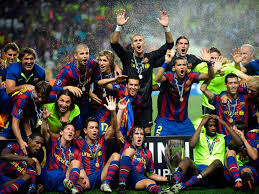
barca

You can get a copy of a sample chapter easily by using this link.

The full draft is available at this link but you will need to drop me a request for a password to allow you to download the PDF.  Just send me a request either through a comment to this post or by using the contact us page.

ferguson

I hope you enjoy what you read.  I have just one small request to make in return.  I would love to have your feedback. All comments are welcome.  Any suggestions you have for improvements, for inclusions, for removals, or any other thoughts or comments will be very much appreciated.  Do you think this concept or format will have appeal?  If so, to whom?

murray wigginsOf course, whether you choose to read just one chapter or the entire compilation, I will be happy if you enjoy it, even if only to relive some great sporting moments.  

If you extract even more value than that, then I will be delighted. Do let me know.  

Happy New Year for 2014.   woodward


Coaching by nudges

A recent post on this blog about “what coaching is“, as usual prompted further questions and requests for more information on what coaching entails.  Clearly there remain misunderstandings about the role of coaching within businesses and organisations, with some people still associating it with a form of remedial ‘treatment’. Having said that, I do see far greater awareness and understanding today, than even a few short years ago. Not so long ago, you might have heard a reaction from a colleague that went something like this.

“Oh you are getting ‘coaching’.  Why?  What’s wrong?  Did your annual appraisal go badly?”

The implication (and misunderstanding) of course being that coaching was being used as a tool to ‘fix’ something that had clearly gone wrong.  Perhaps to raise someone’s poor performance to a more acceptable level.

Now, I find you are much more likely to hear something like the following.

“Oh you are getting ‘coaching’. Amazing!! They must think a lot of you and see massive potential.  I wish I could get coaching through my company.”

This shift in mindset, also reflects a much more accurate understanding of what coaching is; an approach that helps people fulfil their potential.  Not a tool for rehabilitation or rectification, but a vehicle that allows people to explore their values and beliefs, their vision and their purpose. It is much more sought after, and is now seen as one of the ‘perks’ of the job. Career changers, especially those in middle management and executive positions, are more and more looking for coaching as an incentive, and benefit provision, when choosing between companies, reflecting the increasing value being placed upon it.

Coaching enables people to gain greater self-awareness and insight, allowing them to make informed choices and decisions, to be more conscious of how they react in given situations, and to develop life-strategies that will serve them more effectively.  Coaching, quite simply, helps people get more of what they want, be more fulfilled, and enable more success.

One of the dilemmas Continue reading

You Cannot Lead without Inquiry (Update)

BLOG UPDATE:  This article was originally posted in February 2012, and I am delighted to see that Hamza Kashgari, the young Saudi writer who inspired the article, has eventually been released from his prison sentence in Saudi Arabia. If you missed the original story, Hamza was imprisoned for expressing views deemed blasphemous by the authorities.  

(see Freedom House article on his release here)

**********************************************************

POSTED Feb 20, 2012      Too many people in positions of authority operate from a position of fear. Fear of not knowing, fear of being found out, fear of looking incompetent, fear of losing what has taken them years to attain.  This is true in companies, public service and politics. People who are in these positions are rarely stupid.  Being smart is usually a big factor in them getting to where they are. But, once they are there, something seems to kick in which is profoundly ‘anti-learning’. To paraphrase the great Chris Argyris, “Smart People find it tough to Learn”.

Today’s story in ‘The Nation’ of Hamza Kashgari, a 23-year-old journalist, who faces potential death for daring to question, shines a powerful spotlight on the fear with which ‘leaders’ operate. As a species we progress by learning.  We are problem solvers, we are cognitive thinkers, we naturally question, challenge and inquire. It is by doing so that we have overcome the multitude of obstacles that have stood in the way of our evolution over millenia. But, we do not and cannot stand still. To do so would consign the human race to extinction, probably through self-destruction. More than ever before, we requireenormous learning on a global scale. We need creativity and innovation, we need it networked and con-joined, we need collaboration, we cannot afford to shut down any avenues of possible learning. We need advances, leaps of logic, and ‘open and questioning minds’ that will take our species forward together to solve the biggest problems we have ever had to deal with – drought, famine, economy, conflict, climate change, energy, pestulance, AIDS, malaria, and the list goes on.

Shutting down inquiry, especially in our young people, is a fast-track to obsolesence. It may preserve the ‘Leaders’ position in the short term, it saves face, it avoids embarrassment, it re-asserts authority and quells insubordination, but all at the expense of ‘learning’.  The best Leaders through history have demonstrated that they contnue to change, they recognise that the circumstances that surrounded them while getting to where they have reached are continously changing, and so must they. They adapt, they are flexible in their approach, and they continuously learn. They do this by continuing to ask questions.  They do not fear that they will be seen as incompetent in doing so. They encourage others to do the same, they create a safe and open space for inquiry, because they know that this is the surest way to keep learning.

I wish Hamza well in his fight for justice and his right to learn.

Resist the temptation to be clever

I have often been asked by people who are unfamiliar with coaching, “How can you coach people in areas that you have no experience or knowledge of?”

I sometimes use this as an opportunity to help people obtain a clearer understanding of what coaching actually is.  I spend time explaining that coaching is not the same as mentoring. That it is not about specific knowledge or skills transfer. In fact, it can actually be an advantage to ‘not know’, as it makes it easier for the coach to ask totally naive questions with no pre-judgement.

source: events.stanford.edu

source: events.stanford.edu

To emphasise this point, I will often allude to the possible dangers that can emerge when you are too close to an area. When the coach is carrying their own ‘baggage’ around, they can slip into expressing their own views, or ask questions loaded with judgement. This can be one of the biggest challenges facing the internal coach. I worked as a coach within a corporate environment for a number of years. It was hugely rewarding, and offered a tremendous opportunity to be part of great change within the organisation. However, I know from personal experience, that when certain issues arose during coaching sessions, where I as the coach had specific knowledge about something, it presented me with a dilemma. I could, and sometimes did, inject a piece of knowledge that would help clarify some confusion, and help move the client past a particular obstacle.  Indeed, it would be wrong (and could be argued as unethical) not to. However, it is important to recognise that when you are doing that, you are no longer being a coach, and it is very important to tell the client that, so as to avoid any confusion about your role as a coach.

There is a real danger however, particularly for a new coach (as I found to my cost on occasions), that you may slip in and out of your coach role too many times, or for too long. The relationship may even morph into one that is no longer ‘coaching’, and into something else entirely. You may find yourself Continue reading

Performance dips. Is it all just statistics?

source: wikispaces.psu.edu

source: wikispaces.psu.edu

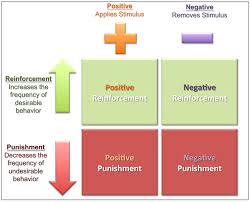
In the age-old debate about which works best – positively rewarding desired behaviours or punishing non-desired behaviours – we need to be careful that we don’t fall into the trap of making a causal attribution that does not actually exist. We may be observing nothing more than a mere consequence of statistical distribution known to students of statistics as ‘regression to the mean’.

This is described in the excellent book Thinking, Fast and Slow by Daniel Kahneman (p 175), where he describes an Air Force trainer who objected to Kahneman making the claim that rewarding improved performance was more effective than punishing mistakes. His objection was based on his experience. When he positively praised someone for performing a manoeuvre well, on the next occasion the individual inevitably performed worse. On the other hand, when someone did badly, he would blast a condemnation into their ear which, in the view of the trainer, always caused an improvement in performance.  Ergo, negative reinforcement works more effectively than positive.

source; aperfectchef.hubpages.com

source; aperfectchef.hubpages.com

And, so it might seem, on first inspection in this example. That is, until you think about these situations as being distributed levels of performance around a mean. It makes sense that one single piece of outstanding performance is very likely to be followed by one that is closer to the mean than before. Likewise, an extremely poorly executed manoeuvre is more than likely an aberration, and (even without the blast in the ear) is likely to result in an improvement, and a performance closer to the mean on the next occasion.

What the trainer had stumbled upon was a rule of statistical distribution, and not a profound principle of psychological reinforcement theory.

What we do know, however, is that the brain is wired in such a way as to be biased toward negativity.  This is a consequence of our evolutionary journey and is one of the reasons that we have survived as a species.  It was critical, and indeed life-saving at times, for our ancestors to be alert to danger, to be primed to detect predators, to see risks everywhere. Neuroscience demonstrates that our emotional centres are biased toward negative emotions, and, for this reason, positivity does face an uphill battle. It is working against the tide of our emotional make-up, and to overcome the bias (or at least redress it) we need to experience at least a 3 to 1 ratio of positive thoughts or experiences over negative ones on a daily basis.  (for a deeper treatment of this area see the previous post Overcoming the Brain’s Negativity Bias).

Negative reinforcements and punishments have their place in a world associated with danger and risk, but in a world where our safety is less of an issue, and the emphasis is on how well we thrive, grow and develop, the powerful effects of positive reinforcement are in the generation of optimism, creativity, empowerment and confidence.

*******************************************

If you feel that you or members of your management team would benefit from exploring ways to make substantial improvements to personal and collective effectiveness and productivity, please do get in touch.       Simply  submit  your contact details on the Contact Us page and I will be delighted to get in touch for an informal initial chat.

About me:  I enable people in business to operate more successfully.  You may be struggling to implement corporate strategy, you may want to get more productivity out of your teams but don’t know where to start,  or your people may not be having as effective conversations with each other as they could be. I will work with you to enable you to formulate more effective ways of leading, to raise awareness of blockers to successful ways of working, and ultimately to help you to lead more successfully.  

.  

Are your people ready to change?

If you’re in a bad situation, don’t worry it’ll change.  If you’re in a good situation, don’t worry it’ll change.  ~  John A. Simone, Sr.  

At a time when most businesses are seeking ways to emerge from the effects of the recession, and get themselves back on the road to economic growth, one inevitable question their leaders will all face will be, “What things are going to have to change around here to start us moving again?”  

  • Will the strategy and tactics they have been deploying during the crunch be the same ones they need to drive growth?  
  • How do they shift mindsets on their management teams from ‘cost avoidance’ to ‘growth and profit’? 
  • Do they need different types of people in their company to take them in a different direction?
  • Will their own leadership style need to be different as they move forward?
  • Are they even the right leader to take the company forward and be successful?

Some of these questions can be extremely daunting, and will challenge even the most competent leaders. However, much will depend on how the workforce has been led during the period of recession. 

Have people been continuously aware that this day was coming, or will it come as a surprise to them  that they are now expected to do things differently, think differently, perhaps adopt new practices.  Remember, even unpleasant circumstances become comfortable after a while, and people will resist moving away from the ‘way things are’ even if they are promised a better future.polar-bear-ice

It’s not enough to simply promise things will get better and hope they will change.  One major reason for this, we now know, is because of the way our brains are organised. Regular patterns of thinking and behaviour become ‘wired’ at the neural level. It is certainly not a trivial matter of expecting people to one day waken up and operate as if they had a different wiring pattern. Not even after the most rousing and stirring ‘all-hands’ kick-off event !!  Our brains need to have new connections created (and old connections disused and atrophied) over a period of time in order for new patterns of thinking and behaviour to take root. New visions, positive futures, different expectations, alternate rewards, all help generate these new connections, and ultimately, different behaviours.

That’s why the best leaders Continue reading

The Power of Silence

“Silence is true wisdom’s best reply.” Euripides

How comfortable are you with periods of silence during conversations?  Do you feel uncomfortable? Are you compelled to fill the void and keep the cascade of words flowing?

I was prompted to think about this by a short article I read recently by Angela Dunbar, in which she claims that almost all coaching and talking therapies are designed to work by encouraging the client to open up and talk about what’s happening for them, to speak their thinking aloud and verbalize any insights they may be having.  All of this is based on the (not unreasonable) assumption that, by expressing out loud what’s going on in your mind, problems will be unpicked and solutions found.

The article goes on to point to research in the field of cognitive psychology (see paper by Schooler, Ohlsson, and Brooks) that suggests that the act of verbalizing thoughts actually prevents insights arising. This may be because the brain has limited resources, and if they are concentrated on the conscious activity of talking, there is reduced capacity for the non-conscious activities that are necessary for insight to occur.  The research evidence suggests that insight involves processes that are distinct from language, and which benefit from not being distracted by speech.

Continue reading