
Don’t give me bad news

Nancy Kline in her superb book Time to Think describes a conversation with a senior civil servant whose department was going through wave after wave of changes to the way work was done and how things were structured. When asked how his managers were coping  with all of this, he responded, ‘I have no idea.  I don’t ask them.’  When asked ‘Why?’, he said, ‘They might tell me. We couldn’t have that.’  As Nancy goes on to explain, what he was really saying was thathe couldn’t handle that”.

How common is it for managers to shy away from facing up to the reality of what is going on around them, particularly when it might involve a face-to-face conversation with someone?  Very common, in my experience.   Confronting bad news, delivering home truths, providing feedback on performance, addressing inappropriate behaviour, or challenging resistance to change.  All of these scenarios present managers with situations which they either feel ill-equipped to handle effectively, or they ignore.

When managers fail to recognise an under-performing member of their team, there can be any number of underlying thinking errors or limiting beliefs at play.

For example:

  • They don’t want to admit they have someone under-performing as it may reflect badly on them
  • They don’t want to face the issue directly (it’s not in their nature), and they’re worried about handling any conflict that facing up to it might cause
  • The work is getting done to an ‘adequate enough’ level. Even though the individual is not adding as much as they potentially could, everyone’s reasonably happy – so why rock the boat?  (I dealt with this specific case in more detail in a previous post called Are you prepared to upset the Apple Cart?)
  • The individual is reasonably effective in some areas, so why not overlook or downplay issues in other areas where things could be better?
  • It is just a fact of life that some individuals are weak in certain skills or habits. We can’t change that.
  • The manager has been ‘friends’ with the individual and they’ve worked together a long time. They find it hard to confront them with hard messages.
  • The individual is a “nice” person, and it would hurt them to come down too hard on them
  • The individual is “slick” in that they always have a reason/response to issues raised with them, it’s just not worth the hassle of bringing up problems. After all, we’ve always managed to work round them in the past

Holding back, and not acting with complete honesty or sincerity does not create or encourage learning and improvement?  It does not prepare people for the future and help them adapt to change.

Fundamentally the approach to overcoming this type of ‘limiting thinking’ is simple….. Continue reading
When conflict works

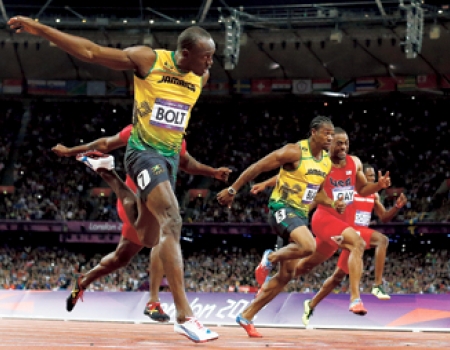
It seems to me, from reflecting on the Olympics, that truly great performances benefit from having someone else to ‘bounce off’. On occasions this can be achieved by colleagues in the same team pushing each other to ever higher levels, as evidenced by the Jamaican sprinters, Usain Bolt and Yohan Blake. It may also be achieved by fierce but respectful rivalry, where the standards of excellence set by one player forces the other to have to raise their game to heights they would not otherwise have to. The phenomenal standards of performance displayed by the world’s top tennis players is evidence of this. It is debatable whether Nadal would ever have reached the level of peak performance he has, if he was not asked some extraordinary questions on the tennis court by Federer. Djokovic has since had to take his game to even greater heights to become World number one. Whether friendly or fierce rivalry, in elite sport, the tensions, pressures, and challenges set, help motivate participants to keep raising their game.

But it is not only sport that can benefit from rivalry, conflict and challenge. Used effectively, disagreements and tensions can be hugely important in driving up standards in all walks of life.

This is illustrated most powerfully in this short clip of Margaret Heffernan, describing the inspiring story of Alice Stewart, an epidemiologist who struggled against the medical establishment to prove that x-rays on pregnant mothers were responsible for childhood cancers. During a long, and often lonely battle, to prove her case, Alice relied heavily upon a colleague, who was quite the opposite from Alice in many ways. His job, as a statistician and as a friend, was simple. To try to prove Alice’s data and results wrong. His job was to create conflict around her theories. Subjecting her work to this level of challenge and scrutiny, provided Alice with greater confidence about the validity of her theory, and helped her to find the energy to persist against formidable opposition.

So, how willing are we in the business world to be so open to this level of ‘voluntary’ challenge and conflict? To what extent are we willing to invite disagreement in the interest of true collaboration?  Continue reading

Winning margins

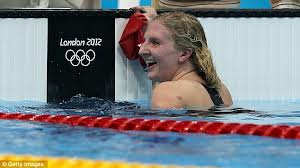
Rebecca Adlington, the darling of British swimming, put in a faster time this week to win Olympic bronze in the 400m Freestyle than the time she clocked to win gold in the same event four years ago in Beijing.  This simple fact, whether surprising or not, encapsulates the essence of high performance sport. The margins between top performers are ever-decreasing, and every athlete is seeking that special something that might just give them the vital edge that will make the difference on the day.

People sometimes ask why people like Usain Bolt, Roger Federer or Tiger Woods need coaches. After all, when athletes have already become the best in the world, what more coaching do they need, and who is ‘qualified’ to coach someone who is the best?  The answer is simple. They want to remain the best, and only being as good as you are now is not going to achieve that.

I am fascinated by the variety of ways that performers seek to gain that vital edge over the competition. Swimmers, for example, are increasingly engaging in an intriguing mixture of cross-over training. Rock-climbing, pilates and ballet are just three unlikely activities that are being incorporated into their already punishing schedule. This is not just to generate variety and ease boredom from swimming lengths, although the value of that is not to be under-estimated, nor is it just because they are proven for building exceptional core strength, something that is vital for top swimmers. The additional benefits gained relate to developing an increased sense of overall body awareness. Having spatial awareness of hands and feet is very important to swimmers, especially in those micro-seconds and vital millimetres when a wall touch needs to be timed to perfection.  One swimming coach this week stated that “…..he and his swimmers will leave no stone unturned to find that extra ingredient that might just make the vital difference, and if that means tapping in to other disciplines then great”.

I referred in my last post to the importance of ‘Learning from the Outside’.  This can be thought of on different levels, whether as an individual or as an organisation. In any walk of life, whether athletics or business, any fresh and innovative ideas that can be drawn upon to enrich training methods, and ultimately produce peak performance are to be welcomed. Business leaders have been slower than their counterparts in the athletic world to adopt this ‘leave no stone unturned’ mindset, and to tap in to other disciplines to help create the winning edge. (See Why aren’t Business Leaders more like Athletes?)

Of course, this focus on sport and winning, raises another dilemma for many people. Some argue that competition can be harmful and unhealthy, and actually brings out the worst in people.  After all, not everyone can win the gold medal, and doesn’t competitive sport result in more disappointment and failure than anything else?  Well, I like the treatment this subject gets from Tim Gallwey in his book the Inner Game of Tennis.  “Winning is overcoming obstacles to reach a goal, but the value of winning is only as great as the value of the goal reached.”   In other words,  the essence of competition  is all about the challenge and obstacles to be overcome.  In a game of tennis, the opponent provides the obstacles required to allow a player to reach and experience their own peak performance.  To that end, when an opponent Continue reading

Learning from Wimbledon

It’s the Tennis season, though those of you living in the UK or Ireland could be forgiven for mistaking it for the Asian monsoon season. Thank goodness for Wimbledon’s Centre Court roof or we could still be waiting for the final matches to be played.

I was delighted to see how well Andy Murray performed, becoming the first British men’s player to reach the singles final at Wimbledon in 74 years. Although he lost in a great final to an inspired Roger Federer, I sensed that Murray had buried a few ghosts that have been haunting him. In fact, what pleased me, even more than the level of tennis performance that he put in, was the Inner Game he played.


All sports, games and activities that people undertake can be thought about on two levels. The outer game is the one played out physically, and witnessed by others. In the case of tennis it includes the serves, ground strokes, smashes and lobs. But more often than not, especially in a contest between two players of comparable skill levels, it is the one that plays the better Inner Game who comes through and wins.

The Inner Game is played out completely inside the brain. To succeed in the Inner Game one must quieten the ‘voice’ in the head that judges, criticises and worries. It can act in many subtle (and not so subtle) ways, but basically it does one of two things. It either causes us to dwell on and regret past events (e.g. a poorly executed drop shot at the end of the last rally that cost you the game), or it worries about and raises anxiety levels about future events (e.g. if I don’t win my next service game, my opponent will be serving for the match). Neither of these thought processes are useful or conducive to delivering your peak performance. To perform at your best, you need to be operating neither in the past nor in the future, but with total concentration on the present.

This applies, of course, not just to Tennis, sports or games, but to our everyday lives. How much of your thinking time in work is preoccupied with concerns or regrets about past events or with anxiety about deadlines or future presentations?

As it is the Tennis season, I wanted to give my own game a boost, so I re-read Tim Gallwey’s seminal work, The Inner Game of Tennis. This is a hugely recommended book for tennis (and non-tennis) fans. It’s simple messages about quieting our inner voice, and questioning traditional ‘teaching’ and ‘coaching’ methods, are every bit as applicable to how we operate, function and interact in our personal and working lives, as they are to tennis.  I was lucky enough to hear Tim speak recently (via videolink from his home in California) at the Association for Coaching 10th Anniversary Conference in Edinburgh. He used a simple formula to describe excellence – Excellence = Potential minus Interference (i.e. where interference is all of the internal negative thoughts, doubts, limiting beliefs, self-criticism and judgement that we are capable of inflicting on ourselves on a regular basis).

Tim describes the typical ways of learning that people adopt :- Continue reading

Are you prepared to upset the Apple Cart?

I recently had a conversation with a senior manager in a large global organisation about how he was applying performance management in his area.  What he told me surprised me.  He had a few people in his teams that were clearly not performing as well as they could.  Their contributions, when set against people doing similar jobs in other parts of the business, were lower, and they showed no desire to grow and develop beyond their area of specialism. But the manager appreciated their efforts, saw them as ‘steady-eddies’ and knew they would never be star performers.  They were valuable to him, because they had skills he would find hard to replace, even though he knew demand for those skills were in rapid decline. He saw no point in ‘upsetting the apple cart’, as he put it, as everything was running quite smoothly.  His customer was happy, his team was happy, and he was happy. So, why cause problems?

I asked him how he wanted to be viewed by his team as a leader, when they looked back on their careers.

At first he thought that they would see him as a ‘friendly manager’, someone they could ‘trust’, who ‘looked after them’, and to some extent ‘protected them’ from all of the ‘latest fads’ and ‘initiatives’ that were doing the rounds in the business.  Those ‘fads and initiatives’ that he was referring to are about preparing people for what are major global changes within the industry, that are demanding different skills and ways of working.  People are being encouraged to take responsibility for their own careers, to uplift their skills, and develop new ways of thinking to better prepare themselves for the disruption and challenges that are rapidly emerging.

I suggested that it was possible they would look upon him as a useful buffer and protector from ‘disruptive change’ in the short term (or for as long as their area remains viable), but that in the longer term they are likely to look back and question why others had ‘stolen a march’ on them.

They may be saying things like: Continue reading

Why aren’t Business Leaders more like Athletes?

It suprprises me that our aspiring business leaders and even general managers in corporations and in public service do not dedicate more time to brain science. I liken this to the world of athletics. An athlete’s primary job is to run faster, or jump higher or throw further. Sounds simple. But it is now well-recognised that to be the very best and to achieve the nano-second advantage that might make the difference between gold & silver or even between qualification for the olympic team and staying at home, athletes need to know a lot more than ‘just’ their traditional training programme. In the course of becoming the best they can be, they become well-versed in areas of muscle physiology, nutrition, anatomy, cardio-vascular mechanics, as well as some important principles of the the way their brain works through relaxation techniques, managing and channelling emotions and positive visualisation exercises. So what do we need and expect from our leaders? Continue reading