Performance dips. Is it all just statistics?

source: wikispaces.psu.edu

source: wikispaces.psu.edu

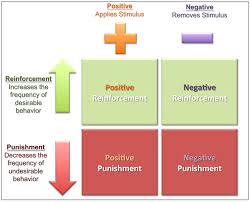
In the age-old debate about which works best – positively rewarding desired behaviours or punishing non-desired behaviours – we need to be careful that we don’t fall into the trap of making a causal attribution that does not actually exist. We may be observing nothing more than a mere consequence of statistical distribution known to students of statistics as ‘regression to the mean’.

This is described in the excellent book Thinking, Fast and Slow by Daniel Kahneman (p 175), where he describes an Air Force trainer who objected to Kahneman making the claim that rewarding improved performance was more effective than punishing mistakes. His objection was based on his experience. When he positively praised someone for performing a manoeuvre well, on the next occasion the individual inevitably performed worse. On the other hand, when someone did badly, he would blast a condemnation into their ear which, in the view of the trainer, always caused an improvement in performance.  Ergo, negative reinforcement works more effectively than positive.

source; aperfectchef.hubpages.com

source; aperfectchef.hubpages.com

And, so it might seem, on first inspection in this example. That is, until you think about these situations as being distributed levels of performance around a mean. It makes sense that one single piece of outstanding performance is very likely to be followed by one that is closer to the mean than before. Likewise, an extremely poorly executed manoeuvre is more than likely an aberration, and (even without the blast in the ear) is likely to result in an improvement, and a performance closer to the mean on the next occasion.

What the trainer had stumbled upon was a rule of statistical distribution, and not a profound principle of psychological reinforcement theory.

What we do know, however, is that the brain is wired in such a way as to be biased toward negativity.  This is a consequence of our evolutionary journey and is one of the reasons that we have survived as a species.  It was critical, and indeed life-saving at times, for our ancestors to be alert to danger, to be primed to detect predators, to see risks everywhere. Neuroscience demonstrates that our emotional centres are biased toward negative emotions, and, for this reason, positivity does face an uphill battle. It is working against the tide of our emotional make-up, and to overcome the bias (or at least redress it) we need to experience at least a 3 to 1 ratio of positive thoughts or experiences over negative ones on a daily basis.  (for a deeper treatment of this area see the previous post Overcoming the Brain’s Negativity Bias).

Negative reinforcements and punishments have their place in a world associated with danger and risk, but in a world where our safety is less of an issue, and the emphasis is on how well we thrive, grow and develop, the powerful effects of positive reinforcement are in the generation of optimism, creativity, empowerment and confidence.

*******************************************

If you feel that you or members of your management team would benefit from exploring ways to make substantial improvements to personal and collective effectiveness and productivity, please do get in touch.       Simply  submit  your contact details on the Contact Us page and I will be delighted to get in touch for an informal initial chat.

About me:  I enable people in business to operate more successfully.  You may be struggling to implement corporate strategy, you may want to get more productivity out of your teams but don’t know where to start,  or your people may not be having as effective conversations with each other as they could be. I will work with you to enable you to formulate more effective ways of leading, to raise awareness of blockers to successful ways of working, and ultimately to help you to lead more successfully.  

.  

Are your people ready to change?

If you’re in a bad situation, don’t worry it’ll change.  If you’re in a good situation, don’t worry it’ll change.  ~  John A. Simone, Sr.  

At a time when most businesses are seeking ways to emerge from the effects of the recession, and get themselves back on the road to economic growth, one inevitable question their leaders will all face will be, “What things are going to have to change around here to start us moving again?”  

  • Will the strategy and tactics they have been deploying during the crunch be the same ones they need to drive growth?  
  • How do they shift mindsets on their management teams from ‘cost avoidance’ to ‘growth and profit’? 
  • Do they need different types of people in their company to take them in a different direction?
  • Will their own leadership style need to be different as they move forward?
  • Are they even the right leader to take the company forward and be successful?

Some of these questions can be extremely daunting, and will challenge even the most competent leaders. However, much will depend on how the workforce has been led during the period of recession. 

Have people been continuously aware that this day was coming, or will it come as a surprise to them  that they are now expected to do things differently, think differently, perhaps adopt new practices.  Remember, even unpleasant circumstances become comfortable after a while, and people will resist moving away from the ‘way things are’ even if they are promised a better future.polar-bear-ice

It’s not enough to simply promise things will get better and hope they will change.  One major reason for this, we now know, is because of the way our brains are organised. Regular patterns of thinking and behaviour become ‘wired’ at the neural level. It is certainly not a trivial matter of expecting people to one day waken up and operate as if they had a different wiring pattern. Not even after the most rousing and stirring ‘all-hands’ kick-off event !!  Our brains need to have new connections created (and old connections disused and atrophied) over a period of time in order for new patterns of thinking and behaviour to take root. New visions, positive futures, different expectations, alternate rewards, all help generate these new connections, and ultimately, different behaviours.

That’s why the best leaders Continue reading

The Power of Silence

“Silence is true wisdom’s best reply.” Euripides

How comfortable are you with periods of silence during conversations?  Do you feel uncomfortable? Are you compelled to fill the void and keep the cascade of words flowing?

I was prompted to think about this by a short article I read recently by Angela Dunbar, in which she claims that almost all coaching and talking therapies are designed to work by encouraging the client to open up and talk about what’s happening for them, to speak their thinking aloud and verbalize any insights they may be having.  All of this is based on the (not unreasonable) assumption that, by expressing out loud what’s going on in your mind, problems will be unpicked and solutions found.

The article goes on to point to research in the field of cognitive psychology (see paper by Schooler, Ohlsson, and Brooks) that suggests that the act of verbalizing thoughts actually prevents insights arising. This may be because the brain has limited resources, and if they are concentrated on the conscious activity of talking, there is reduced capacity for the non-conscious activities that are necessary for insight to occur.  The research evidence suggests that insight involves processes that are distinct from language, and which benefit from not being distracted by speech.

Continue reading

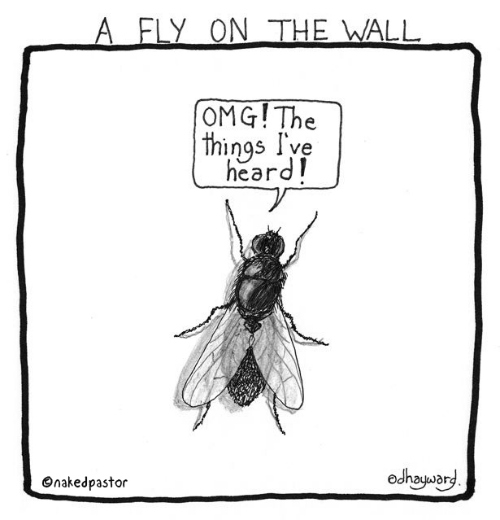
‘Fly on the Wall’ consultancy

I thought I’d share with you this week one of the most effective, yet simplest, consultancy techniques I have seen used.  It does not involve great expense, or even take a great deal of time. It does not involve reading lengthy consultancy reports or attending turgid feedback sessions.  In fact, it uses the resources and brains you already have at your disposal in your teams today.

fly-on-wallGather together a good cross-section of people  (but no more than about 8-10), from up and down the organisation,  ideally with different perspectives of your business, from both an internal and external facing focus.  Invite the ‘owner’ of the business problem or issue that requires ‘consultancy’ to spend 5-10mins (no more) outlining the issue. No prolonged explanations about why things won’t work, or haven’t worked. Just a simple, easy to understand, explanation of the facts, what is trying to be achieved, and what the business benefits will be once realised.

The collected group then have 5 mins to Continue reading

Coaching with emotion

We can’t stop ourselves having emotions. Indeed, why would we want to?  So, how do coaches coach from a place that ensures their emotions do not hi-jack their approach and derail the effectiveness of their engagements with clients?  What happens if you feel sorry for a client?  What if you get an overpowering desire to tell someone what they need to do?  What if something they say upsets you, or makes you angry?

Masterful coaches recognise that they can’t (and shouldn’t) block their own emotions, but rather, that they use these emotions to help them be a better coach.  By raising awareness of their own reactions and emotions, coaches can channel their coaching skills into better listening, richer rapport and deeper presence.

source: graciexela.blogspot.co.uk

source: graciexela.blogspot.co.uk

If your emotions leak into your questions, then they will lose impact, and judgements you are making will be transparent. If you are focusing on how you feel, you will not be listening fully to the client, and presence in the moment will suffer. Much better to be open and honest about emotions that are showing up for you. Sharing with a client that, “….this is making me feel uncomfortable right now, how is it making you feel?”, is fine. In fact, role-modelling the sharing of emotions in this way, may well help elicit a deeper exploration and sharing of emotion by the client.

It is when coaching reaches this emotional level that great things often start to happen, and progress and movement becomes possible.

The importance of engaging on an emotional level was discussed in a previous post called the The Upstairs & Downstairs Brain.

**************************

If you feel that you (or members of your team) would benefit from exploring ways to make substantial improvements to personal and collective effectiveness and productivity, please get in touch. Tailored learning programmes are available that have delivered proven benefits, whether your current focus is on:

  • a need to engage your workforce in a positive and compelling way through a transformation
  • how to ensure you get the best out of your investment in talent 
  • ensuring your senior teams, team leaders & middle managers are equipped to handle the conversations that are needed to ensure your organisation is operating as effectively and productively as it could be. 

Simply submit your contact details on the Contact Us page and I will be delighted to get in touch with you for an informal initial chat.


Visualise your way to happiness

source: uppereastsideinformer.blogspot.com

source: uppereastsideinformer.blogspot.com

Among the many advantages that the evolution of the human brain has afforded us, is an often overlooked capability – the power to ‘simulate’ the future. Humans are able to visualise and dream about future events. When you think about this, it is a pretty amazing ability. Future thinking is key to planning, anticipating, speculating and visioning. Imagining how events might turn out in your head before trying them out in real life turns out to be a skill that provides us with tremendous advantages.The brain’s pre-frontal cortex acts like a psychological immune system, that helps us alter our views of the world so that we feel better about things. This is displayed most dramatically in the way that humans synthesise states of happiness, regardless of what is actually going on in their world.

But is synthetic happiness of the same quality as ‘natural’ happiness?  Do we ‘know’ the difference?  Dan Gilbert describes ‘natural’ happiness as Continue reading

How close are you to your ‘A’ game?

I was intrigued by something that Rory McIlroy said recently in an  interview following his widely-reported ‘early exit’ from the Honda Golf Classic in Florida.  Clearly he has been going through a troubled time, with speculation bouncing between whether it is down to his new clubs deal, his relationship with tennis star Caroline Wozniaki, or, as he claimed in Florida, a troublesome wisdom tooth.

source: sports.yahoo.com/blogs/golf-devil-ball-golf

source: sports.yahoo.com/blogs/golf-devil-ball-golf

He summed up how he feels when he is off his game in very simple terms.  “I always think when I’m playing bad that it’s further away than it is.” (meaning his best game). I sense this is true for many of us, in all walks of life.  Rory went on to say “….If I have a bad round, it’s sort of like the end of the world.”   This ‘catastrophizing’  form of thinking, is, I am sure, familiar to many of us. When some aspect of our life (not always one that is most critical) is not working as well as we’d like, it can become magnified and generalised, to the extent that it contaminates our thinking and self-perception of other aspects of what we do and who we are.   Continue reading

We’re rewarding the wrong behaviours

The subject of bankers and their bonuses has raised its ugly head again this week. Yes, it is getting kind of boring.  If only because nothing new ever comes out of these media-driven examinations.  All we really get is a platform for the ‘public’ (or sections of the public) to express their disgust. What is there new to say?  Well, one or two thoughts spring to my mind (albeit not necessarily new).

First, the mass demonization of everyone who works in the banking industry is unhelpful and unfair. Indeed, a sizeable majority of those who work for the bank in the news this week, operate a long way (both physically and financially) from the lofty heights of the “City Bonuses” often quoted by the press. The people who work at the front desks of the provincial banks up and down the high streets, or in the call centres around the world, or in the admin departments at HQ, are not earning big bucks, and in the main, will never see a bonus no matter how good a job they do.

Second, the bonus system (not just in banking), one of the key incentivisation tools at the very heart of capitalism, is profoundly broken.

Let’s assume for a moment that monetary bonuses do have some merit as a means of incentivising staff to do a better job than they otherwise would do.  At the very least, one would expect that the measure of success used to decide whether the bonus should be paid, would be one that resulted in a direct improvement for the customer. That may be in the form of better value (financially), better quality or better service, but it should be something that is tangible and agreed (externally) as having resulted in that improvement.  

What has become all too prevalent in the crazy ‘bonus-driven culture’ of our businesses and organisations, is an industry of internally-driven, inward-looking, process improvement measures, which have little or no relevance to the end customer, or recipient of the service. Internal departments, in order to prove their value and viability, concoct complicated measures, based on process efficiency, productivity enhancements, employee engagement and so on. All worthwhile activities, no doubt, but irrelevant if the end customer experience is not impacted and does not improve. Despite this, great effort is expended in agreeing annual goals and targets, and even greater effort in gathering evidence to prove they have been achieved, regardless of whether the end customer is receiving improved service, value or product innovation.  The system has lost its way, and lost touch with its original purpose.  

Ah, original purpose. What was that anyway?   Continue reading

What is Coaching anyway?

I am sometimes asked by people what I actually do when I’m coaching. Before I have started to answer, it is often closely followed by a question about the difference between counselling (or therapy) and coaching. Of course, there is the text-book answer. Coaching is not intended to work from a position of fixing people. Coaching is rooted in the principles that people are naturally creative, resourceful and whole.  And that is a good and important principle that coaches adhere to

In coaching we are seeking to provide people with the self-awareness to be able to come up with their own choices, answers and solutions, to take responsibility, and be empowered to improve and fulfil their potential. All well and good. Nothing wrong with that. The agenda is the client’s to bring to the coaching and it is not the coach’s place to ‘judge’ what is important to the client or not.

source: listas.20minutos.es

source: listas.20minutos.es

This is where it can start to get tricky.  People will often present (particularly in a business setting) with a problem they want to fix.  It might be a business-related issue that they are stuck with and they are looking to work out a way forward with it.  Coaching can provide the client with a useful sounding board for their ideas, for the coach to explore areas that are causing the client to feel stuck, can provide the independent, non-judgemental environment that allows the client to clear their head before stepping back in to the fray with a new plan of action. There is nothing wrong with that of course, and for many people it is a great service.  Some clients will say “I always feel so much better just talking to you.”

But, do our clients deserve more than this from their coach?   Continue reading

Overcoming the Brain’s Negativity Bias

We didn’t get where we are today by being positive you know. Oh no.  Survival is a tough, uncompromising business.  Our ancient ancestors needed the negativity bias that is neurally wired into our brains in order to be successful. And successful they were; the fact you are reading this today being proof of that. The paradox is that this very successful survival mechanism – ‘the negativity bias’ – can often get in the way of people being able to experience life positively.

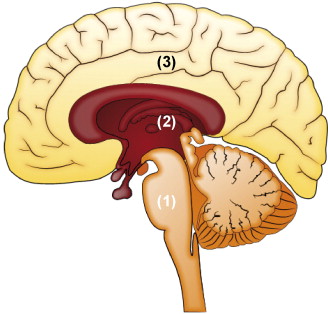
Let’s look at a simple model of how the human brain has been built up over tens of thousands of years of evolution.  (see also Rick Hanson’s article on this subject).          We can think of it as being composed of three (evolutionary) layers:

1. The Lizard Brain            This is the ‘old brain’. It shares many characteristics with the reptilian brain. It tends to fire in a reactive way. It is alert to dangers.  One classic and well-know example that is often quoted is the ’emotional hijack’ – when our emotions take over and we can actually feel like we are at the mercy of another brain. In some ways that is true.  When the ‘red mist’ falls across our eyes in moments of fury or fear, the lizard has taken over the controls.

2.   The Mammalian Brain      The middle layer of the brain, which we share with other mammals (in an evolutionary sense) is much more concerned with seeking rewards. More sophisticated processing takes place at this layer than in the ‘old brain’, although in neuroplastic terms it is still relatively ‘rigid’.

3.  The Primate/Human Brain    The most recently developed, upper layer of the brains of primates and humans is concerned primarily with attachments and relationships.   We see this most clearly in the use of communication, language, social network development and extracted thought concerned with abstract concepts such as philosophy, religion and science.

Some of the most recent advances in the science of neuroplasticity have started to reveal amazing abilities for the brain to change and alter shape (by creating new connections and thickening existing connections) as a result of experiences and repeated use.  While neuroplasticity can, and does, take place at all three levels of the brain, it does appear that it is much more difficult to affect changes in the lizard brain than in the primate/human level (or neocortical region) of the brain.  For a superb in-depth treatment of this area, I refer you to Rick Hanson, author of Buddha’s Brain.

Why is this important?  Well, it means that, no matter how sophisticated and developed our thinking becomes, no matter how much we believe we have our emotions under control, there is, deep within our 21st Century selves, a part of us which is operating on one simple rule, which is basically “Get Lunch – Don’t Be Lunch!”

Now, even in the wild, most anxious episodes resolve fairly quickly.  The highly attuned Continue reading