Is being urgent a good thing?

Well, that depends!  Critical issues and problems more often than not benefit from early attention, and a ‘true sense of urgency’ is usually what is required to break-through barriers, obstacles and resistance.

The real enemies of ‘true urgency’ are ‘complacency’ and ‘false urgency’.  You may be familiar with those imposters.

Complacency is a dangerous state of mind, mainly because people rarely believe they are being complacent (at least until after the event). In this state, people are content, satisfied and cling on to the status quo. They don’t look for new opportunities, they are not great fans of change, and tend to stick with what has always worked for them in the past.

False Urgency can be equally dangerous. People displaying this thinking and set of behaviours, are energized, active and busy. They are likely to be anxious or frustrated. Their behaviour can often be mistaken for being productive and important simply because they are busy and active. However, their activity is often misdirected, lacking focus and chaotic.


True urgency is neither of these things.  People displaying true urgency do not Continue reading

Step off the dance floor once in a while

I was struck by this article by Paul Shoemaker on the “6 Habits of True Strategic Thinkers”.  It all makes sense and I am sure most good leaders will know this stuff – at least they will when they are away from the thick of the action.

So, what are the 6 habits effective leaders should form to get strategic?

  • Anticipate
  • Think Critically
  • Interpret
  • Decide
  • Align
  • Learn
A good list (for more detail on what’s behind each item go to the article) to add to any leader’s toolkit.  However, we all have “espoused” theories, and usually they are pretty sound. The problem comes when we start trying to put them into action.  What we then see are “behaviours in practice”, which more often than not are quite different from what we say we should or would do.
The one additional habit I would add, is STAND BACK and OBSERVE.
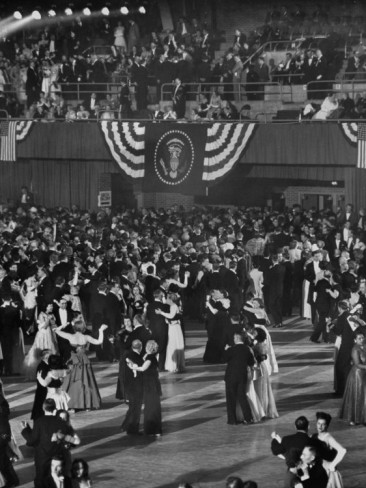
This has been expressed in a number of ways by different people.  One analogy I like is that of observing the dance-floor from the gallery.  Every now and then it makes sense to stop dancing, and observe the dancers from the gallery.  Watch their movement, the patterns they make, spot the crowded parts of the floor and watch for the different ways people are dancing. What can you learn? Then, when you rejoin the dance, you will do so with new knowledge, with a fresh perspective, and with strategies to put in to practice.
Another useful way to think about it is Continue reading

How do you Influence People?

How often have you thought about your own personal influencing style?  And, has it changed over the course of time?  If it has changed, has that been as a result of your own careful thought-out intervention and change, or has it happened subconsciously, so that you are only aware of the change as a result of reflection?  I suspect that, like most of us, you have not often given it too much thought, especially when in the thick of the action, when deadlines are looming, and decisions just have to be made.

Influencing others is at the very core of Leadership. While that has always been the case, in today’s complex, inter-connected world, it is even more true. To be successful in a world where a leader had direct control over their troops, in an environment where command-and-control was all that was needed, where the tasks expected of people were simply expressed (basically “do-it”, or the slightly more persuasive JFDI), influence was probably less important than straightforward authoritarian directorship.

Effective leaders in today’s business world, recognise that Continue reading

“Coaching is like Brain Surgery”. So, how sharp is your scalpel?

For a long time the received wisdom within the world of brain science has been about structure, fixed neural connections, localization of function and other related concepts. This view was largely influenced by some of the pioneering work of people like Hubel & Wiesel, Nobel Prize winners in 1981.

The idea that the brain may actually be ‘plastic’ in some way, that it may continue to make new connections, and that regions of the brain may actually be able to adapt and become responsible for function that it was not originally ‘mapped’ for, was dismissed until very recently.

The great news is Continue reading

Why do we bother with Employee Surveys?

When corporations wanted employees who did only what they were told, employee surveys may have served some purpose. They were rooted in the traditional command-and-control structures, and, no doubt, provided management with a barometer for employee feeling. They may even still provide useful information on improvements to the staff canteen , or how to better manage the car park.  But, can employee surveys provide anything useful in businesses that espouse employee empowerment and forward-thinking organisational learning? I am not convinced they can.

They encourage behaviours that leave employees and management in their traditional places. They do not encourage accountability by employees, and they compel management to feel that they need to fix the things that employees tell them need fixing.  Neither of these results is healthy and neither does anything to transform businesses or organisations into genuine learning systems. In fact, what we get is individual defensive reasoning and

Continue reading

Stuck in the Middle with you

The words of the late great Gerry Rafferty are ringing in my ears today.  The ‘squeezed middle’ is constantly being talked and tweeted about. Whether in relation to the controversial NHS bill, or the impact of rising University fees, or proposed changes to Child Benefit,  people argue that the most poor and needy have safety nets to protect them, while the richest in our society can afford to pay whatever changes are imposed. It is the poor people in the middle that suffer most.  I’m just not sure who is in this ‘middle’ (or should that be muddle) and who is not.  Is the middle a narrow slice of our society, squashed between haves and have-nots, or is the middle actually a massively thick wedge accounting for the vast majority of us?

What I do know is that Continue reading

What Matters Now

I urge you to have a dip in to the attached eBook.  It’s a collection of fantastic ideas and thoughts from an array of thinkers and writers that acts like a ‘guidebook to life’.  

You may not find every page of interest or even agree with some of the sentiments, but I am sure you will find one or two nuggets that will really resonate with you.

Seth Godin has done the hard work in pulling it together and it would be very rude of us if we didn’t read it.

What’s more, it’s free. You can browse it in web/blog format or download a PDF version.

Here are some of the highlights that worked for me……..

  • Don’t worry about finding inspiration. It comes eventually.
  • The best way to get approval is not to need it.
  • When times are tough, vision is the first casualty. Before conditions can improve, it is the first thing we must recover.
  • The 19 Es of Excellence.
  • Ripples.
  • Take a risk. Unleash your curiosity. Venture further.
  • The list of Nobodys.(!)

And much more…..

Wrong thing well or right thing poorly. Which do you prefer?

People at the top (however you define that) are more in need of support, coaching, or even just “an ear” than most, and yet they are the least likely to get it. High achievers are afraid to show any limitations. Asking for help – whatever that form takes – is to admit weakness, and our culture does not take kindly to ‘weak leaders’ who need help.

So, how do we want our leaders to be?  What is our model of the perfect leader?

If we don’t expect them to need help, then I fear we are expecting too much of them, and, at the same time, we are creating a ‘vicious cycle’ from which we won’t escape.

The norms and mores of our society have created unrealistic expectations, and as a result we see smart, ambitious people who are less productive and satisfied than they should or could be. Anxiety about performance compromises progress, resulting in lower levels of risk-taking and plateauing careers.

It is not unusual to see high potential achievers avoiding  Continue reading

You Cannot Lead without Inquiry

BLOG UPDATE:  This article was originally posted in February 2012, and I am delighted to see that Hamza Kashgari, the young Saudi writer who inspired the article, has eventually been released from his prison sentence in Saudi Arabia. If you missed the original story, Hamza was imprisoned for expressing views deemed blasphemous by the authorities.  

(see Freedom House article on his release here)

**********************************************************

POSTED Feb 20, 2012      Too many people in positions of authority operate from a position of fear. Fear of not knowing, fear of being found out, fear of looking incompetent, fear of losing what has taken them years to attain.  This is true in companies, public service and politics. People who are in these positions are rarely stupid.  Being smart is usually a big factor in them getting to where they are. But, once they are there, something seems to kick in which is profoundly ‘anti-learning’. To paraphrase the great Chris Argyris, “Smart People find it tough to Learn”.

Today’s story in The Nation of Hamza Kashgari, a 23-year-old journalist, who faces potential death for daring to question, shines a powerful spotlight on the fear with which ‘leaders’ operate. As a species we progress by learning.  We are problem solvers, we are cognitive thinkers, we naturally question, challenge and inquire. It is by doing so that we have overcome the multitude of obstacles that have stood in the way of our evolution over millenia. But, we do not and cannot stand still. To do so would consign the human race to extinction, probably through self-destruction. More than ever before, we require Continue reading

Fancy a Free Coaching Session?

This is International Coaching Week 2012! And to mark it, I am offering a limited number of free coaching sessions to the first people who respond through this website. All you need to do is submit your contact details through the Contact Us page of this website together with a brief summary of what you’d like to get out of your free coaching session.

It’s that easy.  Go on, what have you got to lose?