“May your choices reflect your hopes, not your fears.” ~ Nelson Mandela
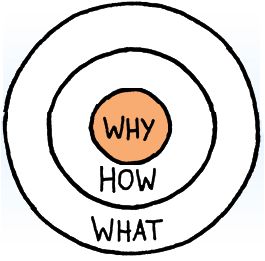
The current Scottish Independence campaign has highlighted many questions and parallels with the world of leadership and inspiration. Reading this post about the importance of Getting Back to Why, I was reminded of Simon Sinek’s Golden Circle. People are inspired by “Why” and not by “What” or “How”. To gain a greater understanding of how the golden circle model works, this TED talk is well worth watching.
The independence campaign has almost exclusively been conducted on the question of How. “How will Scotland run its economy?” “How will it balance its books?” “How will it ensure its security?” How…! How…! How…! Questions that do not inspire, that do not contribute answers, and which, in the main, generate doubt, uncertainty and fear. It is little surprise, therefore, that a predominantly pro-union press and media have allowed the how question to dominate the campaign.
Simon Sinek has shown that the great companies, organisations, politicians and leaders inspire, generate energy and instil hope with “why”. Martin Luther King did not start his speeches by telling people how everything would work in a world after civil-rights was achieved, he started by telling people about his Dreams. Inspiration and hope comes not from having all the details known beforehand, but by being clear on the bigger vision, the grand purpose. No major change in history has ever been made where people have known clearly what lay ahead beforehand. They rarely know how things will work out, but they have known why they wanted to make the change. When purpose and vision is clear, then anything becomes possible. Being clear on the how is of less significance. Those details will emerge, they will evolve, driven by the energies of an inspired and optimistic people who know clearly why they want change to happen.

Back in January I wrote about how it seemed to me that the question Why? is so much more fundamental to the independence referendum than the question How? Yet the mainstream of the debate has been framed almost entirely by How.
The reason’s not hard to see. It’s simpler to place practical obstacles – in this case mainly economic and political – in someone’s path than to convince them of the moral, philosophical or emotional benefits of the status quo. Yet whichever way you plan to vote you must surely be clear about why you do or don’t want independence before you start to consider how it might or might not come about.
I was reminded of that post this week by a friend at the Edinburgh International Book Festival. It made me think that I myself have been too easily caught up in the How? of late, and that…
View original post 944 more words
 Gyro Consulting Services