Learning from Wimbledon (revisited)

It’s one year since I wrote the post called Learning from Wimbledon.  Andy Murray had just lost an emotionally charged final to Roger Federer. His tearful speech in front of a packed Centre Court and millions more on TV was hard to watch. But, despite the despair and pain that he (and his followers) felt, it was clear that something had changed. His raw talent was clearly good enough to win the major prizes. His tactical awareness was not in question. His physical fitness had been transformed such that no-one in the game worked harder to ensure they were able to go the distance.  The final piece of the jigsaw for Andy was conquering his Inner Game. For years his temperament had been called into question. He cracked at the big moments. The pressure placed on him by the British media and public, hungry for a British Wimbledon men’s champion, was becoming unbearable. If Andy was to succeed, it was going to be a victory inside his own head that would secure the breakthrough.
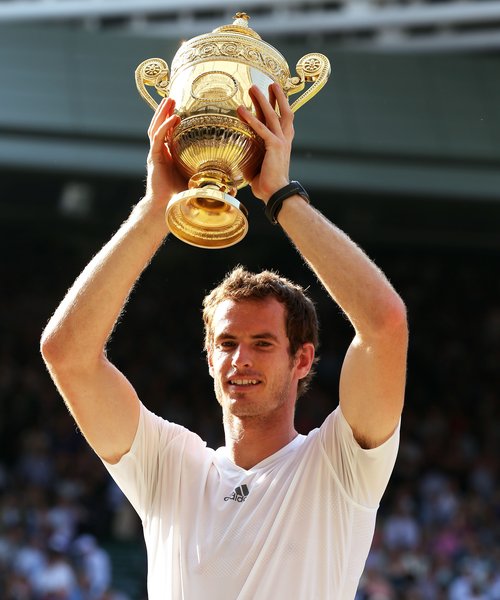
andy-murray-wins-wimbledon-2013-1373217266-custom-0The Inner Game is played out completely inside the brain. To succeed in the Inner Game one must quieten the ‘voice’ in the head that judges, criticises and worries. It can act in many subtle (and not so subtle) ways, but basically it does one of two things. It either causes us to dwell on and regret past events (e.g. a poorly executed drop shot at the end of the last rally that cost you the game), or it worries about and raises anxiety levels about future events (e.g. if I don’t win my next service game, my opponent will be serving for the match). Neither of these thought processes are useful or conducive to delivering your peak performance. To perform at your best, you need to be operating neither in the past nor in the future, but with total concentration on the present.
Continue reading

The Power of being ‘Clueless’

“There is no such uncertainty as a sure thing.” ~ Robert Burns

When we believe we are right, we don’t go looking for data to check otherwise. We close down our curiosity antennae and remain blissfully unaware of alternative views of the world. It can be cosy and comfortable existing in this state of course. Sticking with what you know keeps life simple. You don’t have to experience the dis-orientation of constantly questioning and challenging your assumptions. It lets you go about your daily business with minimal fuss. Life’s complicated enough, after all, without setting out to make it more challenging.

But, think about it a little longer. What if we all adopted this approach, all of the time? Nothing would ever change. Where would innovation come from?  What would happen to creativity?  The problems that we face, big and small, would simply become ‘accepted’ and incorporated into our ‘reality’, our ‘truth’, and not open to question. I guess this approach is more prevalent than we care to imagine. How much of our world, and ‘your’ individual ‘reality’, is governed by assumptions and beliefs? Continue reading

Lessons from a journey through Wales

Life is like riding a bicycle.  To keep your balance you must keep moving                  ~ Albert Einstein

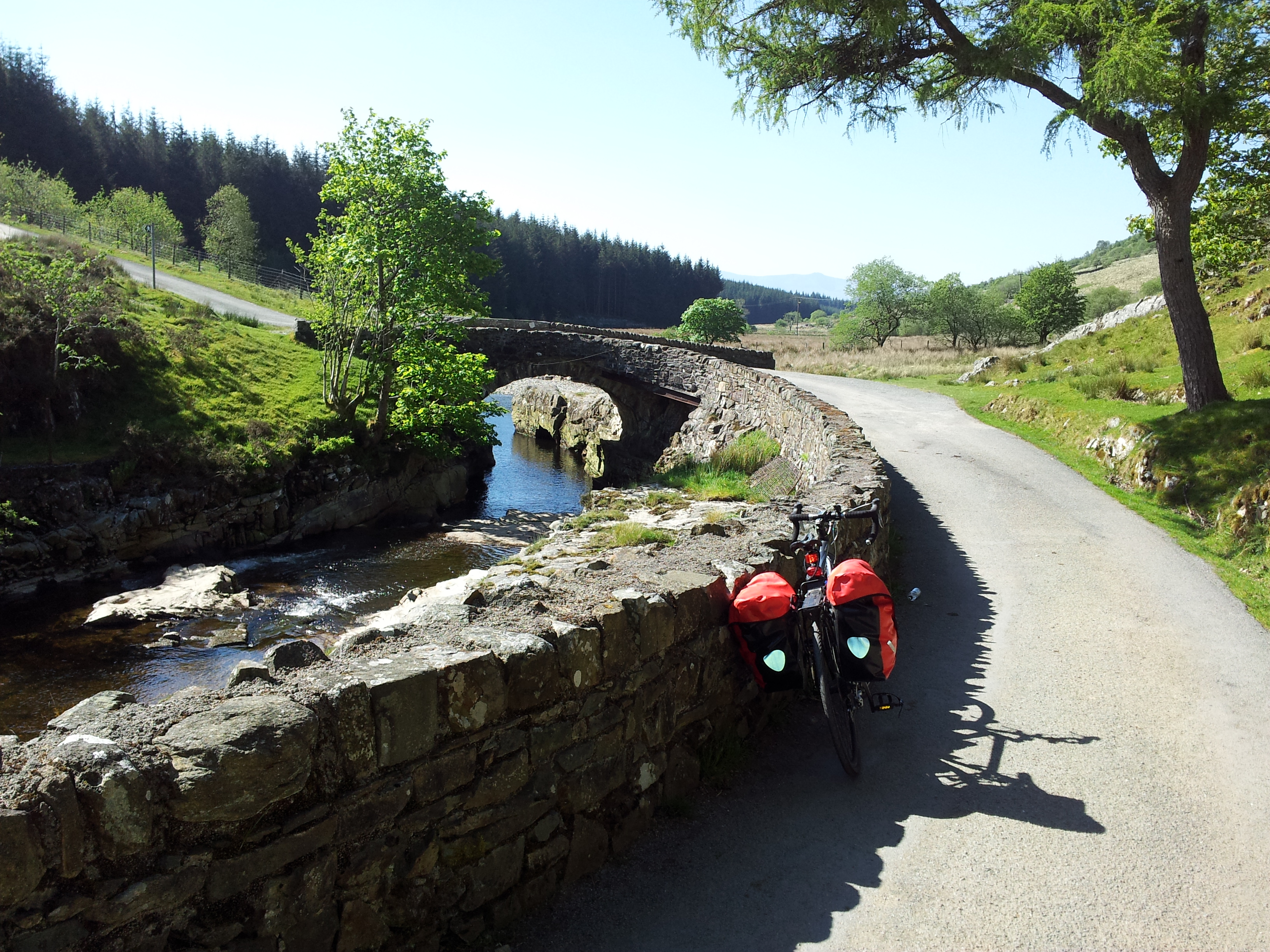
During the last week I went on a solo adventure. I cycled the entire length of the country. Now, before those of you living in places like Australia or the USA get really excited, I need to point out that the country I am talking about is Wales.  But hey, that’s an adventure for me. If you don’t know Wales, it is hilly. From top to bottom, all 250 miles or so of it, are either going up or going down, though I am certain there are many more ups than downs!

It was a superb trip, spread over four and a half days, in glorious sunshine, through some of the UK’s most beautiful countryside.  I had no big plan other than to enjoy the journey and prove to myself that I could rise to the challenge.  As I came toward the end of the road, I began to ask myself what, if anything, I had learned along the way. I cannot report any spiritual awakening, or major personal transformations, I’m afraid, but I thought I would  share with you a few of the musings of my journey.

1. Take Frequent Breaks.  There were many points where I was sure I could not go on.  I was exhausted. The hill was too steep. It was too hot.  No matter how spent I felt, I was amazed how even a 5 min break, with a bit of refreshment and a stretch, was enough to allow me to carry on. It worked, over and over again.  I do have a tendency to work on tasks until they’re completed, often ‘forgetting’ to take breaks. I know now how much more re-focused and re-energised you can be with frequent breaks.

2. Have small, regular goals.  The ‘Big Vision’ – the feeling of completing the journey – is great.  It sets the direction, it inspires you to take on the challenge in the first place, and it helps occasionally to play the picture over in your mind of what finishing will be like (especially when the going gets tough).  But, what got me through was having small targets – the next hill, what’s round the next corner, what’s the next village. This short-term chunking allowed me to focus only on the immediate stage, and not be overwhelmed by the scale of the entire challenge.

3. Rhythm is all important.  This lesson only really came to me later on the journey.  It’s difficult to explain how it happened, as it was something that ‘came to me’ without consciously seeking it. But, it was quite clear that the effort required was much easier once I hit upon a steady, relaxed rhythm.  Fighting against the rhythm is tiring and, on steep hills, I found I ground to a halt the more effort I put in. Relaxing and pumping out a slower, but even, tempo allowed me to go on much longer, and I even began to enjoy hills!

I also learned two other, more trivial, lessons. Continue reading

What’s your favourite Question?

“If I had an hour to solve a problem and my life depended on the solution, I would spend the first 55 minutes determining the proper question to ask, for once I know the proper question, I could solve the problem in less than five minutes.”  (Albert Einstein)

Have you ever thought about the power of questions?  We ask questions all the time but we probably don’t think much about doing it, or what impact our questions are having. There’s more to questions than simply choosing whether to use What, Where, Who, When, Which, How or Why?  Good questions are what drives creativity, discovery and progress.  But, I have a concern that our business culture and organisations do not encourage and reward behaviour that promotes good questions. Instead, our leaders and managers are expected to have ‘answers’ rather than questions and are expected to make decisions and fix problems.  This drives our management cultures toward adopting an ‘advocacy’ rather than an ‘enquiry’ philosophy, reinforcing the expectations of the workforce and of the leaders themselves.

More than ever, we need ‘new thinking’, fresh paradigms, and questions that challenge the ‘way things have always been done’.  Unfortunately, we don’t train people in the skill of constructing powerful questions, perhaps reinforced by the age-old ‘dogma’ that we pay people to come up with answers and solutions, not ask more questions.  Of course this is short-sighted thinking, and it is time to value the power of questions and to invest in the development of this most important of skills.

So, what makes a question ‘powerful’?  Here is a list proposed by Eric E. Vogt, Juanita Brown, and David Isaacs, 2003, in “The art of powerful questions”.

Powerful questions……

  • generate curiosity in the listener
  • stimulate reflective conversation
  • are thought-provoking
  • surface underlying assumptions
  •  invite creativity and new possibilities
  • generate energy and forward movement
  • channel attention and focus inquiry
  • stay with participants
  • touch a deep meaning
  • evokes more questions

A powerful question will also spread across networks of conversation, pervade organizations and communities, and are more often than not the catalyst for large-scale and transformational change.

Here are some examples of the types of questions that I believe have the power to shift thinking, tap in to people’s creativity, and open up possibilities that ‘more conventional’ ways of tackling issues may never discover. Continue reading

You Cannot Lead without Inquiry

BLOG UPDATE:  This article was originally posted in February 2012, and I am delighted to see that Hamza Kashgari, the young Saudi writer who inspired the article, has eventually been released from his prison sentence in Saudi Arabia. If you missed the original story, Hamza was imprisoned for expressing views deemed blasphemous by the authorities.  

(see Freedom House article on his release here)

**********************************************************

POSTED Feb 20, 2012      Too many people in positions of authority operate from a position of fear. Fear of not knowing, fear of being found out, fear of looking incompetent, fear of losing what has taken them years to attain.  This is true in companies, public service and politics. People who are in these positions are rarely stupid.  Being smart is usually a big factor in them getting to where they are. But, once they are there, something seems to kick in which is profoundly ‘anti-learning’. To paraphrase the great Chris Argyris, “Smart People find it tough to Learn”.

Today’s story in The Nation of Hamza Kashgari, a 23-year-old journalist, who faces potential death for daring to question, shines a powerful spotlight on the fear with which ‘leaders’ operate. As a species we progress by learning.  We are problem solvers, we are cognitive thinkers, we naturally question, challenge and inquire. It is by doing so that we have overcome the multitude of obstacles that have stood in the way of our evolution over millenia. But, we do not and cannot stand still. To do so would consign the human race to extinction, probably through self-destruction. More than ever before, we require Continue reading