Coaching by nudges

A recent post on this blog about “what coaching is“, as usual prompted further questions and requests for more information on what coaching entails.  Clearly there remain misunderstandings about the role of coaching within businesses and organisations, with some people still associating it with a form of remedial ‘treatment’. Having said that, I do see far greater awareness and understanding today, than even a few short years ago. Not so long ago, you might have heard a reaction from a colleague that went something like this.

“Oh you are getting ‘coaching’.  Why?  What’s wrong?  Did your annual appraisal go badly?”

The implication (and misunderstanding) of course being that coaching was being used as a tool to ‘fix’ something that had clearly gone wrong.  Perhaps to raise someone’s poor performance to a more acceptable level.

Now, I find you are much more likely to hear something like the following.

“Oh you are getting ‘coaching’. Amazing!! They must think a lot of you and see massive potential.  I wish I could get coaching through my company.”

This shift in mindset, also reflects a much more accurate understanding of what coaching is; an approach that helps people fulfil their potential.  Not a tool for rehabilitation or rectification, but a vehicle that allows people to explore their values and beliefs, their vision and their purpose. It is much more sought after, and is now seen as one of the ‘perks’ of the job. Career changers, especially those in middle management and executive positions, are more and more looking for coaching as an incentive, and benefit provision, when choosing between companies, reflecting the increasing value being placed upon it.

Coaching enables people to gain greater self-awareness and insight, allowing them to make informed choices and decisions, to be more conscious of how they react in given situations, and to develop life-strategies that will serve them more effectively.  Coaching, quite simply, helps people get more of what they want, be more fulfilled, and enable more success.

One of the dilemmas Continue reading

Resist the temptation to be clever

I have often been asked by people who are unfamiliar with coaching, “How can you coach people in areas that you have no experience or knowledge of?”

I sometimes use this as an opportunity to help people obtain a clearer understanding of what coaching actually is.  I spend time explaining that coaching is not the same as mentoring. That it is not about specific knowledge or skills transfer. In fact, it can actually be an advantage to ‘not know’, as it makes it easier for the coach to ask totally naive questions with no pre-judgement.

source: events.stanford.edu

source: events.stanford.edu

To emphasise this point, I will often allude to the possible dangers that can emerge when you are too close to an area. When the coach is carrying their own ‘baggage’ around, they can slip into expressing their own views, or ask questions loaded with judgement. This can be one of the biggest challenges facing the internal coach. I worked as a coach within a corporate environment for a number of years. It was hugely rewarding, and offered a tremendous opportunity to be part of great change within the organisation. However, I know from personal experience, that when certain issues arose during coaching sessions, where I as the coach had specific knowledge about something, it presented me with a dilemma. I could, and sometimes did, inject a piece of knowledge that would help clarify some confusion, and help move the client past a particular obstacle.  Indeed, it would be wrong (and could be argued as unethical) not to. However, it is important to recognise that when you are doing that, you are no longer being a coach, and it is very important to tell the client that, so as to avoid any confusion about your role as a coach.

There is a real danger however, particularly for a new coach (as I found to my cost on occasions), that you may slip in and out of your coach role too many times, or for too long. The relationship may even morph into one that is no longer ‘coaching’, and into something else entirely. You may find yourself Continue reading

‘Fly on the Wall’ consultancy

I thought I’d share with you this week one of the most effective, yet simplest, consultancy techniques I have seen used.  It does not involve great expense, or even take a great deal of time. It does not involve reading lengthy consultancy reports or attending turgid feedback sessions.  In fact, it uses the resources and brains you already have at your disposal in your teams today.

fly-on-wallGather together a good cross-section of people  (but no more than about 8-10), from up and down the organisation,  ideally with different perspectives of your business, from both an internal and external facing focus.  Invite the ‘owner’ of the business problem or issue that requires ‘consultancy’ to spend 5-10mins (no more) outlining the issue. No prolonged explanations about why things won’t work, or haven’t worked. Just a simple, easy to understand, explanation of the facts, what is trying to be achieved, and what the business benefits will be once realised.

The collected group then have 5 mins to Continue reading

We’re rewarding the wrong behaviours

The subject of bankers and their bonuses has raised its ugly head again this week. Yes, it is getting kind of boring.  If only because nothing new ever comes out of these media-driven examinations.  All we really get is a platform for the ‘public’ (or sections of the public) to express their disgust. What is there new to say?  Well, one or two thoughts spring to my mind (albeit not necessarily new).

First, the mass demonization of everyone who works in the banking industry is unhelpful and unfair. Indeed, a sizeable majority of those who work for the bank in the news this week, operate a long way (both physically and financially) from the lofty heights of the “City Bonuses” often quoted by the press. The people who work at the front desks of the provincial banks up and down the high streets, or in the call centres around the world, or in the admin departments at HQ, are not earning big bucks, and in the main, will never see a bonus no matter how good a job they do.

Second, the bonus system (not just in banking), one of the key incentivisation tools at the very heart of capitalism, is profoundly broken.

Let’s assume for a moment that monetary bonuses do have some merit as a means of incentivising staff to do a better job than they otherwise would do.  At the very least, one would expect that the measure of success used to decide whether the bonus should be paid, would be one that resulted in a direct improvement for the customer. That may be in the form of better value (financially), better quality or better service, but it should be something that is tangible and agreed (externally) as having resulted in that improvement.  

What has become all too prevalent in the crazy ‘bonus-driven culture’ of our businesses and organisations, is an industry of internally-driven, inward-looking, process improvement measures, which have little or no relevance to the end customer, or recipient of the service. Internal departments, in order to prove their value and viability, concoct complicated measures, based on process efficiency, productivity enhancements, employee engagement and so on. All worthwhile activities, no doubt, but irrelevant if the end customer experience is not impacted and does not improve. Despite this, great effort is expended in agreeing annual goals and targets, and even greater effort in gathering evidence to prove they have been achieved, regardless of whether the end customer is receiving improved service, value or product innovation.  The system has lost its way, and lost touch with its original purpose.  

Ah, original purpose. What was that anyway?   Continue reading

What is Coaching anyway?

I am sometimes asked by people what I actually do when I’m coaching. Before I have started to answer, it is often closely followed by a question about the difference between counselling (or therapy) and coaching. Of course, there is the text-book answer. Coaching is not intended to work from a position of fixing people. Coaching is rooted in the principles that people are naturally creative, resourceful and whole.  And that is a good and important principle that coaches adhere to

In coaching we are seeking to provide people with the self-awareness to be able to come up with their own choices, answers and solutions, to take responsibility, and be empowered to improve and fulfil their potential. All well and good. Nothing wrong with that. The agenda is the client’s to bring to the coaching and it is not the coach’s place to ‘judge’ what is important to the client or not.

source: listas.20minutos.es

source: listas.20minutos.es

This is where it can start to get tricky.  People will often present (particularly in a business setting) with a problem they want to fix.  It might be a business-related issue that they are stuck with and they are looking to work out a way forward with it.  Coaching can provide the client with a useful sounding board for their ideas, for the coach to explore areas that are causing the client to feel stuck, can provide the independent, non-judgemental environment that allows the client to clear their head before stepping back in to the fray with a new plan of action. There is nothing wrong with that of course, and for many people it is a great service.  Some clients will say “I always feel so much better just talking to you.”

But, do our clients deserve more than this from their coach?   Continue reading

Enough v Perfect? You choose.

I am enough!

As a leader, would you ever tell your people they are “Already enough”?  What would stop you saying that?  Have you ever said to yourself, “I am enough”?

with thanks to: Hugh at gapingvoid.com

with thanks to: Hugh at gapingvoid.com

Doesn’t it amount to an admission of defeat? Isn’t it saying I can’t get any better? Where is the ambition in the word “enough”? It is surely the antithesis of everything we aspire to. To keep improving, to become more effective, to control, to perfect. To be perfect.

But, think again. We are a society riddled with uncertainty. As a result we battle against that uncertainty and it comes out as anger, as fear, and with bitterness. The more scared we get, the more certain we become in our beliefs. The angrier we get, because others just don’t get it, the more it results in increased frustration and fear. A vicious cycle of fear, anger and increasing uncertainty.The struggle to attain is driven by ever rising expectations. Expectations from where? From parents, from peers, from ourselves? The pressure to be the best you can be, to maximise your potential. They are well-meaning expressions, I find myself using them as self-motivators, what harm can they do? The trouble is, they don’t come with an instruction manual. No-one ever knows Continue reading

Did the earth move?

As a Leadership Coach of a number of years, I may be about to say something that upsets my fellow coaches, or worse, loses me future business as a coach! But, I’ll risk it for the sake of sharing what I believe needs to be said.  As coaches (and probably as clients too) we shouldn’t expect too much from the ‘coaching session’ itself.

What do I mean by this?  Well, I know there are coaches (and I have had this feeling too at times), who worry that, if the ‘earth doesn’t move’ for their clients during the coaching session, they must being doing something wrong.  We dream of our clients having ‘eureka’ moments, where the lights go on, and the path to their future vision becomes clearly illuminated.  Not only is this an unrealistic expectation (at least on each and every coaching engagement), it also ignores the fact that people are very different in the way that they process information and how they deal with issues of change.  I speak from personal experience in this matter.

There have been times, when I have been receiving coaching, that I have worried about how I have been showing up in the session. Sometimes I have felt less than engaged, or sensed that I had made the session unnecessarily challenging for the ‘poor coach’. I know (with my coach’s hat on) that I needn’t have worried about that. Coaches, are, after all, professionally trained and skilled in both supporting and challenging their clients, as appropriate, however they show up.

What I do know, from personal experience, is that my ‘eureka’ moments have tended to happen far away from the coaching session, and at moments when I am least expecting it. You see, I like models and frameworks. I enjoy concepts, paradigms and theories. My preferred method of processing information Continue reading

What’s your favourite Question?

“If I had an hour to solve a problem and my life depended on the solution, I would spend the first 55 minutes determining the proper question to ask, for once I know the proper question, I could solve the problem in less than five minutes.”  (Albert Einstein)

Have you ever thought about the power of questions?  We ask questions all the time but we probably don’t think much about doing it, or what impact our questions are having. There’s more to questions than simply choosing whether to use What, Where, Who, When, Which, How or Why?  Good questions are what drives creativity, discovery and progress.  But, I have a concern that our business culture and organisations do not encourage and reward behaviour that promotes good questions. Instead, our leaders and managers are expected to have ‘answers’ rather than questions and are expected to make decisions and fix problems.  This drives our management cultures toward adopting an ‘advocacy’ rather than an ‘enquiry’ philosophy, reinforcing the expectations of the workforce and of the leaders themselves.

More than ever, we need ‘new thinking’, fresh paradigms, and questions that challenge the ‘way things have always been done’.  Unfortunately, we don’t train people in the skill of constructing powerful questions, perhaps reinforced by the age-old ‘dogma’ that we pay people to come up with answers and solutions, not ask more questions.  Of course this is short-sighted thinking, and it is time to value the power of questions and to invest in the development of this most important of skills.

So, what makes a question ‘powerful’?  Here is a list proposed by Eric E. Vogt, Juanita Brown, and David Isaacs, 2003, in “The art of powerful questions”.

Powerful questions……

  • generate curiosity in the listener
  • stimulate reflective conversation
  • are thought-provoking
  • surface underlying assumptions
  •  invite creativity and new possibilities
  • generate energy and forward movement
  • channel attention and focus inquiry
  • stay with participants
  • touch a deep meaning
  • evokes more questions

A powerful question will also spread across networks of conversation, pervade organizations and communities, and are more often than not the catalyst for large-scale and transformational change.

Here are some examples of the types of questions that I believe have the power to shift thinking, tap in to people’s creativity, and open up possibilities that ‘more conventional’ ways of tackling issues may never discover. Continue reading

Is being urgent a good thing?

Well, that depends!  Critical issues and problems more often than not benefit from early attention, and a ‘true sense of urgency’ is usually what is required to break-through barriers, obstacles and resistance.

The real enemies of ‘true urgency’ are ‘complacency’ and ‘false urgency’.  You may be familiar with those imposters.

Complacency is a dangerous state of mind, mainly because people rarely believe they are being complacent (at least until after the event). In this state, people are content, satisfied and cling on to the status quo. They don’t look for new opportunities, they are not great fans of change, and tend to stick with what has always worked for them in the past.

False Urgency can be equally dangerous. People displaying this thinking and set of behaviours, are energized, active and busy. They are likely to be anxious or frustrated. Their behaviour can often be mistaken for being productive and important simply because they are busy and active. However, their activity is often misdirected, lacking focus and chaotic.

True urgency is neither of these things.  People displaying true urgency do not Continue reading

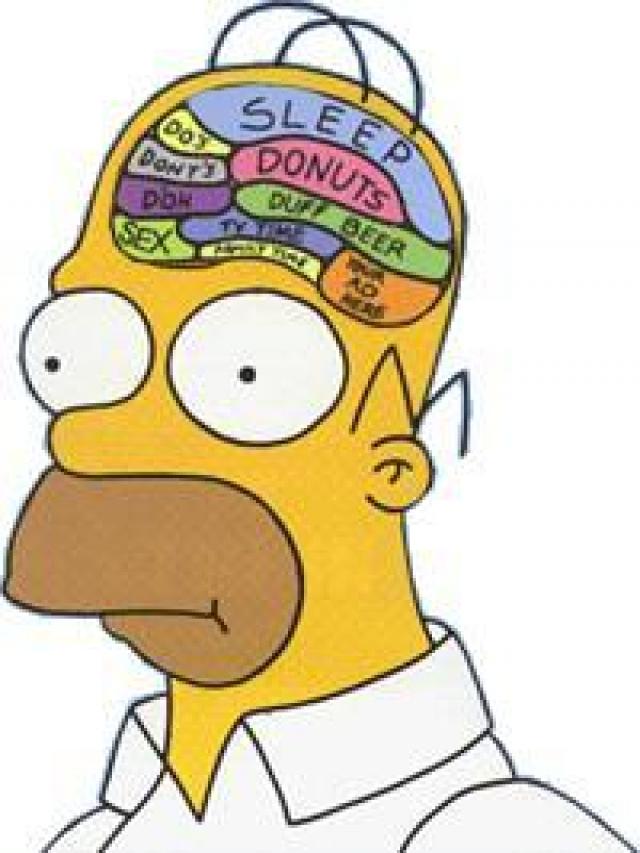
“Coaching is like Brain Surgery”. So, how sharp is your scalpel?

For a long time the received wisdom within the world of brain science has been about structure, fixed neural connections, localization of function and other related concepts. This view was largely influenced by some of the pioneering work of people like Hubel & Wiesel, Nobel Prize winners in 1981.

The idea that the brain may actually be ‘plastic’ in some way, that it may continue to make new connections, and that regions of the brain may actually be able to adapt and become responsible for function that it was not originally ‘mapped’ for, was dismissed until very recently.

The great news is Continue reading