Leading Small Countries to Big Futures. Reflections from the edges of Europe.

I have recently returned from visiting two European countries in quick succession. The first, Scotland, is in the far North West of Europe, and has much in common with Norway and Iceland, while the other, Albania, is in the South East of the continent, and has more in common with Greece and Serbia. Two countries in stark contrast to one another in so many ways, but also with many intriguing parallels. Both are proud countries with long and rich histories, of similar relative size and population, both with rich energy reserves not yet fully explored and exploited, and both at a cross-roads in their respective journeys. The contrasts, on the other hand, are stark.

Albania is a country which has remained fiercely independent through turbulent times. When former Yugoslavia tried to annex the country, it formed alliances first with Russia and later with China, but gave up on both of these super-powers to create an isolationist state. Scotland on the other hand gave up its independence in the early 1700s, joining a Union with England, Wales & Northern Ireland to form today’s United Kingdom.

Albania is currently seeking to come in from the cold with a long term plan to join the EU. It has a long way to go to satisfy the many conditions required, even to become a ‘candidate state’. There are massive improvements required on the economy, human rights, open & transparent democratic elections, infrastructure, and more.  Scotland, meanwhile, has a proud and reputable tradition in its standards of education and democracy, as well as in its finance and legal systems. It is currently engaged in a national and UK-wide debate on whether its future is best served as an independent state once again, or to continue as part of a union within the United Kingdom.

What particularly fascinates me about these countries, and the significance of their respective moments in history, is how their Leadership will choose to navigate the challenges that will be thrown at them, and how they will communicate the key messages that they believe will bring people with them.

Albania, since being free of the stranglehold of communism and isolationism, has rapidly become a country of massive contrasts and disparity. Top of the range German and Japanese cars share the (under-developed) roads with donkeys and hand-pulled carts. The gap between rich and poor is enormous and appears to be widening. The ‘ruling class’ is accused of corruption, and that includes the current Leader, Sali Berisha. Trust in leadership is in short supply and yet the people remain optimistic, perhaps still buoyed by the recency of their freedom from the oppressive chains of communism that led to their world isolation. The challenge for the leadership in Albania will be to harness and nurture that optimism, and not exploit it, and to work relentlessly to gain trust and credibility.

Scotland is very different, and its Leadership faces a different type of battle. Scotland has been part of a union for over 300 years. The Scots people have a reputation for being cautious, pragmatic and, some say, dour. Scots do not heap praise on its famous and successful sons and daughters. They like to keep people in their place and ensure they do not get ideas above their station. This is a national characteristic. Alex Salmond, the current leader in the Scottish Parliament, who is keen to persuade the nation of the benefits independence will bring, will need to find ways to energise and mobilise the people, and overcome the culturally entrenched tendency to accept the status quo After all, it’s easier to stay where one is; our brains are wired to resist change. No matter how unsatisfied we may be (short of a life-threatening situation), our brains will do their best to convince us that what got us here is working, so “why change anything”?

What Scotland does have in its favour is its history of egalitarianism. It is a country with a heritage of social justice and fairness, and is coming from a better starting point in terms of the gap between the richest and poorest being relatively narrow, when compared with Albania.

So, why do I stress this particular point? Continue reading

How to create Success out of Failure

Some of the greatest opportunities to promote loyalty or repair damaged reputations arise from negative situations.
I am reminded of the example of a well-known US airline that put special effort into repairing damage caused by customer-impacting failures.  When flights were delayed, whether caused directly by the airline or not, special processes kicked in. Extra staff ensured that regular communication updates were provided to customers, not via the usual impersonal and indiscernible ‘Tannoy’, but in person, by a trained and sympathetic member of the airline customer service team. Anyone worried about connecting flights or about getting messages to friends or relatives who may have been waiting at the other end were given extra attention, and all efforts made to assure that connections would be held, and people contacted on passenger’s behalf. When people arrived, more members of the airline were on hand; a) to apologise once again, in person, for the inconvenience caused and b) to find out if there was any other help or assistance that could be provided in making connections, collecting baggage or accessing other airport services.  Finally, passenger’s contact details were taken so that they could be followed up with at a later date.

Now, my experience from situations where things fail badly at airports is that getting up to date and accurate information can be pretty difficult, and knowledgeable members of staff are hard to find (almost as if they go in to hiding!).  This is a huge opportunity missed. The airline, in the example just described, reported excellent customer retention, very good onward reference rates (i.e. people tell their friends what a good carrier they are), and much better than average customer satisfaction levels, despite the initial experience being a negative one.

No company or organisation sets out to deliver poor customer experiences, but inevitably things can and will go wrong. How these situations are handled is a huge differentiator.  People will and do forgive poor experiences (providing they do not happen too often) if they sense that they are being treated fairly, with respect and that the company genuinely goes out of its way to make things right.  Leaders possess a huge responsibility ensuring their people understand and appreciate the positive potential difficult situations present. Great leaders expect high standards of attentiveness to be delivered at all times, and will role-model and encourage the desired behaviours at every opportunity.

The following list of practices is by no means exhaustive, but will go a long way to ensuring customer service reputations are repaired when things go wrong.

  1. Take responsibility – even if a third-party is at fault or circumstances are outside of your control. After all they are YOUR customers.
  2. Say sorry.  Apologise and demonstrate genuine understanding of the frustrations people are feeling.
  3. Communicate regularly, in as direct (human) a way as possible, with updates about the situation – even if nothing has changed, it is worth sharing that with people, so that they do not have to make assumptions or speak to each other and feed on rumours.
  4. Seek feedback and information that will help you learn and improve from the experience – and let customers know that their input to this process is valued and respected.
  5. Follow up with customers after the event. Check that they got to their destination safely, let them know you are working on improving things for the future, demonstrate that what happened was not acceptable and fell short of the kind of service you would want for them.

Creating a culture and mind-set amongst the workforce that lives these values, will generate a “word of mouth” buzz and demonstrate that they care. This in turn will build loyalty amongst existing customers, and generate new customers, especially those who have experienced badly handled situations by competitors.

When will we stop just surviving?

We become what we focus on.  The surest way to create a habit (for good or for bad) is to focus relentlessly on repeating the same patterns of behaviour and thinking.  And that’s what worries me.  Our companies and organisations have been ploughing pretty much the same furrow for a long time now.

The malaise that has hung over the economy for several years has created a series of habits within our executive population that has seen them become ‘expert’ in running affairs in a very particular way.  Yes, houses needed to be put in order, cost reductions (probably overdue in some areas) were necessary, educating the entire workforce in seeking efficiencies was sensible, and asking tough questions about what was core business for the future, have all been necessary and useful exercises.

So, what’s my concern?  Well, let’s imagine fictitious Company A.  Here, people have stayed in this mindset for too long, to the exclusion of other ways of thinking, a habit has been formed, which has become harder and harder to break. The senior executives and middle managers have become obsessed by cost reduction spreadsheet reviews, incidental expenditure policy changes, efficiency targets that become embroiled in inter-department disputes about double-counting savings, and the policing of travel bans. Accompanying this ‘inward-looking’ focus they have been swamped by demands for more and more metrics, reports and updates to satisfy themselves, and every layer of management, that things are on track, and people are doing what is expected of them. Of course, this has generated an atmosphere which is lacking in trust, resulting in duplicated reporting, with departments wanting to make sure that their own house is in order before sharing numbers to the wider organisation where they may be exposed.

I make no apology, for painting such a depressing picture of what I suggest is the reality of  day to day life in companies, and government departments, up and down countries, in various parts of the world at this time. This all amounts to ‘Managing for Survival’, when what is called for is a mindset of ‘Leading to Grow’.

You may even recognise some of this in your own company or in your own behaviour?  It’s my guess that many executives and middle managers have lost focus and believe that how they are operating is ‘how things are meant to be’. It has taken everyone down in to the engine-room of the ship, leaving no-one on deck or on the bridge, looking out for new land, or blue skies. It has become Continue reading

Are you a popular Leader? Then what are you doing wrong?

If you want to be popular, leadership is probably not for you. At least, not if you want to do it right.

Leading is all about challenging the way things are. If nothing needs changing, if everything is alright the way it is, then fine, enjoy it while it lasts. Of course, people will instinctively resist suggestions that things need to change. Any attempt to challenge the things that people hold dear, such as habits, routines and traditions will be met with strong feelings, opposition, and possibly even aggression. Yes, leading can be dangerous.

But, taking popular decisions to appease those feelings, keeping people sweet, and avoiding the tough messages is not leadership. Leading involves disturbing people, putting provocative ideas out there, and challenging people to face up to tough realities.

Of course, good leaders do not do these things for kicks. They risk upsetting people and being unpopular in order to get people to take responsibility for solving their own problems, taking tough decisions, and facing up to the adaptive work that is always required in any change process.
Leaders who get seduced by people’s appeals to do the fixing for them, to come up with
the answers for them, and to take all the tough decisions, are doing both themselves and the people a major disservice.  Themselves, because ultimately they will be blamed when things do not work out, and the people, because they will have been robbed of a chance to grow, learn and adapt.

Every day, people in all walks of life, have the opportunity to lead and they choose not to.  When you sit in a meeting room and watch and hear people dance around the real issue, you could be the one who calls attention to it. By doing so, you could lead the meeting in a more constructive and adaptive direction. But, you choose not to. It could prove unpopular. You might upset people. Meanwhile, the issue will stay unresolved,and remain the ‘elephant in the room’ for months. More than likely, others are going through the same thought process as you, and everyone loses.

The dangers of leading are well researched and documented in Leadership on the Line by Ronald Heifetz & Marty Linsky.

So, what does it take to be a ‘brave’ Leader – Continue reading

Lessons from a journey through Wales

Life is like riding a bicycle.  To keep your balance you must keep moving                  ~ Albert Einstein

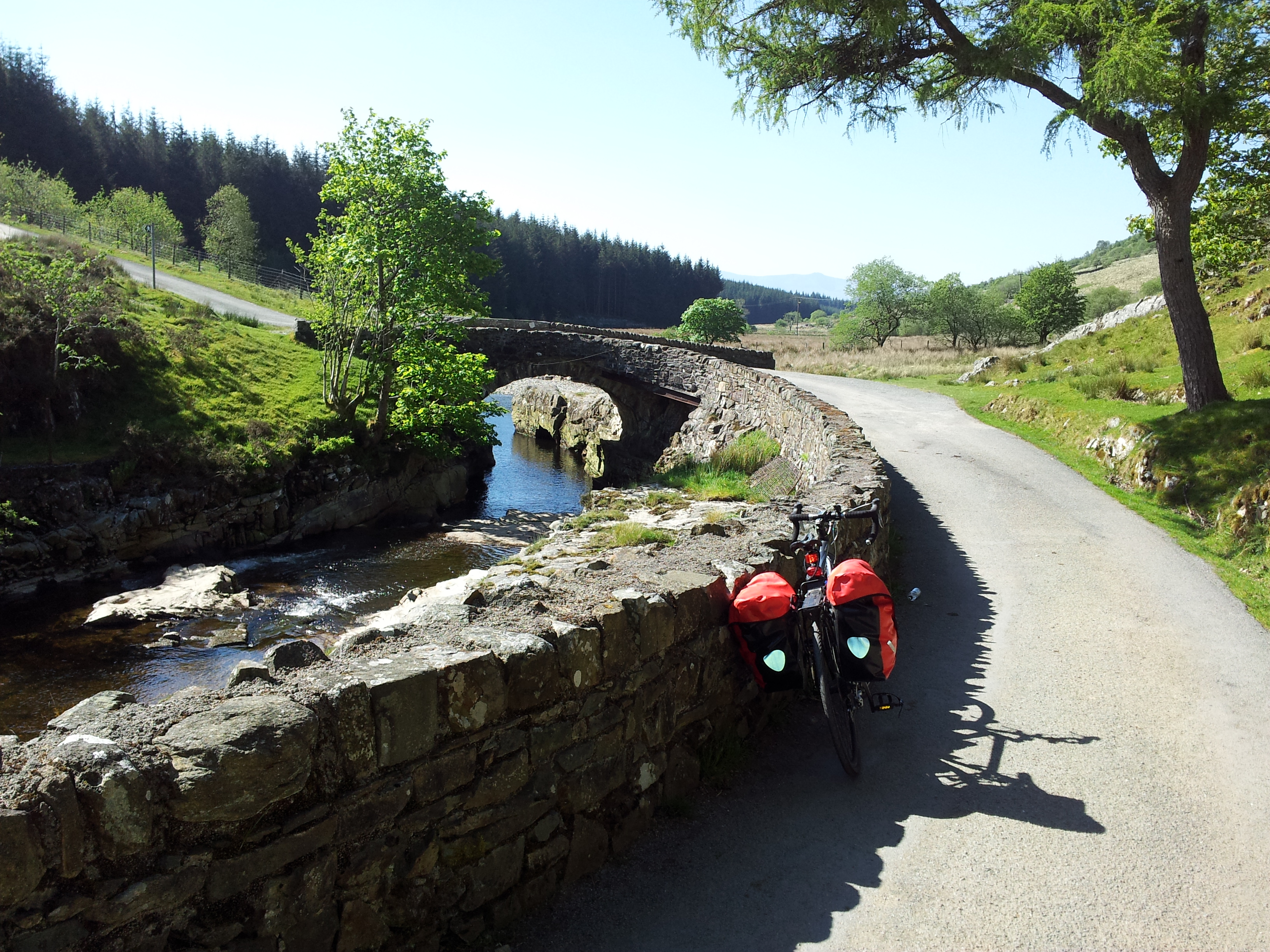
During the last week I went on a solo adventure. I cycled the entire length of the country. Now, before those of you living in places like Australia or the USA get really excited, I need to point out that the country I am talking about is Wales.  But hey, that’s an adventure for me. If you don’t know Wales, it is hilly. From top to bottom, all 250 miles or so of it, are either going up or going down, though I am certain there are many more ups than downs!

It was a superb trip, spread over four and a half days, in glorious sunshine, through some of the UK’s most beautiful countryside.  I had no big plan other than to enjoy the journey and prove to myself that I could rise to the challenge.  As I came toward the end of the road, I began to ask myself what, if anything, I had learned along the way. I cannot report any spiritual awakening, or major personal transformations, I’m afraid, but I thought I would  share with you a few of the musings of my journey.

1. Take Frequent Breaks.  There were many points where I was sure I could not go on.  I was exhausted. The hill was too steep. It was too hot.  No matter how spent I felt, I was amazed how even a 5 min break, with a bit of refreshment and a stretch, was enough to allow me to carry on. It worked, over and over again.  I do have a tendency to work on tasks until they’re completed, often ‘forgetting’ to take breaks. I know now how much more re-focused and re-energised you can be with frequent breaks.

2. Have small, regular goals.  The ‘Big Vision’ – the feeling of completing the journey – is great.  It sets the direction, it inspires you to take on the challenge in the first place, and it helps occasionally to play the picture over in your mind of what finishing will be like (especially when the going gets tough).  But, what got me through was having small targets – the next hill, what’s round the next corner, what’s the next village. This short-term chunking allowed me to focus only on the immediate stage, and not be overwhelmed by the scale of the entire challenge.

3. Rhythm is all important.  This lesson only really came to me later on the journey.  It’s difficult to explain how it happened, as it was something that ‘came to me’ without consciously seeking it. But, it was quite clear that the effort required was much easier once I hit upon a steady, relaxed rhythm.  Fighting against the rhythm is tiring and, on steep hills, I found I ground to a halt the more effort I put in. Relaxing and pumping out a slower, but even, tempo allowed me to go on much longer, and I even began to enjoy hills!

I also learned two other, more trivial, lessons. Continue reading